$1,400 stimulus checks to hit millions of bank accounts Wednesday. Here’s what to know
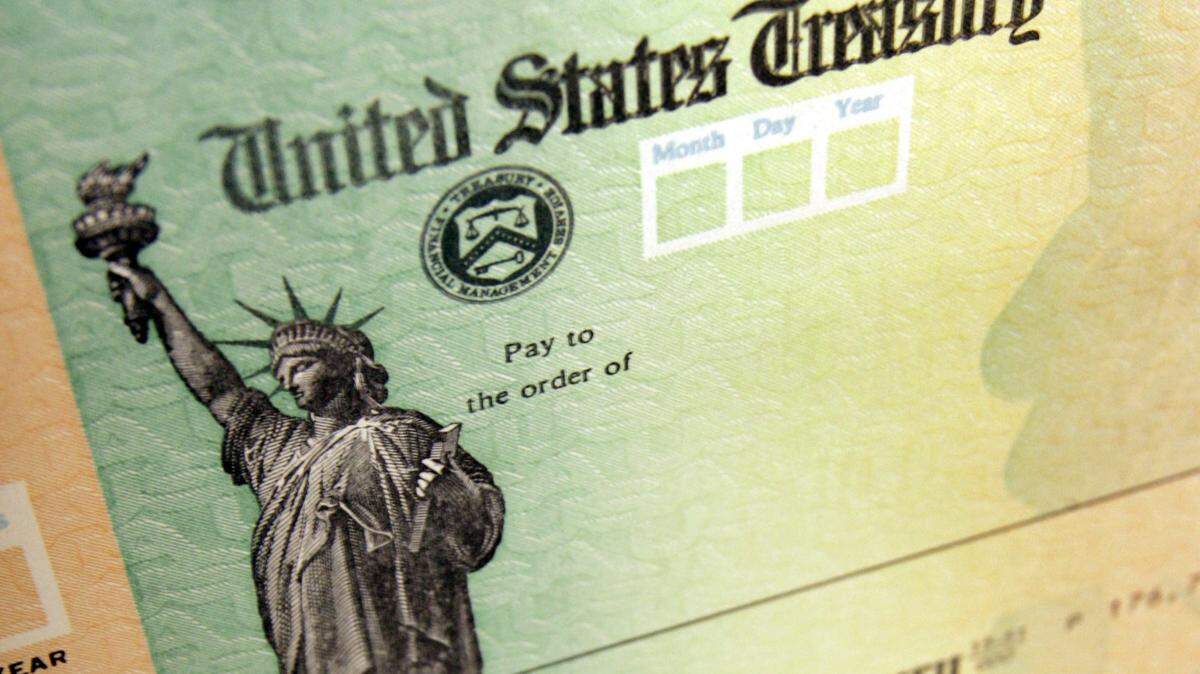
Millions of Americans on Wednesday, March 17 will receive their stimulus checks, equaling up to $1,400 for most adults, after President Joe Biden signed the American Rescue Plan into law last week.
Here’s what you need to know, including: why many payments are going out Wednesday, how to track your check, what to do if you haven’t received a payment and how children and dependent adults are also eligible.
Why are payments going out Wednesday?
That’s the “effective date” set by the U.S. Treasury Department.
“The (Internal Revenue Service) recently sent an initial wave of tens of millions of economic impact payments via the Automated Clearing House (ACH) system,” a group of banking and credit unions said in a statement Wednesday. “The actual funds will be sent to the banks and credit unions on March 17, at which time funds will be made available to customers. Until that time, the funds remain with the government.”
Some people, however, started seeing their payments over the weekend, and some banks were criticized this week after telling their customers they could expect to get the money starting Wednesday.
But, as CNBC reports, banks that sent the payments out sooner than Wednesday could have been “advancing the money based on instructions they received on who was to get paid and how much.”
“Some Americans may see the direct deposit payments as pending or as provisional payments in their accounts before the official payment date of March 17,” the IRS said in a statement.
Why haven’t you received your stimulus check?
Not all payments will go out Wednesday.
The first payments will be sent through direct deposit — and additional payments, including those sent through the mail, will be delivered in the coming weeks, according to the IRS.
Payments will likely come sooner for those who have already provided the IRS with their bank account information, while those receiving the payments through a pre-paid debit card or paper check through the mail will likely have to wait a little longer.
“We’re doing everything in our power to expedite the payments and not delay them, which is why the president’s name will not appear on the memo line of this round of stimulus checks,” White House Press Secretary Jen Psaki previously said.
How to track your stimulus check
Those who haven’t received their $1,400 payment can track it using the “Get My Payment” tool from the IRS.
After clicking “get my payment” users will be prompted to enter their social security number, birth date and address. The IRS says the tool will then display one of the following messages:
▪ A “payment status” either saying the funds have been processed and when to expect them, or a message saying the payment has not yet been processed.
▪ A “payment status not available” message.
▪ A “need more information” message.
What “status not available” and “need more information” mean
If the message says “Payment Status Not Available,” it could mean one of three things: the payment hasn’t been processed, the user isn’t eligible for a payment or the IRS doesn’t have enough information to issue a payment.
If the message reads “Need More Information in Get My Payment,” it’s because the post office wasn’t able to deliver the payment and it was returned to the IRS. Users can have their checks reissued as a direct deposit by providing an account and routing number for a bank account, prepaid debit card or other similar financial products.
If users see the message, “Please Try Again Later,” it means the user has been locked out of their account for 24 hours due to the information they entered not matching records or a person accessing the system more than 5 times in 24 hours.
Additional help from the IRS
People can also get information about the stimulus payments by calling the IRS helpline at 800-919-9835.
The IRS also has a frequently asked questions page about the payments and using the “Get My Payment” tool.
Who gets the checks
Individuals making under $75,000 and couples making under $150,000 are eligible for the full $1,400 payment, plus $1,400 per child or adult dependent. The payments will phase out after that, capping at individuals making $80,000 and couples making $160,000.
Anyone with a valid social security number, green card or H-1B and H-2A work visa is eligible for the payment.
How we got here
The up to $1,400 direct payments are included in the $1.9 trillion American Rescue Plan that Biden signed into law last week.
They mark the third round of direct relief payments sent to Americans since the start of the coronavirus pandemic. Most received $1,200 after the $2.2 trillion CARES Act passed last March and $600 after a $900 billion relief package passed at the end of last year.
“This historic legislation is about rebuilding the backbone of this country and giving people in this nation — working people and middle-class folks, the people who built the country — a fighting chance,” Biden said before signing the American Rescue Plan.
The package also includes a child tax credit expansion, extended federal unemployment benefits and funding for state and local government to continue rolling out the COVID-19 vaccine, among other things.