
Democrat and Republican candidates promise to reduce gas prices. Can they deliver?
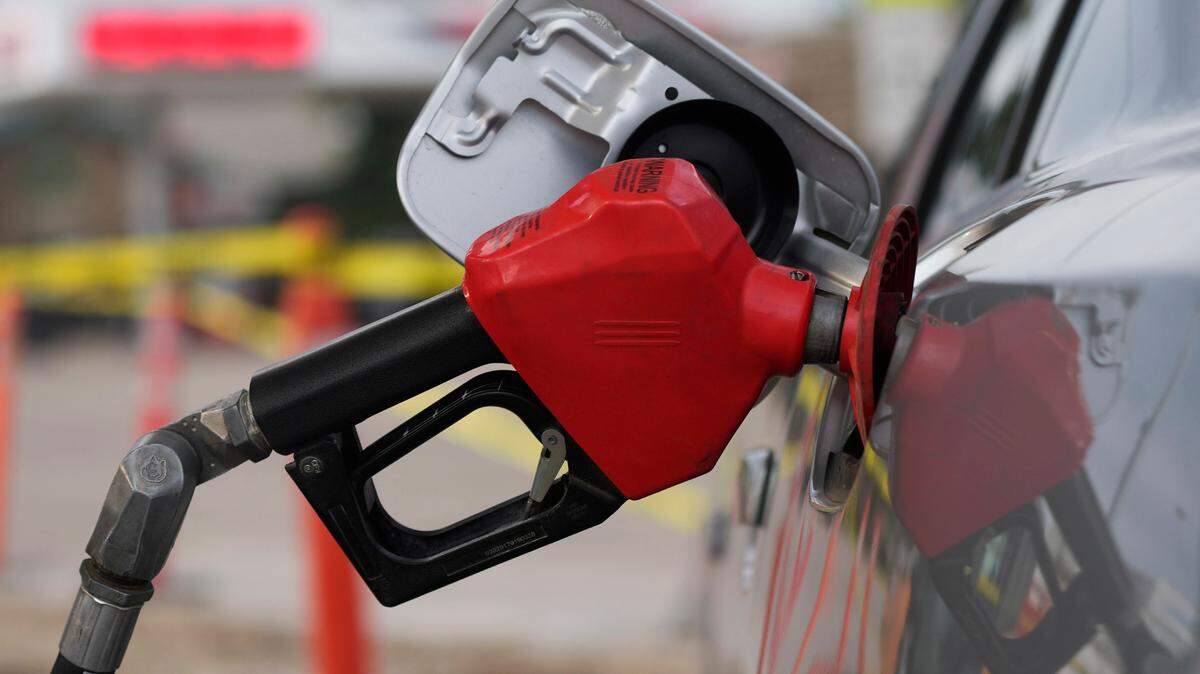
Whether it’s in the form of political ads or campaign tweets, candidates are making a lot of promises to voters that they will take urgent action to bring down historically high gas prices.
But there’s one little problem.
“There is very little that politicians can do to meaningfully affect gasoline prices in the short term,” said Ray Perryman, a Texas-based economist.
Nevertheless, solutions and politicians pledging to implement them are all over California’s social media and television ads.
“From an economic point of view, it is hard to make the case for any of the short run policies, though the advocates are generally thinking politically, not economically,” said Severin Borenstein, an energy economist at the University of California, Berkeley.
The issue is a huge deal in these last days before the election. Though prices have dropped substantially in recent weeks, California’s gasoline prices remain stubbornly higher than the nation’s. The average price of a gallon of regular gasoline in the state Thursday was $5.49. The national average was $3.78, AAA reported.
More importantly to office-seekers, prices are highly visible to voters day after day.
There’s simply no easy fix, though there are longer-range strategies for bringing prices down.
“Government can have a real effect on gas prices in the longer run,” Borenstein said, “both by creating incentives to increase supply and decrease demand.”
While candidates do often offer such lofty ideas, they’re more eager in their ads and tweets to emphasize quicker solutions. Among them: A break from gasoline taxes, government releases from petroleum reserves, laws to prevent oil company price gouging and plans for a windfall profits tax on oil companies.
Getting prices down
Sometimes the pitch is simple. “David Valadao…Lower gas prices” declares an ad for the Hanford Republican congressman.
The website of Rep. Josh Harder, D-Turlock, said he is “leading the fight” to repeal gas taxes in Washington and Sacramento. That fight is stalled for the moment in Washington, where House Speaker Nancy Pelosi, D-San Francisco, has been unenthusiastic about suspending the federal 18.4 cents a gallon tax. And Washington has nothing to do with the size of the state tax.
In the newly drawn 3rd congressional district, Assemblyman Kevin Kiley, the Republican congressional candidate, has gas prices at the top of his “issues” website.
“Kevin has led efforts to suspend California’ sky-high gas taxes,” it says, which he has, though he was unsuccessful.
“In Congress, he will work to bring gas prices down by making America energy independent and reducing fees and taxes on energy production,” it adds.
Democratic opponent Kermit Jones has also said the government should consider pausing the state and federal gas taxes.
Gasoline tax breaks?
The problem with suspending a gasoline tax, which has been tried in some states, is largely that it can starve the state of money to repair and replace highways and bridges.
“A tax holiday could lower prices, though possibly not by the full amount of the tax,” Borenstein said, “but in any case that is just cutting government revenues.”
Prices can easily bounce back up once the tax suspension ends. In Maryland, the 43 cents a gallon tax was suspended for 30 days this spring. On the day before the pause, the average price in the state for a gallon of regular was $4.20. It quickly dropped to $3.70, but by June, was up to $4.99.
Democrats tend to be more focused on curbing the power and profits of big oil.
“The unbridled greed of Big Oil companies — who rake in record profits while customers pay inflated prices at the pump — cannot be left unchecked,” Sen. Alex Padilla, D-Calif., tweeted this week.
He’s a sponsor of the Big Oil Windfall profits Tax Act, which would among other things double the tax rate on excess oil company profits. It has little chance of being passed. In Sacramento, Gov. Gavin Newsom is also preparing a California windfall profits tax.
President Joe Biden also wants some tax on oil company profits, which reached billions of dollars in the last quarter. He tweeted Monday that “The oil industry has a choice. Either invest in America by lowering prices for consumers at the pump and increasing production and refining capacity. Or pay a higher tax on your excessive profits and face other restrictions.”
Some experts are skeptical that a big tax would have much effect at the pump. “Windfall profit tax,” Borenstein said, “isn’t designed to change gas prices at all, but to claw back some of the profits from oil companies.”
Tap oil reserves?
One of the easier remedies to explain has been the release of oil from the nation’s Strategic Petroleum Reserve.
The reserve was created by a 1975 law after a Middle East oil embargo made prices spike and supplies dwindle. The reserve can hold up to 714 million barrels of oil in salt caverns at four sites along the Gulf Coast.
Harder this fall proposed a separate Emergency Petroleum Reserve with as much as 350 million barrels of oil. The government could buy oil at prices less than $60 a barrel and sell it when prices were higher than $90 per barrel. Crude oil has been trading between $85 and $90 a barrel. A barrel of oil generally can contain 42 gallons.
As prices climbed earlier this year, President Biden announced a release of 180 million barrels of oil from the Strategic Petroleum Reserve over six months.
Oil from the reserve has been released during emergencies, such as hurricanes, and supply disruptions, such as the one created by the 1991 Gulf War.
Because of the recent releases, “the strategic reserve is already at extremely low levels, and becomes a national security vulnerability if it’s too depleted,” said Perryman. “A supply interruption such as a pipeline cyber attack could become more of an issue without the ability to tap the strategic reserve, and there is already concern that we’ve tapped all we should there.”
The answer to the price increases is a longer-term strategy, one more nuanced and complex. Congress this summer did pass legislation that will help the nation move towards energy efficiency. But more is needed, and that has little to do with the current spate of quick fix ideas.
After all, said Perryman, ”the reality is that prices are driven by a complex interaction of supply and demand.”
This story was originally published November 3, 2022 at 2:23 PM with the headline "Democrat and Republican candidates promise to reduce gas prices. Can they deliver?."
.jpg)