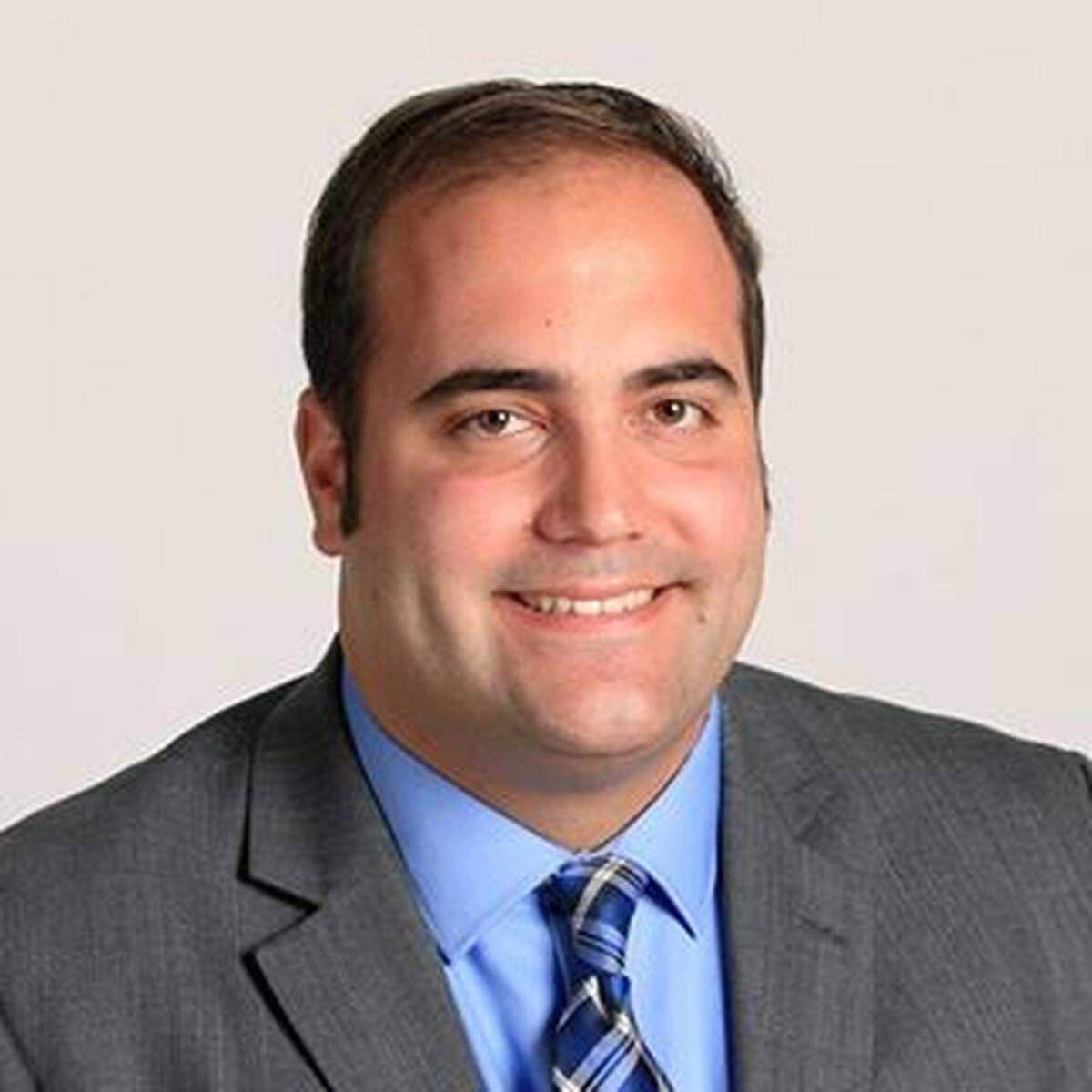
Marshall, police chief’s son and doctor, asks Kansans for vote based on who he’s not
Roger Marshall was a 27-year-old medical intern at Bayfront Medical Center in Florida when he helped treat a woman with ovarian cancer who likely had six-to-nine months to live.
After listening as the oncologist he was training under gave “a message of hope” to the woman’s family, Marshall asked why he didn’t instead try to prepare them for the worst.
“And he said, ‘They’re not ready yet,” Marshall recalls him saying. “They’ll ask me. It might be tomorrow. It might be before they go home, but never take away hope from a patient or a family.’”
Marshall, now 59, said the lesson guided him through his three decades as an OB-GYN, diagnosing patients with breast cancer or helping them recover from miscarriages. It sustains him now, the western Kansas Congressman said, as he runs for U.S. Senate amid a global pandemic and economic upheaval.
“My prayer when I start off the day is, ‘God, help me to be a messenger of hope to these people today,’” he said.
But as the August 4 Republican primary nears, the message driving Marshall’s campaign is fear, not hope. Fear of Kris Kobach, his principal opponent. Fear of a Democratic Senate. Fear of civil unrest.
One Marshall television ad uses footage of looting and the demolition of a church as a backdrop to warnings that Kobach’s nomination could end Republican control of the Senate.
“It’s November 4. Welcome to your country if liberal Democrats take the Senate. Kansas could tip the scales. We can’t afford to lose the Senate,” the ad’s narrator gravely warns.
National Republicans fear that Kobach’s nomination could put the Kansas Senate seat in play after eight decades of GOP dominance. The party establishment, once cool to Marshall, has rallied around him.
The Kansas Republican Party also seems to have dropped a protective shield around him. It urged other candidates to withdraw from the race and changed the rules for a planned debate to minimize his interaction with opponents. Marshall’s GOP rivals Kobach, Bob Hamilton and Dave Lindstrom boycotted the event, leading to its cancellation.
In Montgomery County in southeast Kansas, the party received a request from Marshall’s campaign to tweak the rules of a July 10 forum so that candidates would appear on stage separately. Local GOP leaders refused and Marshall ultimately skipped the event. The duck-and-cover did not impress county Republicans.
“If you’re going to be in Topeka or Washington, you better be able to take the shots,” Montgomery County GOP chairman Virgil Peck said without directly naming Marshall. “Because if you can’t take the shots you’re not going to be properly representing your constituents. You can’t just take your ball and go home.”
Marshall’s seat in the 1st Congressional District has been a launching pad to the Senate for Bob Dole, Pat Roberts and most recently Jerry Moran. Yet after four years in office, Marshall is still an unknown quantity to many of the state’s voters.
His journey from rural doctor to aspiring senator began in a strict Christian household, with a father who believed in corporal punishment and a reverence for the police.
A police chief’s son
Marshall grew up in El Dorado, Kansas, a town of about 13,000 roughly 30 miles northeast of Wichita, where his father, Victor Marshall, was police chief for 25 years. The younger Marshall said he and his two siblings had permission to fight for two reasons: If someone insulted the police or their mother, Nancy Marshall, an office clerk.
“Those situations when we were bullied...his answer was always the same: You punch them in the nose. Don’t come home and belly-ache about it. If someone’s bullying you, you hit them in the nose,” he said. Under those guidelines, he got into about one fight a year as an adolescent.
“He taught us how to box. He taught us how to finish a fight if we needed to. He took us to the gun range. He took us out to fight fires, grass fires. If they were up all night fighting fires, my brother and I would clean the hoses. We were just part of the team, we thought.”
Marshall remains close to his father, who is 81 and still in El Dorado. He became teary-eyed when talking about his influence during an interview in Washington last month.
As a national debate on policing takes place in the wake of George Floyd’s death, Marshall said he can’t help but view the issue through the lens of a police officer’s son. And while he acknowledges that many departments can improve, he also thinks critics discount the dangers police face.
“I remember sitting at dinner on Sunday night and my dad getting a call and my grandmother saying you guys need to tell your dad that you love him,” Marshall said.
Both of Marshall’s grandfathers owned farms and the kids were expected to work on them. That proved to be a challenge for the future congressman, whose childhood asthma was aggravated by the mounds of hay that surrounded him.
“I learned really early on that I couldn’t do that my whole life and I needed to have a different career,” he said.
Marshall chose medicine because doctors were the most respected members of the community when he was a kid. But he was rejected the first time he applied to the University of Kansas School of Medicine, which he cites as still the biggest disappointment of his life.
“I graduated from Kansas State. I had like a 3.97 GPA, good scores and I didn’t get into medical school. And the interviewer told me that since my parents never went to college that I didn’t know what I was getting into and I needed to volunteer at a hospital and make sure that I knew that was what I wanted to do,” he said.
He returned to El Dorado and volunteered at Susan B. Allen Memorial Hospital, where he met his future wife, Laina Corder, who was studying be a nurse at nearby Butler Community College.
“He consulted with his minister,” his father said, recalling Marshall’s disappointment about medical school. “He was a strong Christian boy. And during that period he met his wife. She was becoming a nurse. And that kind of got him through that period. She helped him through medical school.”
Marshall was accepted into KU’s medical school the following year and graduated in 1987. He and Laina were engaged within three months of meeting, Marshall said. They have four children and two grandchildren.
‘Sucking up’ for success?
Marshall said his wife urged him to run for Congress after their birth of their first grandson in 2015.
He’d rebuffed a 2014 overture from local Republicans who saw Marshall, then chairman of Great Bend Regional Hospital, as an attractive alternative to Rep. Tim Huelskamp. The Tea Party stalwart was elected in 2010 and kicked off the House Agriculture Committee two years later after disputes with party leaders. It was a blow to the farm-heavy district.
Nevertheless, the decision to run in 2016 caught his parents by surprise, said Victor Marshall, who offered a warning.
“We never saw it coming,” he said. “I said, ‘You better think that over. You’re going to have people who are on your ass all the time.’ I said, ‘Son, I’m very scared. There’s so many bad hecklers out there.’ His mother and I constantly fear for him.”
Marshall defeated Huelskamp by a 13-point margin.
Since arriving in Congress Marshall has, like most House Republicans, voted largely in line with party leadership. Former Rep. Kevin Yoder, who served with Marshall and supports his bid for Senate, said he “has been one of the most important figures in the GOP effort to replace Obamacare with patient-centered health care legislation.”
Early in his first term, Marshall faced backlash when he quoted a Bible verse that “the poor will always be with us” and suggested to the medical magazine Stat that some people don’t want health care.
“All I was trying to say is that doctors and hospitals have always stood up in the moment of need to take care of the poor. And I have a long history of doing that,” Marshall said, acknowledging that he did not express himself clearly.
Marshall later chaired a GOP task force that in 2019 proposed a plan that would keep the Affordable Care Act’s protections for preexisting conditions, but shift funding for premium subsidies to a state-administered grant program. Its aim was to help low-income people pay for insurance. The plan, which hasn’t received a floor vote, would also increase the allowable pre-tax contributions people can make health savings accounts.
He has voted with Trump 98 percent of the time, more than any other member of the Kansas delegation — a data point he repeats like a mantra in campaign appearances. With the exception of a guest column in The Star last year that questioned the president’s trade policy, he’s been reluctant to criticize the president on any issue.
During last year’s House impeachment debate, Marshall railed against the process as a “circus” and “sham witch hunt” in a fiery speech. He said Trump noticed and thanked him for it at the signing ceremony for the USMCA trade agreement, roughly a month later.
“I was one of the first hands he shook,” Marshall said. “He said, ‘Roger, thank you for standing up for me with impeachment. Thank you for the impassioned speech.’”
Others suggest that his professed devotion to Trump is more tactical than genuine. In 2016 he backed a GOP moderate, Ohio Gov. John Kasich, for the 2016 presidential nomination.
“I have never seen anyone more of a suck-up to the establishment as Roger Marshall,” said Alan LaPolice, a longtime political rival in the 1st Congressional District.
LaPolice mounted a GOP primary challenge against Huelskamp in 2014. He ran as independent the following election after, he alleges, intimidation by Marshall’s allies forced him out of the GOP primary. He ran a third time in 2018 as Democrat, losing to Marshall by 36 points.
LaPolice, a First Gulf War veteran and farmer, said he came to regard Marshall as more dangerous than Huelskamp because of his willingness to follow orders and help GOP leadership dismantle the Affordable Care Act, among other agenda items.
“I knew that Roger would be able to collaborate with party members and do more damage than Tim did,” LaPolice said. “Tim was an obstructionist. Roger’s a deconstructionist. And because he had that smile and would say, yes, I knew he would be effective. Roger’s charming”
‘A man I respected’
Back in Great Bend, those who knew Marshall before his political career describe him as kind and service-oriented, a man who raised money for new baseball fields while working long hours in a region where OB-GYNs were scarce.
“There was a year or so when he practiced by himself as about the only obstetrician in town and he covered 365 days,” said Rob Wilson, a dentist who became close with Marshall through First Christian Church, an evangelical church in Great Bend.
“And that damn near killed him, but he was so dedicated but always wanted to make sure Great Bend had a board-certified obstetrician-gynecologist,” said Wilson, who now lives in Texas. “He really stepped up and filled a community’s need. There’d be nights he’d sleep at the hospital if he had someone in labor.”
Robin Barrett got to know to Marshall when he delivered her four children from 1994 to 1999. A decade later, she worked alongside him as a registered nurse.
“He would really stop and consider all the questions I asked him. He didn’t rush me. And when you’ve got 30 people in your waiting room, that’s something,” she recalled about her experience as a patient during her first pregnancy. “He treated me like I really mattered.”
Years later, early in her career as a nurse, she said Marshall guided her through the resuscitation of a newborn infant with meconium in his lungs.
“He started saying, ‘Rub, rub, rub.’ He never raises his voice, but of course you know he means business,” she said. “He told us what he wanted and he meant it because that baby’s life depended on what we did and how quickly we did it... I feel like he made me a better nurse.”
Joe Chism was 9-years-old when Marshall became involved in his life. A baseball teammate of Marshall’s oldest son, Chism was one of the few Black kids in predominantly white Great Bend and felt like an outcast. His father was not in the picture; his mother worked multiple jobs.
Marshall brought him to church and on family trips, arranged dental appointments and made sure he had clothes for school.
“He took me to the Big 12 tournament twice, but the first one that was very special to me because he kind of let me in on his life,” Chism, now 33, recalled. “That whole trip he spent so much time talking to me about life and the struggles… and what you can achieve by working hard. So that weekend was very special to me not just because of basketball but just spending time with a man I respected.”
“He didn’t have to do anything he did for me, but he did it with open arms,” Chism said. “It’s so hard for me to talk about the impact because I don’t want to cry.”
Chism went on to play baseball at Bemidji State University in Minnesota and now works for a healthcare data company in Tennessee. He said he still keeps in touch with the Marshalls.
At a celebratory dinner the day Marshall was sworn into the U.S. House, his father started taking bets on how many years would pass before his son ran for U.S. Senate.
“I went around the table to take bets on his future and I remember saying in four years he will run for the Senate and in six years to 10 years he will run for the president and everybody laughed,” the elder Marshall said. “But now it’s coming true.”
This story was originally published July 19, 2020 at 6:00 AM with the headline "Marshall, police chief’s son and doctor, asks Kansans for vote based on who he’s not."