Georgia senator’s stock sales could cause trouble for Republicans in special election
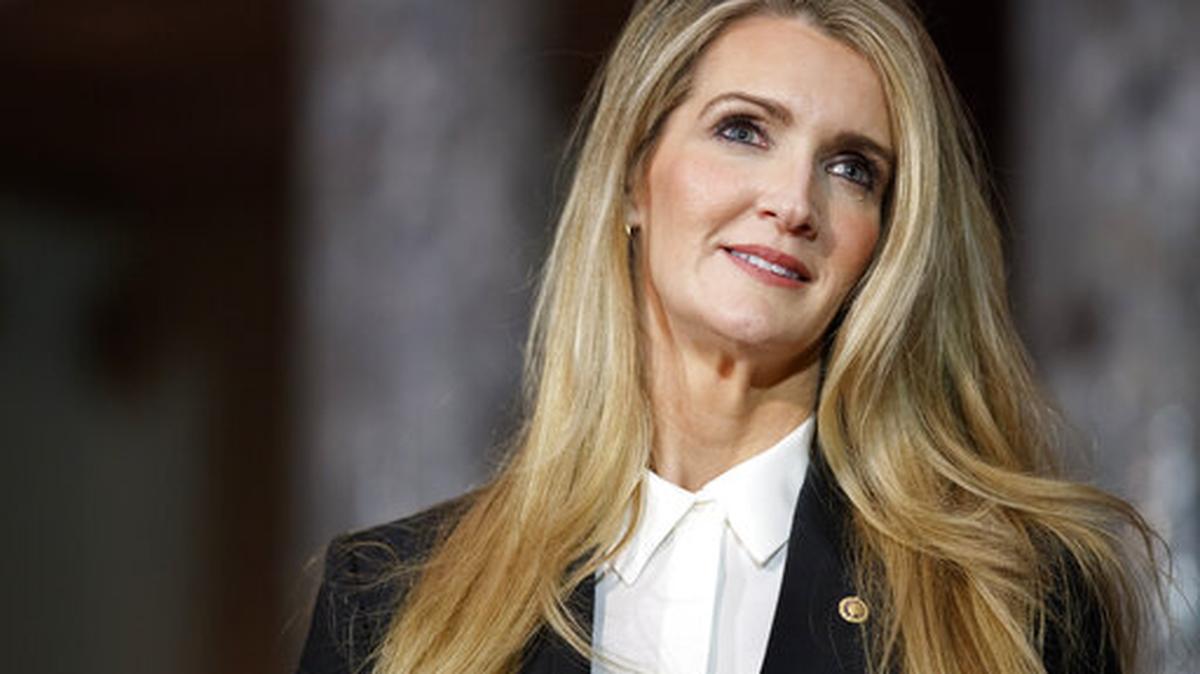
U.S. Sen. Kelly Loeffler was initially the favorite to win a special election in Georgia for the seat she was appointed to in December, having consolidated the support of powerful Republicans and conservative groups.
A challenge from Georgia Rep. Doug Collins was met with disdain from the national party establishment that sought to frame the four-term congressman and former member of House Republican leadership as an insurgent disrupter who would spoil the election for the GOP.
However, the revelation last week that Loeffler sold more than $1 million in stocks after she attended a Jan. 24 congressional briefing on the coronavirus has given Collins an unexpected opening.
For the past week he has been hammering Loeffler over the stock sales in interviews and on social networks, and his campaign believes he is now the one with the upper hand against the political novice.
If the contest between the two Republican lawmakers becomes more competitive, it would mean a bigger headache for the GOP establishment that has worked hard to give Loeffler the edge after failing to push Collins out of the race.
Republicans in Washington fear that an ugly fight between Loeffler and Collins could cause the party to lose the Senate seat in a special election in November, in which Republicans and Democrats will compete against each other on a single ballot.
A run-off election between the two candidates with the most votes, from either party, will take place in January if no one wins a majority of ballots on the first try.
And should it come down to a Republican and a Democrat, a run-off election would pose a significant risk for the GOP given that Democratic groups see Georgia as a top target this election year and would pour extensive resources into winning there.
Whether Collins can gain new momentum and sustain it through to the November election will depend on Loeffler’s ability to explain the stock sale and Collins’ ability to make his attacks resonate, political operatives told McClatchy.
American Conservative Union Chairman Matt Schlapp told McClatchy this week that the accusations against Loeffler are “very relevant” and something that “voters will seriously have to wrestle with” in the months ahead.
“She has to make her case that what she did was above board,” Schlapp said. “It’s not just whether or not it was legal, it was whether or not it was the right thing to do.”
Loeffler insists she has been transparent and that her portfolio is managed by a third party. She says that neither she, nor her husband — the chairman of the New York Stock Exchange — were aware of the January sales at the time they were made.
“Senator Loeffler’s integrity is being attacked by political opponents who are preying on the emotions of Americans during a national health emergency,” Loeffler’s campaign communications director Stephen Lawson said in a statement to McClatchy this week. “The bottom line is that Sen. Loeffler has done nothing wrong.”
Her supporters in top Republican circles continue to stand by her and influential Republican groups have not yanked their endorsements.
In a tweet last week, Marjorie Dannenfelser, the president of the national anti-abortion group the Susan B. Anthony List, said that using the stock sale to attack Loeffler “would simply be DISHONEST.”
But government watchdogs are calling for an investigation and questioning whether Loeffler used nonpublic information about the coronavirus to inform her financial decisions in the days before the public was aware of the severity of the crisis, which grew into a pandemic. Those groups argue that Loeffler does not have her stocks in a blind trust and has not offered proof that she was unaware of the sale.
The Securities and Exchange Commission, while not mentioning members of Congress, warned “corporate insiders” and “other professionals” on Monday about trading on nonpublic information.
The situation “looks really bad” for Loeffler, said University of West Georgia political science chair Chapman Rackaway. At the same time, he said, Georgia voters may not be paying attention right now in the midst of a global health crisis.
“Collins has to capitalize on it, and he’ll have to keep reminding people of it,” Rackaway said.
A Republican strategist who spoke to McClatchy this week also said the questions about Loeffler’s stock sales may not be the game changer that Collins and others think it might be, given the election is so far away and Collins does not have money to maintain the narrative.
Loeffler, on the other hand, is the richest member of Congress — she and her husband have an estimated net worth of nearly $500 million.
Collins, meanwhile, has been blocked from getting financial assistance and campaign services by the National Republican Senatorial Committee. He said the NRSC is in “full incumbent protection mode” and is doing everything it can to help Loeffler.
Nathan Brand, an NRSC spokesman, did not deny it.
“Georgians shouldn’t be surprised to see DC Doug Collins seize on a false story and join the left-wing media and Twitter mob attacking Senator Kelly Loeffler,” Brand said in a statement to McClatchy, seeking to paint Collins as too much of a Washington insider.
Not all Republicans are in agreement on the Georgia Senate race. Prominent Republicans like former Arkansas Gov. Mike Huckabee, Rep. Devin Nunes of California and House Freedom Caucus Chairman Andy Biggs of Arizona have endorsed Collins.
President Donald Trump originally supported Collins, who was one of his chief defenders in the congressional impeachment fight, for the appointment to the seat left open in late 2019 by retiring Sen. Johnny Isakson.
But Georgia Gov. Brian Kemp selected Loeffler instead, and Trump now insists on staying neutral in the contest and refusing to make an endorsement.
Trump also won’t say whether Loeffler and other congressional lawmakers who sold stock in the early days of the pandemic should be investigated to determine whether they did anything unethical. He said at a press briefing last week that he would need to “have a look at it” and that he found the senators who sold stock “to be honorable people.”
POLITICS OF THE CORONAVIRUS
As Americans focus on the impact of the coronavirus on their lives, Collins has been working hard to keep Loeffler’s stock sales in the spotlight.
He has taken to Twitter to accuse Loeffler of “profiting off” the “pain” of out-of-work Americans, and doing media interviews to cite her stock ownership as evidence that the wealthy businesswoman and WNBA team co-owner is out-of-touch with Georgia voters.
Citizens Responsible for Ethics in Washington is also vowing to “keep up the pressure as much as we can,” according to Jordan Libowitz, the government watchdog group’s spokesman.
CREW last week filed a complaint with the Senate Ethics Committee about Loeffler and Sen. Richard Burr, R-N.C., who is facing similar fallout after selling stocks following the closed-door coronavirus briefing.
The liberal advocacy group MoveOn Political Action is running ads that call attention to the accusations against Loeffler, saying the senator was caught “red handed” and now she must resign.
As Loeffler’s detractors amp up their efforts, supporters who have run ads on her behalf in the past are now turning their attention elsewhere at a pivotal moment in her campaign.
Jack Pandol, spokesman for the Senate Leadership Fund —a super PAC aligned with Senate Majority Leader Mitch McConnell — said it was “truly sad that Collins is incapable of anything but spinning falsehoods about this election” and emphasized the group will continue to back Loeffler “to the hilt.”
The Senate Leadership Fund, however, has no current plans to renew anti-Collins, pro-Loeffler spending on advertisements. The super PAC’s initial ad buy was largely intended to force Collins out of the race before the filing deadline, and it expired roughly one week before the revelations about Loeffler’s stock sale. Now, the group is prioritizing spending on other key races across the country where the GOP worries incumbent senators will lose to Democrats.
The Club for Growth, which advocates for fiscal conservatism, earlier this year spent $3 million on ads that directly attacked Collins’ voting record. A Club for Growth spokesman said the group bought online ads on conservative news sites such as Breitbart, Fox News, Townhall, Hot Air, Red State and on the streaming service Hulu.
Reached by text message on Monday, spokesman Joe Kildea reiterated that Club for Growth has not made an endorsement, and does not plan to, in the Georgia Senate race. In an email on Friday, Kildea said the Club would make another ad buy against Collins, without providing additional details on the future spending.
Asked about spending by outside groups, Collins’ campaign spokesman, Dan McLagan, on Tuesday said Loeffler’s outside money is drying up because internal polling shows Collins in the lead.
“We’re not going anywhere,” he added.
Some Republicans are still holding out hope that Trump will resolve the intraparty drama.
The president might have provided a solution earlier this year when he put Collins on his short list of candidates for director of national intelligence. Collins turned him down, saying he preferred to run for the Senate.
In a recent interview, Collins said he didn’t believe Trump’s job offer was a peacemaking gesture.
“It showed how much he thinks of me and those were his exact words to me,” Collins said, adding that “everybody in the state of Georgia” knew that he was Trump’s favorite for the open Senate seat before Kemp appointed Loeffler.
The White House declined to comment.
Updated with post-publication Club for Growth comment that it plans to run more ads against Collins.
This story was originally published March 27, 2020 at 7:00 AM.