Can Marshall beat Kobach? Kansas Republicans poised for bitter primary showdown
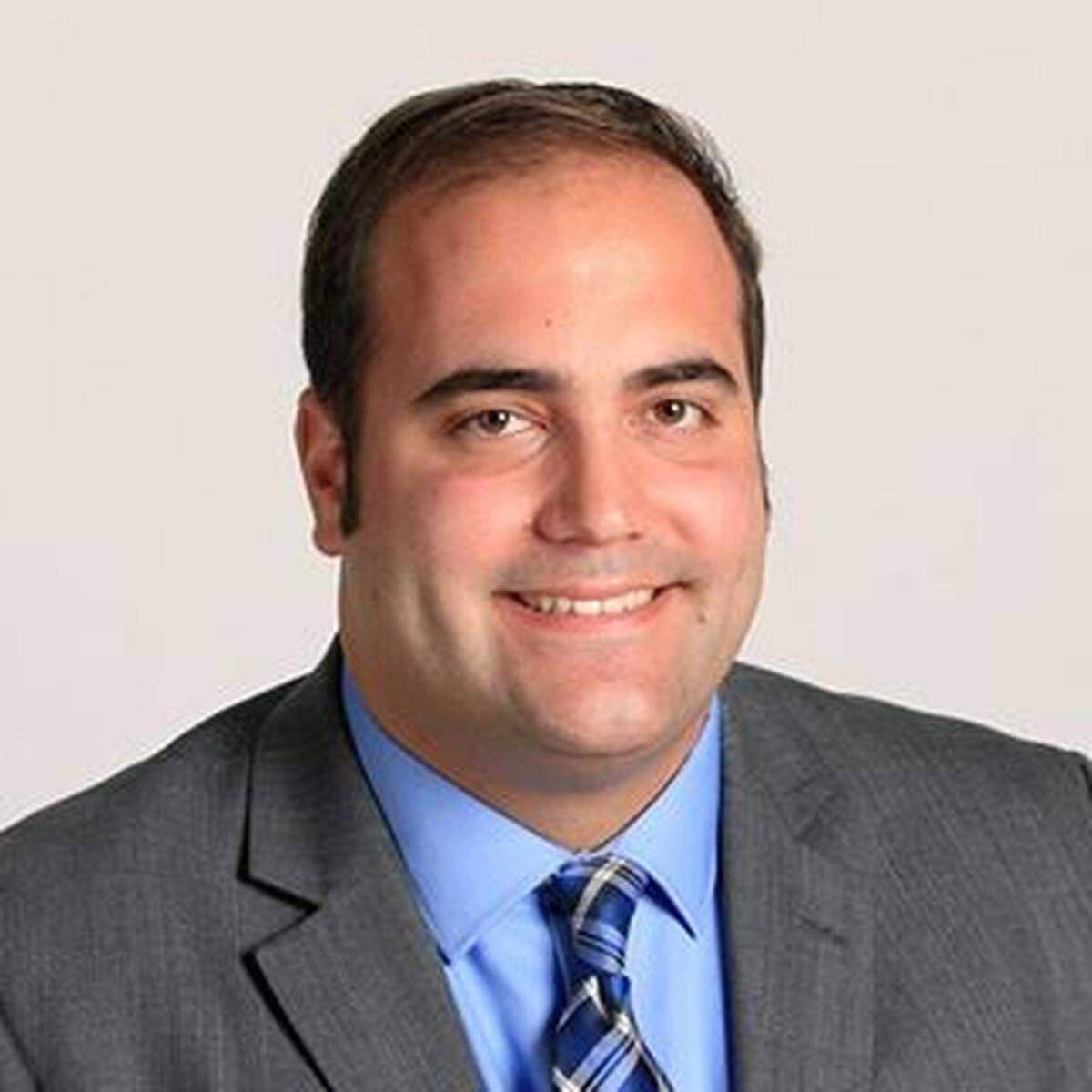
Rep. Roger Marshall backs President Donald Trump and he wants to make sure everybody knows it.
“98 percent of the time! 98 percent of the time!” Marshall said last Wednesday, raising his voice and awkwardly lowering his face to an inch from a reporter’s recording device, to emphasize how often he votes with Trump.
A day earlier, Secretary of State Mike Pompeo told Senate Majority Leader Mitch McConnell of his decision not to enter the Kansas Senate race to replace the retiring Republican Sen. Pat Roberts.
With Pompeo’s long shadow gone, the western Kansas congressman was intent on signaling that he is poised to become the undisputed Republican standard-bearer, and that a vote for him is a vote for the Trump agenda. Television ads, launched last month, show him with the president at the signing of a trade deal with Japan.
But national Republicans aren’t in a rush to anoint Marshall or any other candidate. None of the three other major contenders have been been able persuade GOP leaders that they can close the gap with former Kansas Secretary of State Kris Kobach, the party’s failed 2018 nominee for governor who leads the primary field in the party’s internal polls.
“Nobody’s going to rush in,” said a Washington-based Republican strategist, who requested anonymity to speak candidly.
“None of our candidates have raised the amount of money that they need to raise to run a successful campaign. Every single one of them will need to spend the near term hustling like they’ve never hustled before.”
Party leaders and donors will be looking at the candidates’ fundraising reports, which will become public at the end of the month, and their performances in a Feb. 1 debate at the state party’s annual convention, to help determine which candidate to back.
In their meeting, Pompeo gave McConnell the green light to find another candidate to back. That won’t necessarily be Marshall.
The message that he still needs to prove himself was reinforced, at least indirectly, in Marshall’s own meeting with McConnell a day later.
The two discussed Marshall’s fundraising and how “this looks like a one-on-one race with Kris Kobach,” the congressman said. “The leader just stressed how important it is that we keep this seat red,” Marshall said.
Republican party leaders continue to believe that Kobach puts the seat at risk.
“We need the most conservative Republican who can actually win a general election,” said Indiana Sen. Todd Young, the chairman of the National Republican Senatorial Committee (NRSC), gesturing with his hands to emphasize the phrase “actually win.”
It was a clear dig at Kobach. The NRSC, the party’s main campaign arm for Senate races, took the unusual step of condemning Kobach’s candidacy the day he announced last July and has been clear about its preference for Pompeo.
Kobach, who served on Trump’s transition team and received his endorsement in the 2018 gubernatorial race, has sought to paint Marshall as a moderate — a characterization Marshall fiercely rejects.
“I think that my conservative credentials are as good as anyone and probably way better than most. We’re a national spokesperson for the right to life issue, working hand-in-glove with the NRA,” Marshall said, touting his anti-abortion and pro-gun record. “I just think you cannot get to the right of me of any type of social issue.”
Whenever Democrats come up in conversation, including state Sen. Barbara Bollier, the national party’s preferred 2020 Senate candidate, Marshall is quick to accuse them of “socialism,” the pejorative of choice for staunch conservatives seeking to paint opponents as too liberal.
It’s a contrast to Marshall’s 2016 campaign to unseat then-Rep. Tim Huelskamp, a conservative rabble-rouser who lost a seat on the House Agriculture Committee after battles with leadership. At the time, Marshall framed himself as a peacemaker who could reach across the aisle.
“It’s interesting to see how he’s suddenly spinning himself as something totally different than 2016,” Huelskamp said.
Huelskamp accused Marshall of varying his message depending on the audience. He’ll tell conservatives about his commitment to repealing Obamacare, “then the next day he’s telling Kansas hospitals, I’ll get you more money,” Huelskamp said.
Despite Marshall’s conservative voting record, his primary against Huelskamp made enemies in the movement. The Club For Growth has been open in its disdain for the congressman and has indicated that it might spend against him during the primary.
Marshall represents the same district that elected Roberts and Republican Sen. Jerry Moran before their jumps to the Senate. But Roberts noted that Marshall is only in his second term while he served eight, including as a committee chairman, before his 1996 campaign for Senate.
“We had been here 16 years. We had a solid base. I think Roger needs to reinforce his base and like everything else you need money,” Roberts said.
“It’s a pretty easy task raising money: First you have to ask,” Roberts said. “He’s got some advisers out there who have been very good to him and they need to reach out to other parts of the state and for that matter nationally.”
Bollier raised $1.1 million in the final three months of 2019, a record for a Kansas Democrat which will intensify the pressure on Marshall, who had $1. 9 million cash on hand as of October. He downplayed concerns about Bollier’s fundraising.
“We’ll be short of that for the quarter, but I think the big picture is we have over $2 million cash on hand and she’s raised $1 million. We’ll see how much she spent to raise that money, but regardless we need to be prepared to take her on and to keep her and the left-socialists from taking over this country,” he said Wednesday.
Marshall’s campaign announced Friday that it raised more than $250,000 in three days after Pompeo’s decision became public. The campaign confirmed that figure is comparable to the total it raised during the previous three months.
But if Marshall wants to maintain the momentum he appears to have gained from Pompeo’s exit, he’ll have to avoid gaffes like the one he stepped into during last Wednesday’s interview, when he forgot the name of CIA Director Gina Haspel.
Talking about a briefing the House received from her earlier that day, Marshall said: “They basically put some more meat on the bones of that discussion of what that intelligence looks like. CIA Director— what’s her name? Hasker? Hasker did a great job explaining to us what that intelligence looks like.”
Another error like that could hurt him when he’s on a debate stage with Kobach next month.
Inside Elections, a site that tracks how likely Senate seats are to flip, downgraded the Kansas seat from “Solid Republican” to “Lean Republican” following Pompeo’s decision to skip the race.
“I think Kobach is a huge wild card in the race. Kansas is going to elect a Republican statewide in most scenarios, but 2018 proved that a race with Kobach is different,” said Nathan Gonzales, the site’s editor.
Even some of Kobach’s ideological allies acknowledge 2018 created questions about his viability in a general election.
“Can he win? That’s a question that folks want answered,” Huelskamp said. “Republicans obviously do not want Democrats to take that seat.”
Gonzales said Marshall has a plausible path to the nomination, but so far it’s been “tough to gain a lot of momentum when Pompeo was consistently looming over the race.”
Titus Bond, president of the Kansas City-based Republican polling firm Remington Research Group, called Kobach the “undisputed front runner in the GOP primary” but dismissed the narrative that he would jeopardize Republicans’ hold on the seat.
“A federal race is so much different than a state level race. The issues are different and the politics are different. Putting Kansas in play for Democrats in the U.S. Senate race would mean you’re putting Kansas in play for Democrats in the Presidential election. Neither races are in play,” Bond said.
But Republicans in Washington don’t want to take that chance. Kobach edged then-Gov. Jeff Colyer by 343 votes in the 2018 primary in a seven-way race. A similar scenario could play out this year.
In addition to Marshall, Roberts said that Kansas Senate President Susan Wagle and former Johnson County Commissioner Dave Lindstrom both stand a chance of competing for the GOP nomination, but he warned “the problem is if you have so many candidates obviously the one candidate who would cause controversy, to say the least, would be the recipient (of the nomination). He has a base.”
Asked if there was any way for Kobach to repair his relationship with the national party, Roberts replied, “No comment.”
For his part, Kobach doesn’t seem interested in patching up his relationship with the NRSC and other national GOP groups.
“I think national Republican elites are going to realize the Republican voters of Kansas are going to make this decision on their own. They will have less ability to try to guide the election from Washington,” Kobach said.
“I think the moderate and liberal factions within the Republican Party have always preferred one of the other candidates to me because they are not as conservative as I am.”
Patrick Miller, a political scientist at the University of Kansas, said Republicans will either have to “fancy up Kobach” for a general election or find a way to get Marshall past him in the primary.
“When he ran against Tim Huelskamp he was perceived as a moderate… His challenge is to avoid being defined as a moderate Republican in the race and to define himself as much a pro-Trump conservative as Kobach already has,” Miller said.
“You know what you’re getting with (Kobach). Marshall less so,” he said.
Jonathan Shorman reported from Topeka.
This story was originally published January 12, 2020 at 6:00 AM with the headline "Can Marshall beat Kobach? Kansas Republicans poised for bitter primary showdown."