
Should the presidential line of succession include 80-year-olds?
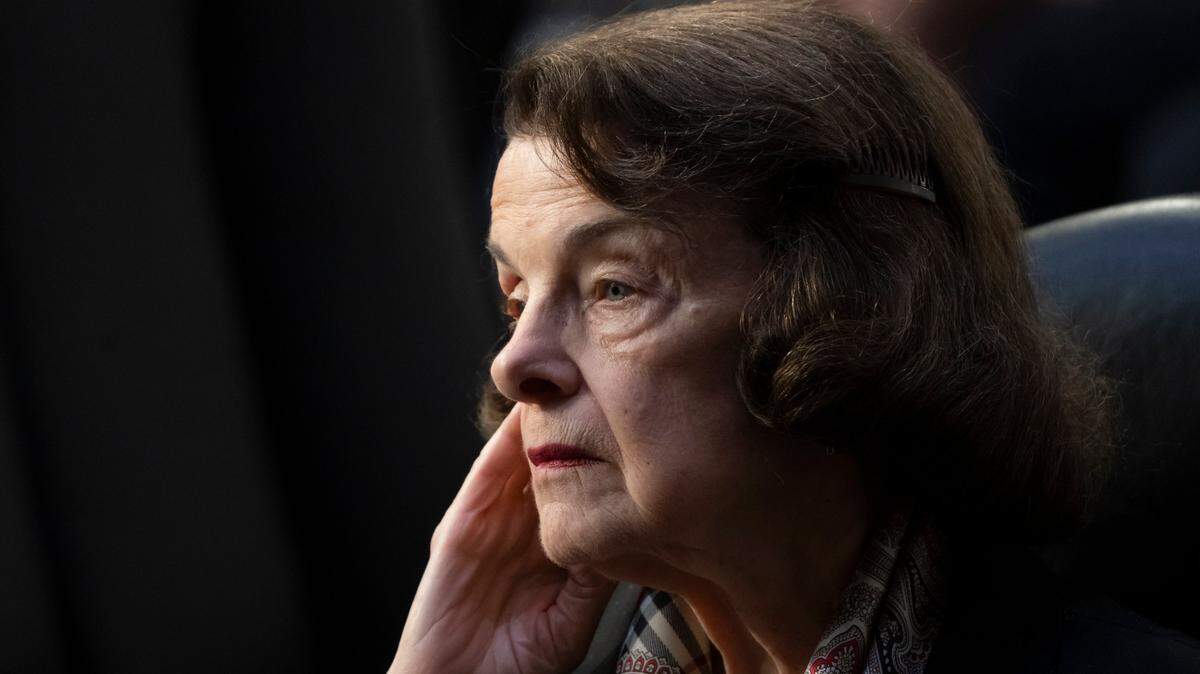
This could have been the line of presidential succession behind Vice President Kamala Harris when the new Congress convenes in January: Nancy Pelosi, 82, and Dianne Feinstein, 89.
Having two octogenerians (and three Californians) that close to the Oval Office didn’t happen. The list to start 2023 will probably go like this: Vice President Kamala Harris, 58, a former California attorney general and U.S. senator, likely House Speaker Kevin McCarthy, 57, a California Republican, and Senate President Pro Tem Patty Murray of Washington, 72.
The narrow escape from a succession line of octogenarians renews longstanding concerns about succession, and it’s not only about age. Suppose McCarthy, a caustic critic of all things Biden, becomes president? Is that what the American people elected in 2020?
Debate about presidential succession is as old as the nation itself, and there’s no letup.
“The terms of succession also create the very instability they’re meant to prohibit,” said Matthew Glassman, senior fellow in government affairs at Georgetown University.
But as Glassman and other experts say, changing the system is not only difficult, but lacks the urgency of other matters confronting Congress and the White House.
Feinstein third in line?
The latest concerns emerged this month when Democrats secured control of the 2023 Senate. Feinstein, a California Democrat, has exhibited some memory problems, raising questions about her fitness to serve.
Asked by The Bee shortly after the Senate was decided whether she wanted the job, she said three times she was thinking about it. A few weeks earlier, she had said she was not interested.
Since then, Murray was nominated by Senate Majority Leader Chuck Schumer, D-New York, for the job. Senate Democrats plan to meet next week to approve the choice.
But should being Senate president pro tem even be included in the succession line?
Succession controversy
The job traditionally goes to the majority party’s senior member, which will be Feinstein. Senate Pro Tem Strom Thurmond, a South Carolina Republican, held the job when he was 98 in 2001. His successor, West Virginia Democrat Robert Byrd, died in office in 2010 at 92. He was followed by Democrat Daniel Inouye of Hawaii, who was 88 when he also died in office. The current president pro tem, Sen. Patrick Leahy, 82, a Vermont Democrat, is retiring.
The position comes with no real power. Often the president pro tem will open the day’s Senate session and participate in other ceremonial duties.
“There are no strenuous leadership details. Even in the chair it means taking instructions from the parliamentarian. It’s not too tough,” said Steven Smith, professor of political science at Washington University in St. Louis.
The original line of succession had the president pro tem after the vice president, with the Speaker next. In 1886 the two congressional offices lost their places, as the secretary of state was deemed next in line after the vice president. Members of Congress argued they had no executive experience, according to the Senate historian’s office.
The Speaker and president pro tem returned to their places in line in 1947, after the 1945 death of Franklin Roosevelt prompted a fresh look at the situation. But this time, the Speaker was placed ahead of the president pro tem.
President Harry S Truman maintained that the Speaker was the elected leader of the elected representatives. House members elect the Speaker.
“Since one could make the same argument for the president pro tempore, Truman’s decision may have reflected his strained relations with 78-year-old President Pro Tempore Kenneth McKellar and his warm friendship with 65-year-old House Speaker Sam Rayburn,” a narrative on the Senate website said.
“After all,” the history said, “It was in Rayburn’s hideaway office, where he had gone for a late afternoon glass of bourbon, that Truman first learned of his own elevation to the presidency.”
Another change in succession made it harder for the legislative branch to assume the presidency. Prior to adoption of the 25th amendment in 1967, the vice president’s office remained vacant if the president died before his term was over.
The amendment, adopted after President Dwight D. Eisenhower’s 1955 heart attack and the 1963 assassination of President John F. Kennedy, required a president to nominate a vice president if the office became vacant. That nominee needed a majority of both chambers of Congress to be confirmed.
Two vice presidents have been appointed. Gerald Ford, then House Republican leader, was nominated six weeks after Spiro Agnew resigned in 1973, and was confirmed and sworn in 19 days later. Ford became president in August, 1974, and nominated former New York Gov. Nelson Rockefeller for the job. Despite controversy about some tax deductions, and skepticism from conservatives that he was too moderate, he was confirmed.
Biden, who turned 80 last week, is the first octogenarian ever to hold the office. While he’s reported to be in excellent health, concerns about presidential succession are hardly new, and only surface during extraordinary events..
Smith noted that the Sept. 11, 2001, terrorist attacks triggered what he called “intense” interest in succession. So did the Jan. 6, 2021, insurrection at the U.S. Capitol.
But the prospect of Feinstein’s inclusion in the succession sparked no serious talk about changing the system. Asked if there was any concern, said Sen. Chris Coons, D-Delaware, said “not that I’m aware of.”
Glassman doubted the topic would come up again soon; it’s too ghoulish to talk about.
”You would have to have both the president and vice president under cloud for this to come up again,” he predicted.
This story was originally published November 28, 2022 at 3:03 PM with the headline "Should the presidential line of succession include 80-year-olds?."
.jpg)