Rand Paul worked with Kamala Harris in the Senate. Could he if she’s president?
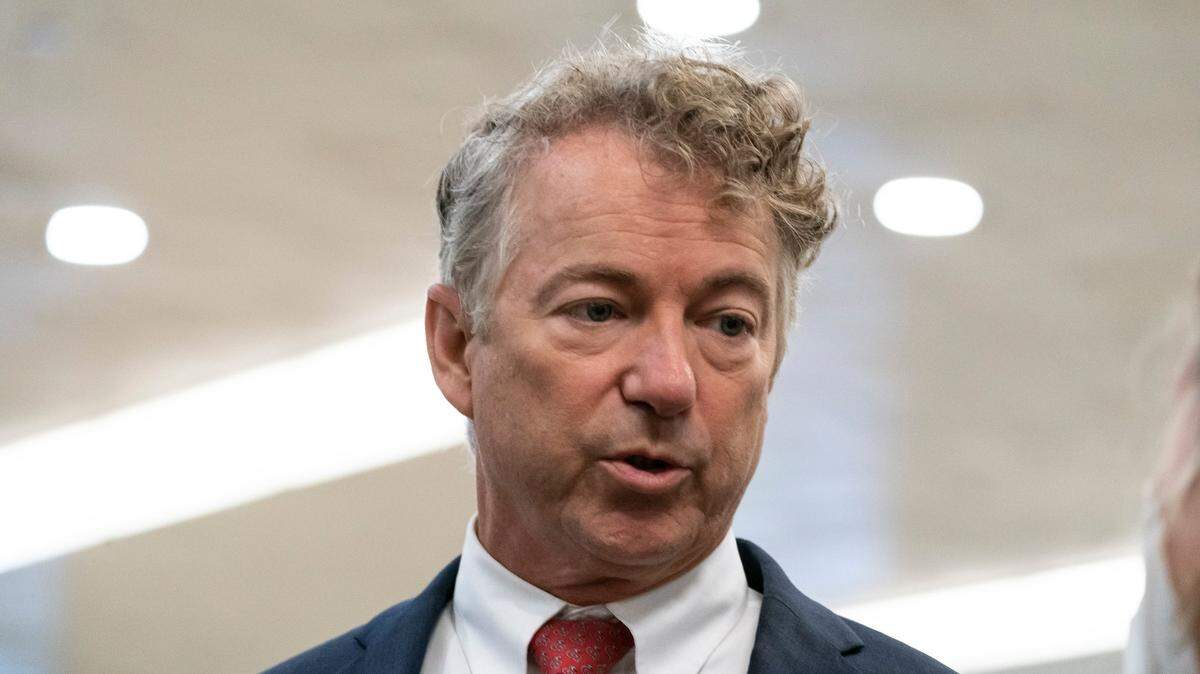
It was the first summer of the new Trump administration and an ambitious Democratic freshman senator was looking for the imprimatur of bipartisanship on an issue central to her biography.
She eyed a Republican senator who had a penchant for breaking with his party’s orthodoxy and a strong libertarian streak rooted in individual rights.
And so a brief but substantive political marriage between Kamala Harris and Rand Paul was born in the summer of 2017.
The labor that tied them together: criminal justice reform.
“I approached Rand Paul early during the course of my time in the Senate about the need to reform America’s money bail system. It is interesting to some, it was predictable to me,” Harris recalled to CNN in an interview at the time. “He said to me, ‘Kamala, Appalachia loves this because there are poor people all over the country who know the injustice of this system.’ So we’ve found common ground.”
Speaking to Jake Tapper in 2017, Paul was notably effusive about the new senator from California who would become vice president of the United States just four years later.
“What’s interesting about it is, we seem to be at each other’s throats and sometimes I think the media overdoes how much we’re at each other’s throats,” the Kentucky Republican said. “We’re good friends, Kamala’s new to Washington, but we immediately started talking about criminal justice reform.”
Now, in the heat of a presidential race, Paul ascribes more sinister motives to the Democratic nominee’s overture.
“I think she was trying to change her reputation, since in California she was mostly famous for locking up young Black men for marijuana — rather than being for criminal justice reform,” Paul said in a statement to the Herald-Leader.
Nonetheless, the unlikely tandem wrote legislation incentivizing states to reform their cash bail systems, which keep defendants behind bars unless they can pony up the money for their release.
The Pretrial Integrity and Safety Act sought to prioritize “individualized, pretrial assessments” that would permit accused individuals who do not pose a flight risk or further criminal conduct to be released from custody.
More than half of the U.S. jail population consists of detainees awaiting trial who have not been convicted of a crime.
Supporters said the Harris-Paul legislation would reverse the mass incarceration problem that has left prisons overpopulated. Paul predicted there might even be 60 Senate votes for the measure.
But the bill never even received a hearing, let alone a Senate vote — a casualty of timing, priorities and a lack of support from Senate leadership,
Still, when Harris was running for president in 2019, she named Paul in a nationally televised Democratic primary debate, citing their work together as evidence of her bipartisan bonafides.
“He and I agree on almost nothing but we agree on that. And after we joined forces he said to me, ‘Kamala you know, Appalachia loves this.’ And it really made the point that the vast majority of us have so much more in common than what separates us,” Harris said.
When she was tapped as Joe Biden’s running mate, she mentioned Paul to celebrity host Andy Cohen as the Republican she had the strongest relationship with.
The Breach
But the Harris-Paul relationship was considerably damaged in 2020, when they engaged in a fierce debate over the Emmett Till Anti-Lynching Act.
Paul objected to the legislation that would make the brutal act of lynching a federal hate crime because he believed specific language would have led to more minor crimes being characterized as lynching, a heinous act of violence that originated in the Jim Crow South.
“This bill would cheapen the meaning of lynching by defining it so broadly as to include a minor bruise or abrasion,” Paul said on the Senate floor in early June 2020. “Our national history of racial terrorism demands more seriousness of us than that.”
Harris replied that it was “ridiculous” to define lynching in the most literal sense.
“It should not require a maiming or torture for us to recognize a lynching when we see it and recognize it by federal law and call it what it is, which is that it is a crime that should be punishable with accountability and consequence,” she said.
In 2022, Paul signed onto a revised version of the bill that was ultimately signed into law by President Biden.
But Paul is still sour about how Harris characterized his efforts to narrow the legislation’s scope.
“I was really unhappy with the way she treated that issue, and if she had wanted to be a part of the solution, she could have supported making the necessary changes I proposed to strengthen the bill and ensure lynching is treated like the horrendous crime it truly is. I cosponsored and voted for the new version of the bill, which passed,” Paul said. “During her career up here, it wasn’t always easy to work with her.”
Last week, Paul sent a fundraising email with the headline: “proof Kamala abused her power.”
An accompanying video clip shows Harris explaining her power as a prosecutor and how she could “charge someone with a misdemeanor — the lowest level offense possible … with a swipe of my pen.”
The Harris campaign did not respond to questions regarding Paul’s criticisms.
The Future
Harris hasn’t prioritized criminal justice as a top tier campaign issue. Her campaign website briefly mentions work on “critical causes like criminal justice reform,” alongside “climate action, infrastructure investments and election security.”
Some observers have pointed to Harris’ selection of Tim Walz — and his advocacy for reforms in Minnesota — as evidence it would be a priority in the new Democratic administration.
But it’s too early to foresee how criminal justice — or any other issue — fits into the future political matrix 80 days before an election.
“Their past work is valuable to emphasize, but what happens in 2025 and beyond will depend a lot of the perceived politics after the 2024 vote,” said Douglas Berman, an expert on criminal justice and sentencing at Ohio State University.
It hasn’t been lost on Trump aides that Paul has yet to endorse the president.
If Trump was to win another term, he certainly wouldn’t forget that the junior Kentucky senator sat on the sidelines.
That leaves the argument that Paul could wield more leverage with a President Harris, who would be incentivized to court GOP allies in a closely divided Senate.
“Sen. Paul and a few other GOP folks have always shown interest in working across the aisle for certain forms of criminal justice reform,” Berman said. “But the devil is always in the details, and getting from good ideas to actual laws is often the enduring challenge.”
This story was originally published August 19, 2024 at 1:00 AM.