
Sen. Kyrsten Sinema just switched parties. What other politicians have done the same?
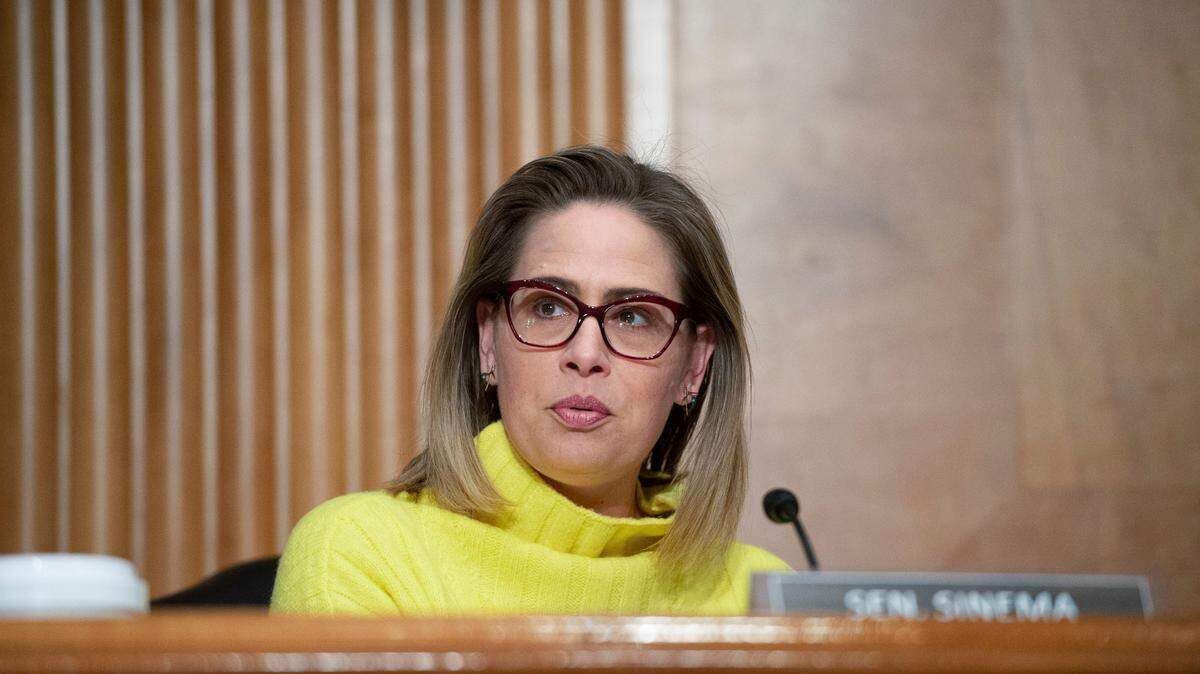
Arizona Senator Kyrsten Sinema, a lawmaker who’s made a name for herself as a moderate, announced she is leaving the Democratic party, an uncommon move for prominent politicians.
“I have joined the growing numbers of Arizonans who reject party politics by declaring my independence from the broken partisan system in Washington and formally registering as an Arizona Independent,” the junior senator tweeted on Friday, Dec. 9.
Sinema, a marathon runner and former member of the Green Party who was first elected to the senate in 2018, elaborated on her decision in an op-ed in the Arizona Republic. She wrote, “Pressures in both parties pull leaders to the edges, allowing the loudest, most extreme voices to determine their respective parties’ priorities and expecting the rest of us to fall in line.”
“My approach is rare in Washington and has upset partisans in both parties,” she added.
Cutting ties with one of the two major political parties is indeed a rare thing for high-ranking elected officials. Just as partisan affiliation is “sticky” for the American electorate, according to Pew Research, it appears similarly longlasting for leaders themselves.
The dominance of the two-party system in American politics is likely a major factor for politicians considering leaving their party. Third-party candidates perform poorly in federal elections, and they particularly flounder in the Senate, according to UVA’s Center for Politics — Bernie Sanders and Angus King were the only two third-party senators in recent years. Third-party presidential candidates, too, perform abysmally. The last American president not affiliated with the Republican or Democratic parties was Millard Fillmore, who was elected in 1850.
And in a nation where political flip-flopping, or changing your stance on a given topic, is not often treated kindly by the electorate, politicians are likely wary of switching partisan affiliation, signifying a full-blown flip-flop.
Still, several notable state and federal officials have opted to switch parties in recent times. Some swapped Republican for Democrat, or vice versa, while others opt for a third party. Evolving personal beliefs and careful considerations of political fortunes likely both contributed to these decisions, according to media reports.
Who are some of the politicians who changed their parties?
It’s been over a decade since the last sitting senator changed their party affiliation. Pennsylvania’s Arlen Specter was first elected as a Republican in 1980, but he became a Democrat in 2009.
“This is a painful decision. I know I’m disappointing many of my colleagues,” he said at a news conference, according to CNN. “I have found myself increasingly at odds with the Republican philosophy.”
Pundits believed Specter was facing an uphill battle for the GOP senate nomination in his upcoming election, according to the outlet. President Obama later phoned to offer him his support, but Specter ultimately didn’t gain the Democratic Party’s nomination for his 2010 re-election.
In 2006, three-term Democratic Connecticut Senator Joe Lieberman lost the Democratic primary and opted to run as an independent candidate in the election, in which he emerged triumphant. He served his last term as an Independent Democrat.
Later in 2007, he chose to endorse Republican Sen. John McCain for president, which “backfired, earning him criticisms of betrayal from many in the Democratic Party,” according to Jewish Insider.
Outside of the Senate, Rick Perry, the former governor of Texas and energy secretary under President Donald Trump, switched from Democrat to Republican in the 80s, according to the Christian Science Monitor. Republican Senator Phil Gramm convinced Perry to join the GOP, according to the Texas Tribune.
Several presidents have also elected to change parties, though their decisions were made years before they ran for office. Donald Trump ditched the Republican Party in 2012, according to ABC, switching to “unaffiliated,” before his eventual return to the GOP when he ran for president. And before winning a landslide victory in 1980 as the Republican candidate, Ronald Reagan, a former Hollywood star, was a Democrat.
These historical examples help demonstrate that changes in party affiliation among notable politicians aren’t unheard of, but they are uncommon and don’t always turn out well for the candidates.
However, support for a third-party in the U.S. is at its highest level in decades, according to Gallup, meaning partisan affiliation among leaders could become less “sticky.”