Paul’s bid to strike down Covid mandates fails as government avoids shutdown
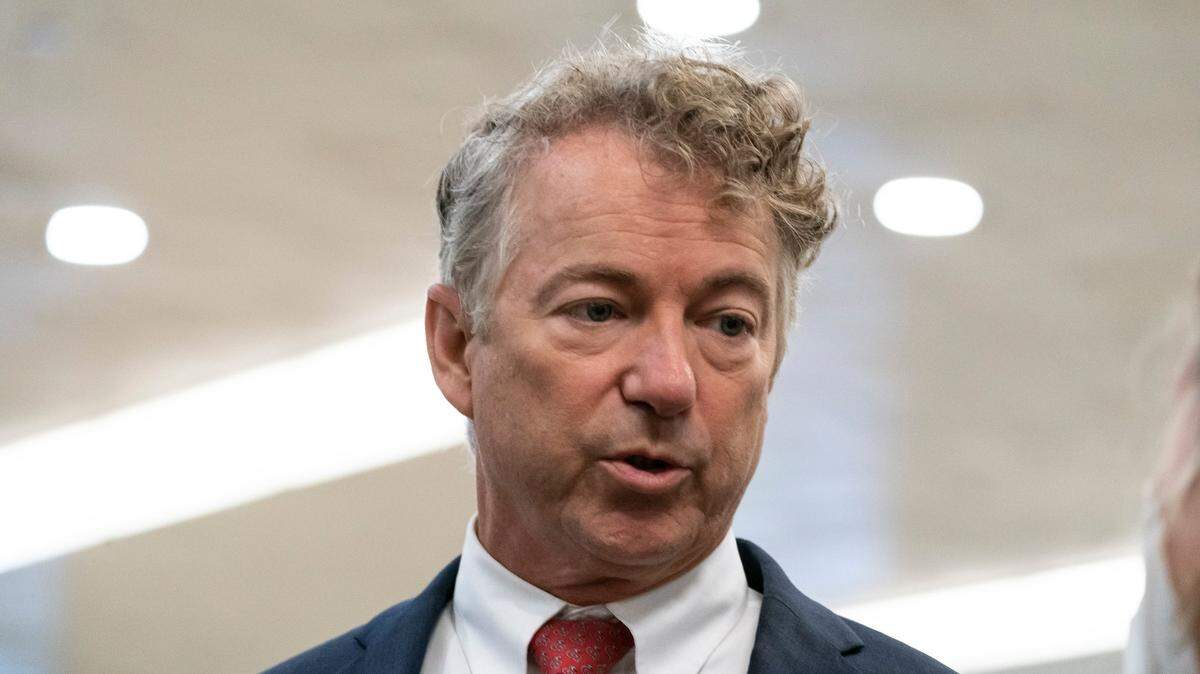
A move by Rand Paul and a group of conservative senators to defund the federal enforcement of coronavirus vaccine mandates failed Thursday evening, as Democrats defeated it on their way to passing legislation that temporarily funds the government.
While the Supreme Court struck down a Biden administration order that private employees at large companies be vaccinated, these senators noted that millions of healthcare workers, military personnel and federal employees and contractors could still be subject to the requirement.
“These Covid-19 vaccine mandates amount to a serious abuse of both federal power and executive authority,” wrote Paul and five other GOP senators in a letter to their colleagues. “They also further strain the economic and social pressures our society currently faces.”
The amendment, which was taken up as part of the continuing resolution to fund the government for three weeks, failed, 47-46 in a partisan vote with a few members absent. Senate GOP Leader Mitch McConnell joined Paul in voting in favor of quashing the mandates. Only a simple majority was required for passage.
“Democrats’ open hostility to members of our military, small businesses, and federal employees during this pandemic will not soon be forgotten,” blasted a statement from the NRSC, the campaign arm for Senate Republicans, following the vote.
In an interview prior to Thursday’s votes, Paul told McClatchy he expected the amendment to fail but said that the tide has turned against widespread mandates two years into the pandemic.
“I do think the dam has broken on this, people pushing back. And it’s not just sort of a right-left thing anymore,” he said.
Still, Paul lamented the U.S. has become more compulsory on vaccines than even many European countries, who have stopped short on mandates.
“It is disappointing. We prided ourselves as Americans as being the independent country, the one that prized not being told what to do by the government, And now Europe, which was considered to be much more a Nanny state sort of society, they’re pushing back,” he said.
While Austria became the first European country to make Covid vaccines mandatory for all adults, other countries have taken more measured steps. The U.K., for instance, is making vaccination mandatory for health and social workers only by April 1. But Sweden has no plans for any mandates and Denmark’s vaccination mandate to enter many businesses expired on Dec. 31 of last year.
Both Paul and McConnell also supported a second amendment, brought to the floor by Sen. Ted Cruz of Texas, to cut any funding for institutions that imposed vaccination mandates on children.
That amendment was defeated by a slightly wider margin, 49-44, with Democrats arguing it should be left up to localities and school boards to determine their own vaccination policies.
Rep. Thomas Massie was a part of a group of conservatives in the House seeking ways to end vaccine mandates, noting that a “few principled senators have pledged to hold up the bill” until they received votes on amendments.
But the delay was short-lived.
Knowing he had the votes to defeat them, Senate Majority Leader Chuck Schumer permitted the package of amendments to go forward on Thursday evening, before the final vote on the continuing resolution to avoid a government shutdown.
McConnell showed no signs of worry about a government shutdown throughout the week, describing the amendment process as a “typical…exercise.”
“We’ll pass the CR and the government won’t shut down,” he told reporters earlier Thursday.
The final funding measure attracted 65 votes. It was the third short-term spending measure Congress has passed in five months, setting up another vote in the coming weeks before funding runs dry again on March 11.
On the vote to fund the government, McConnell and Paul split, with the leader in favor and the junior senator against.