Republican-backed Texas election bill heads to Governor Greg Abbott’s desk
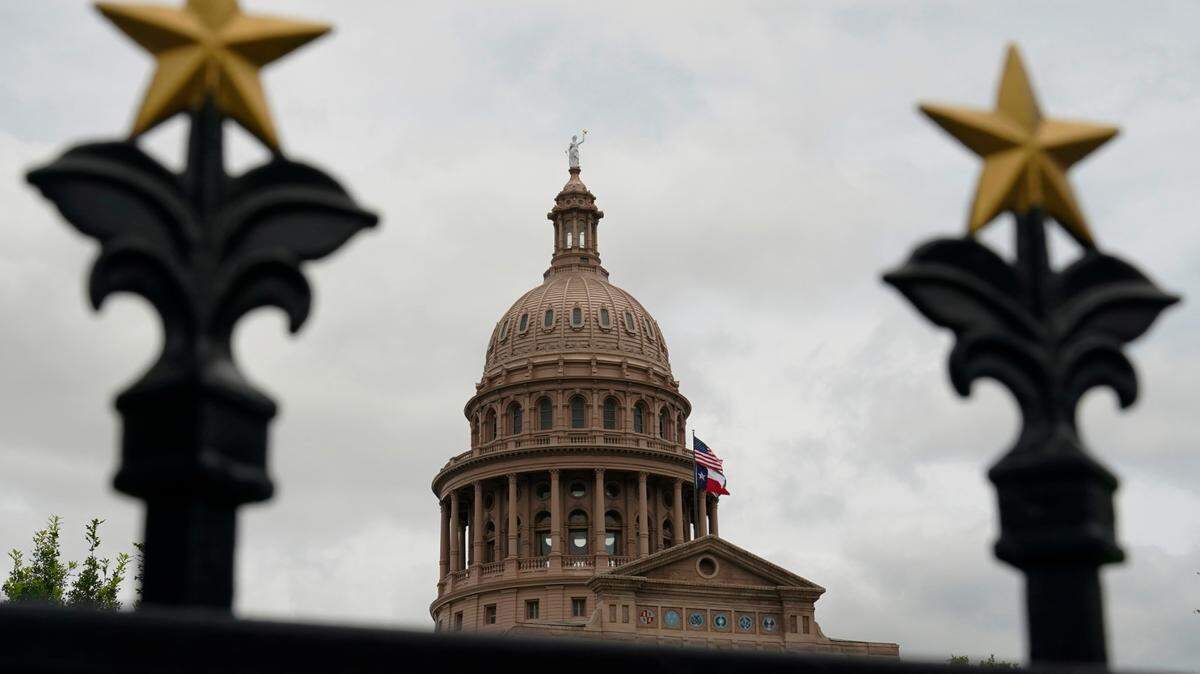
Three busted quorums and two special sessions later, a Republican-backed election bill is headed to Texas Gov. Greg Abbott’s desk.
Senate Bill 1 would prohibit drive-thru and 24-hour voting, add protections for partisan poll watchers and change laws related to voting by mail. Supporters have said the bill is needed to create uniformity in elections and reduce the likelihood of fraud, but opponents say it will disenfranchise voters.
To stop the legislation, House Democrats broke quorum during the regular legislative session in May and again during the July special session. When lawmakers returned for the second special session in August, there again weren’t enough Democrats present to conduct business on the House floor or in committee. But as time passed, more lawmakers returned until a quorum was met.
“How much fraud is OK? None,” said Rep. Bryan Hughes, the bill’s author and a Mineola Republican. “How much suppression is OK? None. That’s why Senate Bill 1 makes it easier to vote and hard to cheat.”
After the House made changes to the bill last week, it was sent to a conference committee — a group of lawmakers from the House and Senate tasked with working out differences between the two versions. The bill remained almost identical to the House’s version, but an amendment addressing cases like that of a Tarrant County woman convicted of illegally casting her ballot was removed.
Both chambers on Tuesday voted on the compromise version, which was approved on an 80-41 vote in the House and an 18-13 vote in the Senate.
Lawmakers have until Sunday to wrap up their business for the special session.
Gov. Greg Abbott says he plans to sign election bill
Minutes after the bill passed out of the Senate, Abbott indicated he plans to sign the legislation, which he said will “solidify trust and confidence in the outcome of our elections.’
“I look forward to signing Senate Bill 1 into law, ensuring election integrity in Texas,” Abbott said in a statement.
Democrats pushed back against the bill in its final floor debates Tuesday. State Sen. Cesar Blanco, D-El Paso, pointed out that there’s no evidence of widespread voter fraud.
“I think that we do have free and secure elections,” he said. “Our own Secretary of State has indicated that.”
Sen. Beverly Powell, D-Burleson, said she wishes an impact study had been conducted for the legislation.
“Without the impact study, I am gravely concerned about the voting rights of our minority voters, our senior citizens, the disabled population in Texas and of our first time new voters,” she said.
Rep. Garnet Coleman, D-Houston said the version headed to Abbott’s desk has language that makes it a better bill, but it has “major flaws that will create problems down the road.” He hopes that if problems arise, lawmakers will fix them during the next regular session.
“Because the worst thing we could ever do is prevent someone from ... exercising their constitutional right to vote,” he said.
One House change, offered by Rep. Stephanie Klick, R-Fort Worth, creates a required training program for partisan poll watchers. Hughes also said the bill provides an opportunity to correct mail-in ballots if there’s a mistake.
State Rep. Matt Krause, R-Fort Worth said the bill will make voting more uniform, accessible and secure.
“I’m glad that we finally got Senate Bill 1 across the finish line,” Krause said.
Among the new voting rules:
▪ Drive-thru voting and 24-hour voting are banned. Both were used in Harris County during the COVID pandemic to increase poll access.
▪ Polls can’t operate before 6 a.m. or after 10 p.m. on weekdays of early voting and generally have to be open for at least nine hours. In counties with 55,000 people or more, polls must be open for at least 12 hours a day in the last week of early voting. That threshold is set at 100,000 under current law. On the last Sunday of early voting, polls must be open at least six hours, compared to five under current law, but specific polls can only be open between 9 a.m. and 10 p.m.
▪ The bill includes protections for partisan poll watchers. Election officers who intentionally or knowingly refuse to accept a watcher for service face a misdemeanor charge. Critics fear this will empower watchers to intimidate voters. A judge could call law enforcement if there’s a breach of peace or law. Training is also required for watchers.
▪ Public officials are forbidden to send an application to vote by mail to a person who didn’t request one. The bill notes that applications could still be posted online and that officials could still share general information about voting by mail.
▪ A person who assists a voter and isn’t an election worker would have to complete a form explaining their relationship to the person they’re helping and if they have received compensation from a campaign, candidate or political committee. Assistants would also have to take an oath under the penalty of perjury that they’ll limit their help to assistance reading and marking the ballot.
Lawmakers discuss cases like Crystal Mason’s
The case of Crystal Mason, a Tarrant County woman convicted of illegally casting her ballot, was front and center as lawmakers considered the election bill. Mason was sentenced to five years in prison because she cast a provisional ballot while on federally supervised release. Mason said she didn’t know she wasn’t allowed to vote. The case is pending in the Texas Court of Criminal Appeals.
An amendment added by Rep. Briscoe Cain, R-Deer Park, would have protected people who mistakenly vote not realizing they are ineligible. It was stripped from the compromise version of the bill.
“I myself, before I studied this issue, I would not have known whether a person on federal supervised release was eligible to vote, and I’m a lawyer, and I’m a member of the Legislature,” said Rep. John Turner, D-Dallas.
Turner later added that he hopes the House will “continue working to correct the injustice by which an inherently benign act, even a civic act —the act of voting — becomes the basis for the deprivation of a person’s liberties.”
When it was the Senate’s turn to consider the conference committee version of the legislation, Hughes said the House amendment was objectionable because he was alerted it “does more than was intended” and could have unintended consequences. There are provisions in the bill to address concerns about voters who think they’re eligible but aren’t, he said.
The bill states “a person may not be convicted solely upon the fact that the person signed a provisional ballot affidavit ... unless corroborated by other evidence that the person knowingly committed the offense.” It also requires a court to instruct a person convicted of a felony on how the conviction affects their right to vote.
Representatives passed a bipartisan resolution authored by Rep. Dustin Burrows, R-Lubbock, on a 119-4 vote expressing that the House “strongly believes that no Texan should be prosecuted for the offense of illegal voting if the person voted or attempted to vote based on a mistaken, honest belief that the person was in fact eligible to vote.”
An appellate court previously found that Mason not knowing she was “legally ineligible to vote was irrelevant to her prosecution” and that the state only needed to prove “she voted while knowing of the existence of the condition that made her ineligible.” The ACLU has appealed that decision to the Texas Court of Criminal Appeals, the state’s highest criminal appellate court.
Tommy Buser-Clancy, a senior staff attorney at ACLU of Texas, which represents Mason, interpreted the amendment as clarifying what’s already in state law.
“The Crystal Mason amendment would essentially just clarify that ... but it doesn’t change the fact that the law already requires an individual to know that they are not eligible to vote,” Buser-Clancy said.
This story was originally published August 31, 2021 at 6:22 PM with the headline "Republican-backed Texas election bill heads to Governor Greg Abbott’s desk."