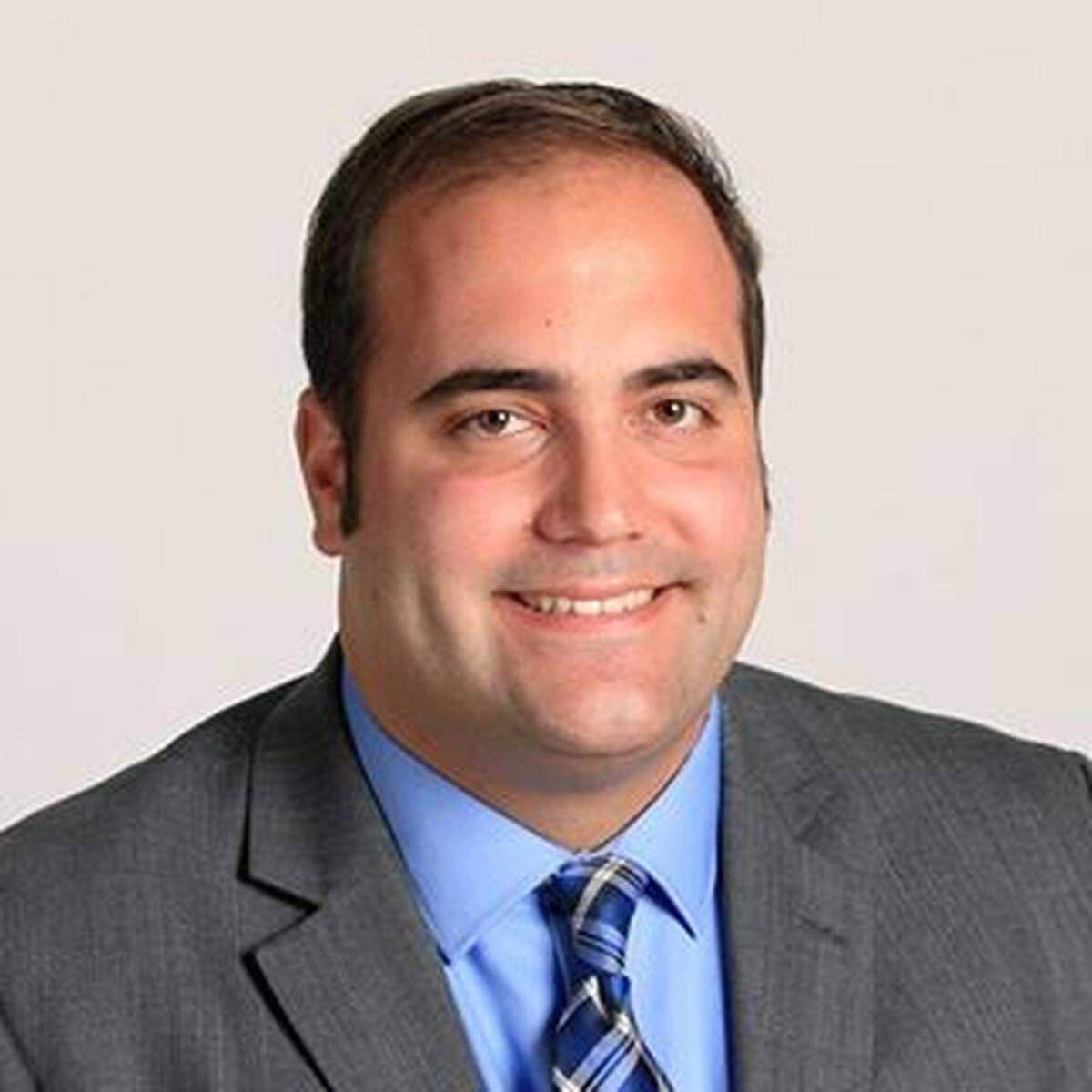
As Greitens floats comeback, here’s a guide to the scandals that led to his resignation
Eric Greitens resigned the Missouri governorship in disgrace three years ago and faded from public view.
But recently the former Navy SEAL has shown interest in running for retiring Republican Sen. Roy Blunt’s seat. If he ultimately becomes a candidate, the cascading scandals that led to his resignation — including allegations of sexual violence and blackmail — will come under new scrutiny.
What were the allegations?
In 2015, Greitens allegedly photographed a woman without her consent, while she was nude, bound and blindfolded in the basement of his St. Louis home, in an attempt to ensure her silence about their extramarital affair.
The allegations first surfaced in January 2018 in a report from KMOV in St. Louis, just hours after the governor delivered his State of the State address. The woman’s ex-husband leaked audio in which she recounted the affair and the alleged blackmail.
The explosive report prompted a felony indictment in St. Louis and a Missouri House investigation.
In April 2018, the Missouri House released a report that contained additional allegations of sexual and physical abuse by Greitens.
In testimony the GOP-led committee deemed credible, the woman, who was Greitens’ hairdresser, alleged that he had forced her to perform oral sex after taking her photo. She also testified that he hit her on three occasions.
Greitens admitted to having an affair with the woman, but he has repeatedly denied the claims of abuse and blackmail.
What charges did Greitens face?
Shortly after the KMOV segment aired, St. Louis Circuit Attorney Kimberly Gardner, the elected prosecutor of St. Louis, launched an investigation.
In February of 2018, Greitens was indicted by a grand jury on a charge of felony invasion of privacy. The indictment stemmed largely from the testimony of the woman, known in court documents as “K.S.”
Investigators at no point recovered the alleged photograph.
In April of 2018, Greitens faced a second felony charge for computer tampering, essentially a form of electronic theft. It followed an investigation by then-Attorney General Josh Hawley, a Republican who was running for the U.S. Senate at the time.
Hawley’s probe focused on The Mission Continues, the veterans charity Greitens founded.
He concluded that there was evidence Greitens likely committed a felony in the process of obtaining a donor list from the charity for his 2016 campaign.
Greitens had attested in a consent decree with the Missouri Ethics Commission that the campaign received the list as an in-kind donation. But the charity denied that it shared the list with the campaign, an action that would threaten its tax-exempt status.
Hawley referred the case to Gardner, who had jurisdiction and charged Greitens days later on the attorney general’s recommendation.
Greitens attacked Hawley, saying he was “better at press conferences than the law.”
How did the blackmail allegations become public?
Rumors about Greitens’ personal life spread through Missouri political circles during his 2016 run for governor. But the allegations did not become public until roughly a year after he took office.
The woman did not publicize the sexual blackmail allegations herself. Her ex-husband surreptitiously recorded her and shared the audio with the media.
The audio became public after his attorney, Al Watkins, received $120,000, which he said came from an anonymous GOP donor to pay for his client’s legal expenses.
Roughly half of the money was delivered by The Missouri Times publisher Scott Faughn, who maintained it was his own and that he was paying for research for a book.
Greitens insinuated that the money was connected to housing interests seeking payback after his decision to zero out a low-income housing tax credit in 2017. He never offered concrete evidence of this claim.
Why was the invasion of privacy charge dropped?
A day before Greitens’ criminal trial was set to begin, Gardner announced she was dropping the case. Her sudden decision came after Greitens’ attorneys sought to call her as a witness.
Greitens’ attorneys alleged that William Tisaby, a former FBI agent that Gardner’s office hired to investigate the governor, committed perjury in a March 2018 deposition when he was questioned by Greitens’ lawyers about his interview with the alleged victim.
The judge agreed to “an offer of proof,” which would have required Gardner to give sworn testimony in a deposition or court hearing.
In order to avoid testifying, Gardner dropped the invasion of privacy charge and asked for the appointment of a special prosecutor.
Jackson County Prosecutor Jean Peters Baker was selected for the role.
Why did Greitens resign?
Greitens faced what was likely to be a drawn out and embarrassing impeachment by the Missouri House, which began proceedings in May 2018. The process might also have unmasked the donors to his dark money group.
He faced increasing pressure from fellow Republicans to step down but resisted for weeks, instead attacking political enemies on both sides of the aisle.
He declared victory on the St. Louis courthouse steps in May 2018 after Gardner dropped the felony invasion of privacy charge.
However, he still faced the unrelated computer tampering case. Later that month, Gardner agreed to drop the case as part of a deal in which the governor agreed to step down.
The deal took effect upon Greitens filing his resignation with the Missouri Secretary of State’s office. Greitens announced his resignation on May 29, 2018, effective June 1 of that year.
“It’s clear that for the forces that oppose us there is no end in sight. I cannot allow those forces to continue to cause pain and difficulty for the people that I love,” Greitens said.
His legal team agreed to release her office of civil liability for the prosecutions. The agreement did not require him to admit guilt in either case.
Another inducement for Greitens’ resignation was taking shape in a Cole County courtroom. Hours before he announced his resignation, a judge ordered A New Missouri, Inc., Greitens’ dark money nonprofit, to comply with a subpoena from the Missouri House for communications and documents showing potential illegal coordination between the group and Greitens’ campaign committee.
Following the resignation, the group’s attorney argued that the House subpoena could not be enforced because Greitens was no longer in office.
The Missouri House issued a scathing memo comparing A New Missouri, Inc., to a criminal enterprise, but dropped its efforts to obtain the documents in June 2018.
Why didn’t the special prosecutor bring charges?
Gardner’s agreement with Greitens did not preclude Peters Baker from charging Greitens after she had been appointed as special prosecutor.
In June 2018 she announced that there was probable cause for a sexual assault case against Greitens, but not enough evidence to prove the case beyond a reasonable doubt partly because of the passage of time. She declined to file charges.
Absent physical evidence, the case would have rested largely on the testimony of the alleged victim. Peters Baker noted that the woman had given consistent answers to investigators, grand jurors, lawyers and lawmakers throughout the multiple investigations.
What was the aftermath?
Greitens’ resignation elevated Republican Mike Parson to governor. Greitens’ hinted at a primary run against his former lieutenant governor, but did not file for election. Parson won a full term in 2020.
The scandal that sunk his governorship has has had long-lasting ripple effects in St. Louis.
Greitens’ attorneys filed a perjury complaint against Tisaby, the investigator, shortly after the invasion of privacy case was dropped.
Tisaby was indicted in 2019 on charges of perjury and evidence tampering for allegedly lying during a deposition and concealing notes from Greitens’ attorneys. Tisaby has pleaded not guilty and the case, which is being handled by a special prosecutor, remains pending.
Gardner faced investigation, but was not indicted in the Tisaby case. She won re-election by a landslide in 2020.
Greitens’ allies have argued that the case against Tisaby exculpates the former governor in the invasion of privacy case.
He declared himself “fully exonerated” in 2020 after the Missouri Ethics Commission released a consent decree that said while there were reasonable grounds to believe Greitens’ campaign broke Missouri law it “found no evidence of any wrongdoing on part of Eric Greitens, individually.”
The ethics commission fined Greitens $178,000 for two campaign finance violations for failing to report in-kind donations from a federal PAC and his dark money group. The commission’s investigation focused solely on Greitens’ campaign finances and did not delve into the other allegations.
What’s Greitens been doing since he left office?
After lobbying by then-Vice President Mike Pence’s office, Greitens rejoined the Navy in 2019 as a reservist but was not reinstated to SEAL status. The Navy confirmed this week that as a reservist Greitens would be allowed to run for political office.
In 2020, he helped launch the charity VirusRelief in response to the COVID-19 pandemic. He delivered N-95 masks to police and fire departments around the state during the PPE shortage in the early weeks of the pandemic. But 150 masks sent to the Columbia Fire Department were defective.
Around the same time as the launch of the new charity, Greitens and his wife Sheena Greitens, now an associate professor at the University of Texas, announced plans to divorce.
In recent weeks, he’s been touring conservative media and building speculation about a political comeback.
Even before Blunt’s retirement announcement, Greitens was hinting at his interest in the seat. Now that it’s an open seat race, he’s become more overt.
“Ever since Roy Blunt stepped out, it has really been humbling. We’ve had so much excited, tremendous, fired-up support from people around the state of Missouri. They’re excited about the strong, optimistic, bold campaign,” he told Newsmax last week.
This story was originally published March 18, 2021 at 6:00 AM with the headline "As Greitens floats comeback, here’s a guide to the scandals that led to his resignation."