
Migrant teen mother who cut her wrist being deported to Honduras
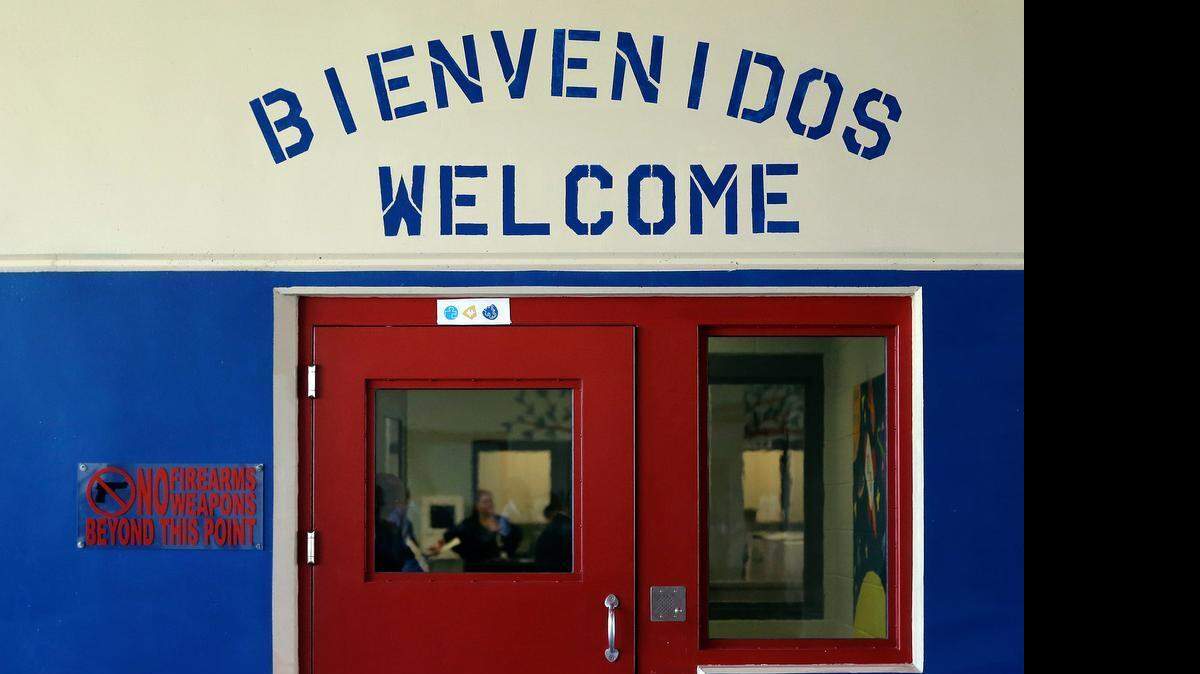
A teenage mother found bleeding from her wrist in the bathroom of a Texas family detention center last week is in the process of being deported.
Lilian Oliva Bardales, 19, who had been held with her 4-year-old son since October, was quietly taken from the Karnes County Residential Center early Monday morning after being kept four days under medical observation without being taken to a hospital or allowed to meet with an attorney, her lawyer said Monday.
U.S. Immigration and Customs Enforcement officials countered that Oliva was able to, and did, access her legal counsel on Friday afternoon, but they said they couldn’t discuss the nature of the meeting because of privacy reasons.
ICE officials also allowed Honduran officials to meet with Oliva and request travel documents so that she could be deported, lawyers said.
“ICE prevented us from having access to her under the guise that she’s under medical observation,” said one of her San Antonio-based attorneys, Javier Maldonado. “And then an hour or two before the plane departs she is given a medical clearance and put on the plane.”
It’s only the latest incident that’s stoked turmoil at the Karnes County Residential Center, where dozens of migrant mothers and children are locked up as they await court hearings that will determine their fate.
Earlier this year, dozens of the women at the Karnes facility launched a hunger strike to protest conditions. Last week, ICE officials were forced to release five pregnant women amid scrutiny of their detention and health care.
Nina Pruneda, an ICE spokeswoman, said Monday that Oliva remains in ICE custody, but she could not confirm dates or times of removals for security reasons. Oliva’s lawyers said they confirmed with ICE that she had been removed from the facility and was in the process of being deported back to Honduras.
The deportation came just days after McClatchy wrote about the detention of pregnant mothers, about Oliva’s self-injury and about her pleading suicide note, written in Spanish, describing her heartbreak at being locked up with her son for eight months. On Sunday, according to another detainee, phones were cut off in the facility so that women couldn’t contact outsiders.
The Obama administration revived the controversial practice of detaining mothers and children last year in response to the tens of thousands of mothers and children who flooded the U.S. border fleeing violence and poverty in Honduras, El Salvador and Guatemala.
The administration decided it needed to send a strong message back to Central America that even mothers and children, if they got to the United States, wouldn’t necessarily be able to stay. ICE now operates three family detention centers, in Karnes City and Dilley, Texas, and Berks County, Pa.
Oliva was sent to Karnes under a mandatory detention order because of a previous attempt to enter the country illegally. She was deported in May 2014. She tried again and was caught in October. She’s now considered a flight risk if she were to be released with only a notice to appear for her next court hearing.
She told an asylum officer that she fled Honduras because she was the victim of domestic violence from an ex-partner who had been beating her since she was 13. She had also been raped by three other men that Honduran officials failed to prosecute, she said. But, despite repeated attempts, Oliva failed to convince a judge that she should be allowed to stay in the United States. She lost her latest appeal last month. Her lawyer had not yet filed another appeal.
On Wednesday, Oliva was found locked in a facility bathroom after allegedly cutting her own wrist. She left behind a note charging officials who held her with treating her “worse than an animal.”
McClatchy wrote stories about Oliva’s suicide attempt and about the letter she left behind, in which she claimed life at the detention center was “killing me little by little.”
“You never wanted to give me my freedom I do this because I would rather be dead than seeing my son fail along with me,” she wrote.
Advocates such Mohammad Abdollahi, with the Texas-based Refugee and Immigrant Center for Education and Legal Services, said the Obama administration moved quickly to deport Oliva as media scrutiny increased. If she were to be released, he said, they risked her drawing more negative attention by becoming the face of the problems and injustices of family detention.
“She would have become the Elivra Arellano of family detention. And they had to get rid of her,” he said, referring to the Mexican woman who received widespread attention for taking refuge in a Chicago church before she was deported in 2007.
While the government legally had the right to deport Oliva, Maldonado said her legal options had not been exhausted and they were in the process of appealing her case to a higher court. Maldonado said they couldn’t file the appeal because ICE prevented them from meeting with her and getting the necessary documents that were in her possession.
ICE officials’ account that the injury was minor conflicted with the actions they took, said Maldonado. If the injury was truly minor, he said, then attorneys should have been able to meet with her to determine how they could help her.
When another attorney tried to see Oliva on Friday, that attorney, Fatima Menendez, was told Oliva couldn’t see anyone because of the extent of her injuries.
“He definitely said she’s going to be in medical observation essentially for a while because there was so much blood,” Menendez said.
Menendez said that only after she questioned why the Honduran consulate was allowed to see Oliva was she allowed to call Oliva. She was not allowed to see her in person.
Menendez said Oliva cried throughout the 10- to 15-minute conversation. Oliva told her she had no clothes and was dressed in a robe. She said she’d received minimal care and hadn’t seen her son in three days, according to Menendez.
“Please help me,” Menendez said Oliva told her.
It’s not only lawyers and advocates who are concerned. The Obama administration’s policies have drawn criticism from his own party. More than 130 House Democrats demanded the facilities be shut down, charging that the Department of Homeland Security “has not fully grasped the serious harm being inflicted upon mothers and children.”
Rep. Zoe Lofgren, D-Calif., who has helped lead the call for closure of the facilities, said the administration’s current policy of detaining “vulnerable women and children in prison” has serious consequences on their health and well being.
“When someone attempts to take their own life it’s a reasonable indication that their case for asylum is meritorious,” she said.
In April, a federal judge in California concluded that the practice of family detention violates an 18-year-old agreement regarding the detention of migrant children.
Two detained mothers sent urgent emails to lawyers Monday morning saying that officials had turned off the phones at the Karnes facility, preventing them from using a legal hotline to contact lawyers. One mother said Oliva was removed at 5 a.m. with two other detainees.
“Since yesterday, the phones have been cut off and we haven’t been able to call anyone to report what’s going on,” wrote one detained mother in an email obtained by McClatchy. “I’m asking you to check into what’s happening because things are happening here that shouldn’t be happening.”
Email: fordonez@mcclatchydc.com; Twitter: @francoordonez.
This story was originally published June 8, 2015 at 5:57 PM with the headline "Migrant teen mother who cut her wrist being deported to Honduras."