Sen. Richard Burr stepping down as chair of intelligence committee amid FBI investigation
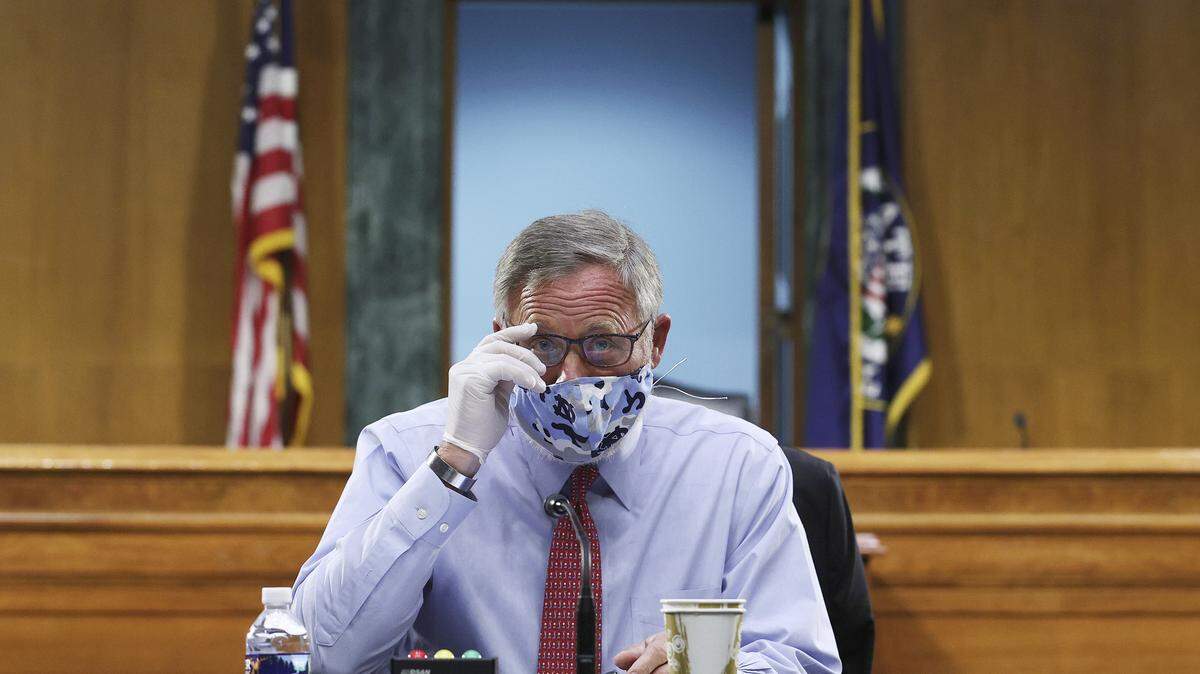
U.S. Sen. Richard Burr said Thursday he is temporarily stepping down from his post as chairman of the Senate Intelligence Committee amid an ongoing federal probe of stock sales he made shortly before the coronavirus pandemic hit the country.
“It’s a distraction to a committee that’s extremely important to the safety and security of the American people and a distraction to the members of that committee being asked questions about me, so I tried to eliminate that,” Burr told McClatchy on Thursday outside the Senate.
The announcement about the North Carolina Republican came the day after the FBI seized Burr’s cell phone in an investigation of the sales earlier this year. Asked about what happened with the FBI on Wednesday night, Burr did not give specifics.
“You have to go with what they’ve said publicly. I don’t talk about the investigation. I’m going to let it play out,” Burr said.
The FBI declined comment.
Burr said he plans to serve out the remainder of his term in the Senate. Burr, 64, is in his third term as a U.S. senator after serving five terms in the U.S. House. He has said repeatedly that he would not run for a fourth term in 2022.
Senate Majority Leader Mitch McConnell, a Kentucky Republican, announced Burr’s decision in a statement released Thursday around noon.
“Senator Burr contacted me this morning to inform me of his decision to step aside as Chairman of the Intelligence Committee during the pendency of the investigation,” McConnell said. “We agreed that this decision would be in the best interests of the committee and will be effective at the end of the day tomorrow.”
Investigation into stock sales
Burr, a member of the Senate’s health committee, sold up to $1.7 million in stocks in early and mid-February, according to a Senate disclosure that he filed. It came after he had received briefings about the status of the coronavirus, which had not yet made a large impact in the United States.
Burr has been one of the Senate’s leaders in planning for pandemics and global health outbreaks, dating back more than two decades.
On Feb. 7, Burr co-wrote a column reassuring Americans that the the country was “better prepared than ever before to face emerging public health threats.” Later that month, he warned attendees at a private luncheon that the dangerous virus was “akin to the 1918 pandemic,” according to a recording first reported by NPR.
Soon thereafter, ProPublica and the Center for Responsive Politics disclosed the stock sales. Burr said in a statement that he “relied solely on public news reports to guide my decision” about the stock sales. He asked the Senate Ethics Committee to investigate.
Federal agents Wednesday night served a search warrant on Burr at his residence in Washington, D.C., The Los Angeles Times reported. Citing a law enforcement official, the paper reported that the Justice Department is “examining Burr’s communications with his broker.”
“I’m not going to comment on the the investigation. You have to ask them,” Burr said Thursday.
Burr is not the only U.S. senator to attract the attention of federal authorities because of stock sales around the outbreak.
Sen. Dianne Feinstein, a California Democrat, “was asked some basic questions by law enforcement about her husband’s stock transactions” last month and “there have been no follow up actions,” according to her spokesman.
Reaction to the resignation
North Carolina Sen. Thom Tillis, a Republican, has said that Burr owes North Carolinians an explanation for the stock sales. He did not know about Burr’s decision to relinquish his chairmanship until asked by a reporter on Capitol Hill.
“I respect his decision to do that. I felt like it was a decision between him and (McConnell),” Tillis said.
When asked if Burr’s explanation to the state’s residents needs to come publicly or quickly, Tillis said there was “an active investigation” underway.
“We just got to see where the facts lead and presume his innocence until otherwise proven,” he said.
Wayne Goodwin, chairman of the N.C. Democratic Party, called for Burr to resign from the Senate. “Senator Burr has violated the public trust and put his stock portfolio before his constituents,” Goodwin said in a prepared statement.
Burr’s committee investigated Russian interference in the 2016 election and allegations of collusion between Russians and the campaign of now-President Donald Trump. The committee has released four volumes of its report. The latest highly redacted volume, released last month, found “no reason to dispute the Intelligence Community’s conclusions,” that Russians interfered in the election with the goal of helping Trump.
Burr has ”done a very good job,” said Sen. Marco Rubio, a Florida Republican and member of the intelligence committee. The committee’s Russia probe “was a well-run process in a politically charged environment.”
The investigation has led to some moments of criticism from Republicans, including Trump. Such as when Burr issued a subpoena for Donald Trump Jr. to testify before the committee in May 2019. Trump Jr. worked out a deal with the committee to testify.
President Donald Trump said Thursday that he had not discussed the Burr probe with anyone at the Justice Department..
“I never discussed it with anybody. That’s too bad,” Trump said.
Insider trading at issue
The 2012 STOCK Act prohibits profiting off “any nonpublic information derived from their positions as Members or congressional employees,” according to a Library of Congress summary. Burr was one of three senators to vote against the bill.
“The law is clear that any American — including a Senator — may participate in the stock market based on public information, as Senator Burr did,” said Alice Fisher, a former U.S. assistant attorney general who is advising Burr, in a statement in late March.
ProPublica reported last week that Gerald Fauth, Burr’s brother-in-law, sold up to $280,000 worth of stock on Feb. 13, the same day as Burr’s stock sales. Fauth is a Trump appointee to the National Mediation Board.
As the situation developed with Burr and other lawmakers, the Securities and Exchange Commission issued a warning in March about insider trading, especially during a pandemic.
“Given these unique circumstances, a greater number of people may have access to material nonpublic information than in less challenging times,” the agency’s enforcement chiefs said in a statement. “Those with such access . . . should be mindful of their obligations to keep this information confidential and to comply with the prohibitions on illegal securities trading.”
North Carolina Attorney General Josh Stein, a Democrat, tweeted that he found Burr’s trades “extremely troubling” and called for a federal investigation.
And Politico reported that a shareholder of Wyndham Hotels, one of the stocks Burr sold, filed suit against him in U.S. District Court for the District of Columbia. The stock closed at $59.10 on Feb. 13, the day Burr and his wife made the sale. Early Thursday it was trading at less than $40.
This story was originally published May 14, 2020 at 12:24 PM with the headline "Sen. Richard Burr stepping down as chair of intelligence committee amid FBI investigation."