
Homeland Security runs out of money next Friday. What could it mean for California?
AI-generated summary reviewed by our newsroom.
- DHS funding lapses after Feb. 13, risking shutdown of TSA and FEMA.
- Democrats demand unmasking, body cams, reviews, and accountability.
- California enacts laws limiting federal enforcement; faces federal lawsuits.
Congress has given itself until next Friday to come up with a spending plan — and major reforms — for the Department of Homeland Security’s immigration operations.
Prospects for any action are dim.
Without a formal budget, much of DHS would shut down after Feb. 13. Most agency functions, notably the Transportation Security Administration and FEMA, which handles disaster relief, would be out of money.
But immigration enforcement would continue without reforms Democrats are aggressively seeking in the aftermath of the fatal shootings of Renee Good and Alex Pretti last month in Minneapolis by federal agents. Immigration enforcement is funded by separate legislation that was approved last year.
“Congress shouldn’t give Trump’s ICE and CBP another dollar until Republicans agree to basic reforms to rein in these out-of-control agencies,” said Sen. Alex Padilla, D-Calif., top Democrat on the Senate border security and immigration subcommittee.
Democrats across the country Thursday were unified in their anger at recent immigration enforcement and issued a lengthy list of demands before they’ll agree to more funding. In the last year, California state lawmakers have approved or introduced bills similar to these proposed reforms, though a federal mandate would have much more authority.
“These are issues the states have raised on their own, but truly, the federal government has more power and authority over their immigration enforcement officers than the states,” said UC Davis Law Professor Kevin Johnson.
Democrats’ demands
Democratic leaders sent a letter to Republican congressional leaders Wednesday with a list of 10 possible reforms.
“None of these roving patrols. You can’t just stop anybody on the street. You can’t just pick them up and not even tell them why they’re picked up, put them in some dark place,” said Senate Minority Leader Chuck Schumer, D-New York.
Democrats want accountability, independent reviews of agents’ performance and an ability to sue. They want agents to be unmasked and easily identifiable, and body cameras should be worn.
And, he said, “the cameras have got to be used in the right way. We can’t just give them cameras.”
Reforms, said Padilla, have to mean “no more masked federal agents, body cameras turned on during all immigration enforcement actions, and basic accountability for rogue ICE and CBP officers. Agents can’t continue acting with reckless disregard for life, safety, and the Constitution.”
He said, “These are not radical demands; they are commonsense asks that are in line with existing rules for state and local law enforcement.”
Republicans and reforms
Many top Republicans scoffed at the Democrats’ demands.
“I see them as radical and extreme. This is about funding the Department of Homeland Security for our nation. Keeping our nation safe,” said Senate Majority Whip John Barrasso, R-Wyoming. “The minority leader might think he has leverage to defund law enforcement. He’s wrong.”
Republicans have balked at the facemask request, arguing that the covers protect agents from doxxing. Homeland Security Secretary Kristi Noem said earlier this week that agents would have body cameras.
GOP leaders are also saying no to Democrats eager to require judicial warrants for searches. Currently, DHS can issue its own warrants.
Forget changing that system, House Speaker Mike Johnson, R-La., told reporters.
“Adding a whole new layer of judicial warrant requirements is an unworkable proposal. And I think the people who are making that suggestion understand that,” he said.
If no budget is approved by next Friday, Johnson said of Democrats, “their pointless obstruction is going to have no effect on border security,” because ICE operations are well-funded.
In the Senate, Majority Leader John Thune, R-S.D., this week also did not discuss details of what he’d accept when he met with reporters. He said that whatever agreement emerges, “I hope it doesn’t devolve into something that makes it harder, not easier to deport and detain dangerous, illegal aliens in this country.”
To win passage of any agreement would require 60 Senate votes. Republicans have 53 seats, and so far nothing close to seven Democrats have signaled they’re eager for a compromise.
Effect on California
In California, immigration advocates and Democrat state lawmakers have supported the push to halt additional DHS funding until new reforms are reached.
“We can’t just keep giving money to a rogue agency that is acting without accountability and that is literally killing people in the streets,” said Joshua Stehlik, policy director for the California Immigrant Policy Center.
The state has borne the brunt of Trump’s mass deportation agenda, with a nation-leading decline in international migration last year and dozens of large-scale operations by federal immigration officials. Over the summer, ICE reported an average of 3,125 monthly arrests across the state.
To combat enforcement practices, state lawmakers passed measures to prohibit officers from wearing masks and limit access to vulnerable locations including schools and hospitals. The Trump administration has sued to stop the unmasking law.
“This is not about Democrats or Republicans,” said Assembly Speaker Robert Rivas, D-Hollister, last week. “It’s not left, it’s not right. This is about our fundamental rights and freedoms. Silence, those who are choosing to say nothing at all, that is a betrayal of our values.”
In recent weeks, state lawmakers have introduced even more measures including requiring a state investigation into any shootings by ICE officers, preventing federal agents from using state resources for their operations and taxing for-profit detention companies.
Kevin Johnson said some of these efforts are more a “statement of opposition,” as opposed to a “real prohibition” given that states generally don’t have authority over federal law enforcement.
“If a Congress decided to pass a federal anti-masking law, then it would unquestionably be legal,” Johnson said.
He noted that the federal Democrats’ demand to stop racial profiling would have a significant effect in California. Last year, the U.S. Supreme Court sided with the Trump administration to lift a temporary restraining order that had barred federal agents from profiling people based on their appearance in Southern California.
“Racial profiling may not evaporate because of the ban on it, but it is a statement that race shouldn’t be considered in law enforcement,” Johnson said.
Will shutdown affect CA agencies?
A long-term DHS shutdown could have some effect on California’s agencies, though it remains unclear how much. The California Governor’s Office of Emergency Services, which coordinates FEMA funding, said a funding lapse would not change the state’s “near-term ability” to respond to emergencies. A long-term concern would be that some administrative functions may pause, and processing for grants and reimbursements could slow.
“Californians will continue to see firefighters on the line, emergency managers in operations centers, first responders in the field, and federal partners carrying out core life‑safety missions if disaster strikes,” said the office in a written statement.
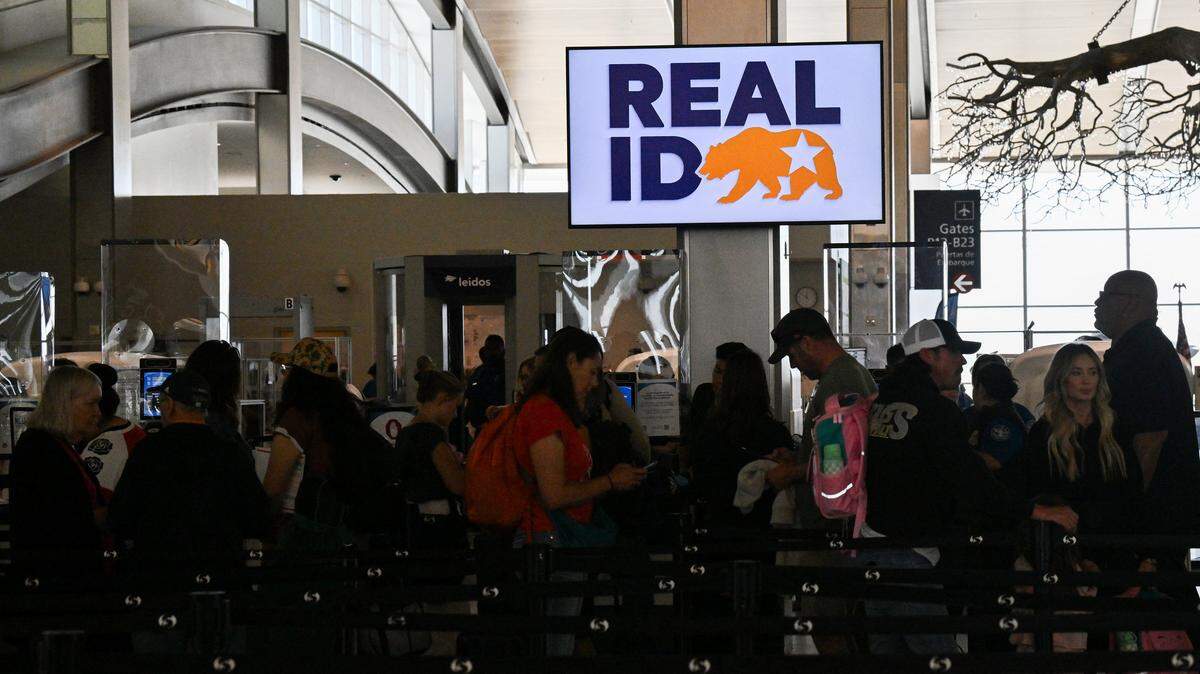
A Sacramento International Airport spokesperson said in a written statement that the airport was not experiencing any operational issues and to contact TSA for more information about its functions.
About 250 TSA employees work at Sacramento International Airport, according to previous reporting from The Sacramento Bee. During last year’s shutdown, some TSA agents and air traffic controllers protested outside the airport during an ongoing stretch of unpaid work.
This story was originally published February 5, 2026 at 4:32 PM with the headline "Homeland Security runs out of money next Friday. What could it mean for California?."

.jpg)