
Partial shutdown begins as Senate passes budget but House delays
AI-generated summary reviewed by our newsroom.
- Congress deadlocks over DHS funding reforms, pushing a partial shutdown risk.
- Partial shutdown would furlough nonessential staff while core services persist.
- California monitors local impacts as leaders negotiate to avert short-term lapse.
Social Security payments will continue. So will mail service. The military will remain on duty. The Veterans Affairs, Agriculture and Justice departments, among others, will stay open.
That’s the good news as part of the government shuts down at 12:01 a.m. Saturday, a scenario made possible as Senate Democrats approved a budget Friday night, but the House still needs to concur. And the House is not back in Washington until Monday.
The Senate vote Thursday was 71 to 29. Sens. Alex Padilla, D-Calif., and Adam Schiff, D-Calif., opposed the bill.
Lawmakers had deadlocked over how to fund the Department of Homeland Security, but the agreement the Senate approved funds the agency for two more weeks while negotiations continue. Other departments, though, would be funded through September 30, the end of the fiscal year.
“Republicans and Democrats in Congress have come together to get the vast majority of the Government funded until September, while at the same time providing an extension to the Department of Homeland Security (including the very important Coast Guard, which we are expanding and rebuilding like never before),” President Donald Trump said on Truth Social Thursday night. “
“Hopefully, both Republicans and Democrats will give a very much needed Bipartisan ‘YES’ Vote,” Trump said.
Even as a partial shutdown does occur, it will not be as sweeping because the funding for some agencies has already been approved for the entire fiscal year.
H.D. Palmer, California Department of Finance spokesman, said the state was monitoring the situation and would determine the specific impacts in the coming days if an agreement is not reached. During shutdowns, the state has used contingency plans to avoid disruptions in services for a short-term period.
Roughly 150,000 federal employees work in the state. About 13,700 of those work in the Sacramento, Roseville or Folsom areas, according to the Federal Reserve Bank of St. Louis. The next scheduled pay date for federal employees is Feb. 4.
“It appears at this point that we would not be looking at a federal shutdown of the length of the last one...We hope that the state doesn’t have to take any action on our end related to this,” Palmer said on Thursday.
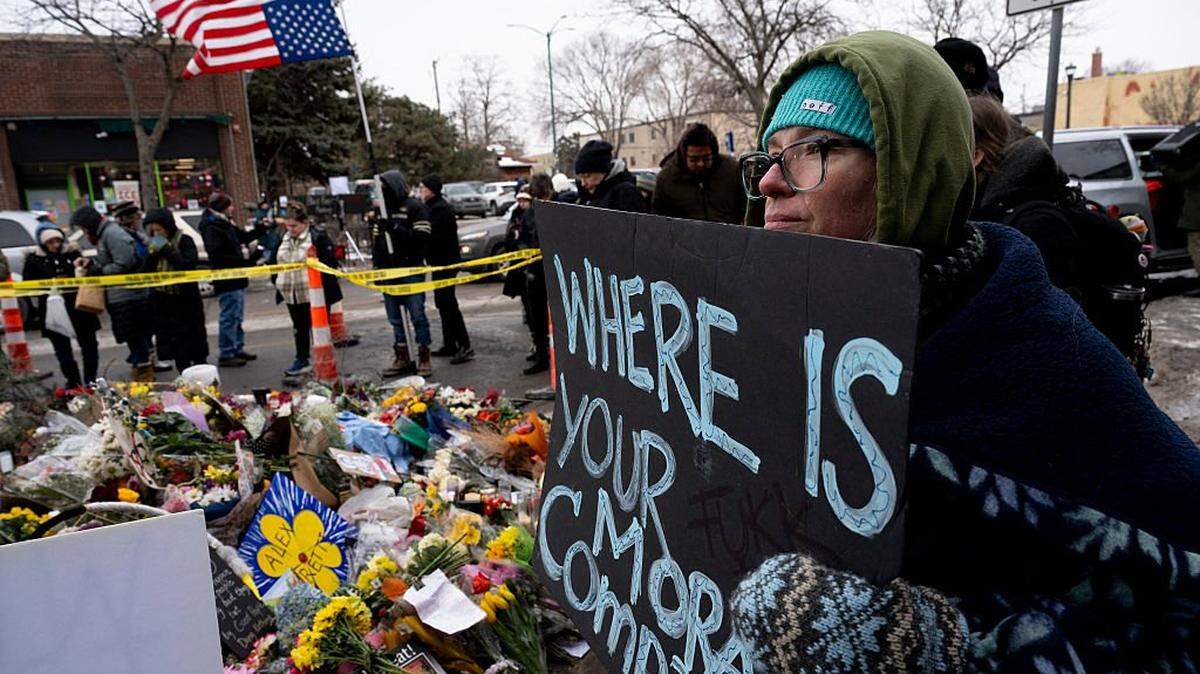
What’s triggering all this is a dispute between Democrats and many Republicans over how to fund and reform the Department of Homeland Security. Democrats are demanding major changes in how immigration officials operate. Their anger was fueled by the Saturday shooting in Minneapolis of protester Alex Pretti by U.S. Border Patrol agents.
Congressional stalemate
Senate Democrats are united on three goals for any legislation: End roving Immigration and Customs Enforcement patrols, enforce measures to hold rogue operations to account and have agents remove masks and wear body cameras.
“Nobody thinks we’re going to solve every single problem in one fell swoop. But the American people are demanding that something gets done,” said Senate Minority Leader Chuck Schumer, D-New York, in a Senate speech Thursday.
“We need real oversight, accountability, and enforcement for both the agents on the ground and the leaders giving them their orders. I will not vote for anything less,” said Padilla, top Democrat on the Senate border security and immigration subcommittee.
The White House is urging calm, and taken steps to ease the tension in Minneapolis. The Trump administration continues talking to Democratic leaders in the hope of reaching an agreement by Friday night, but there are a lot of procedural and philosophical hurdles to overcome.
The looming shutdown
The larger agencies whose funding is pending while this dispute plays out are, most notably, Labor, Health and Human Services, Housing and Urban Development, Education, Defense, State, Homeland Security, Treasury and Transportation. Not affected are the Environmental Protection Agency, Veterans Affairs, Energy, Justice, Interior, Agriculture and Commerce departments and Congress.
Once a shutdown occurs, an affected agency has to halt any unfunded activity, usually within a few hours. It would then furlough employees not considered essential, stop the pay for all employees not covered by other spending bills or fees, and stop signing any contracts, according to the Bipartisan Policy Center.
Social Security and Medicare are not affected as they are considered “mandatory spending,” though in previous shutdowns there have been some customer-service disruptions.
“There is no shutdown in recent memory where Social Security was seriously impacted,” said Max Richtman, president and CEO of the nonpartisan National Committee to Preserve Social Security & Medicare, in a written statement on Thursday.
The U.S. Postal Service is also not affected.
Employees essential for national security remain on the job. Air traffic controllers and military personnel remain at their positions, though their pay could be delayed.
How the freeze on some federal spending would affect the state’s education system remains unclear, though during last year’s shutdown student aid programs and department grants continued while the investigations of civil rights complaints were paused.
“One of the things to bear in mind on that is, in certain situations, some programs have federal funds that are available to them, that have already been appropriated, that would allow programs to continue uninterrupted during a short-term period at least,” Palmer said.
About 10% of the Sacramento City Unified School District’s funding comes from the federal government, according to previous reporting from The Sacramento Bee.
This story was originally published January 29, 2026 at 5:35 PM with the headline "Partial shutdown begins as Senate passes budget but House delays."

.jpg)