Advocates allege inhumane conditions for immigrants on California border before Title 42 ended
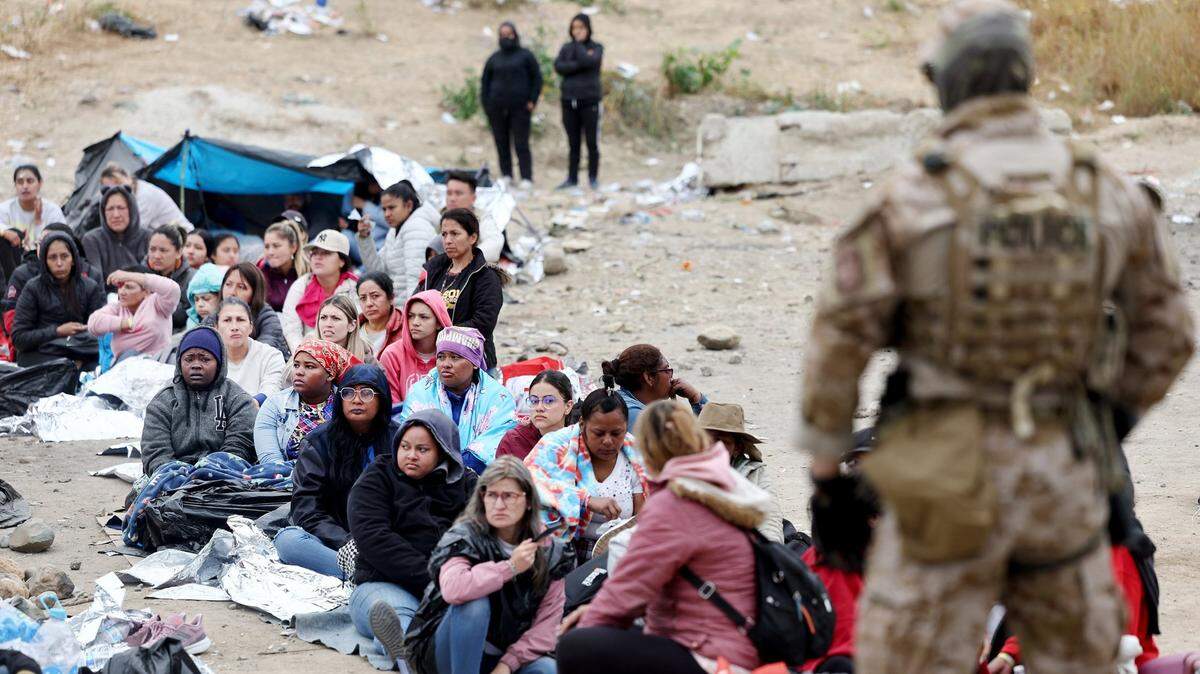
The only port-a-potty for hundreds of people was full and unusable. The day’s meal was a granola bar and a bottle of water. The lucky got mylar blankets for the rain and chill at night in the open-air corridor that serves as an entry point into California.
This is what migrants encountered when they stepped on United States soil and were held between two barriers on the California-Mexico border near San Ysidro, according to a May 13 complaint to the U.S. Department of Homeland Security filed by immigration advocates.
The complaint said agents failed to provide sufficient water, food, medical assistance or shelter for the migrants, who were kept in unsanitary conditions.
The hundreds of migrants who spent up to a week outside San Ysidro were moved over last weekend. But advocacy groups are pressing U.S. Customs and Border Protection, which is under the department’s control, into creating better conditions in other encampments as more people seek to enter the U.S. with the end of Title 42.
“If it wasn’t for volunteers and community members and organizations who stepped up and started providing food and water and what they could to help these folks, we could have seen lives lost,” Lilian Serrano, director of the Southern Border Communities Coalition, said in an interview Monday.
Title 42, a COVID-related migration rule that authorized CBP to swiftly expel migrants and asylum seekers on public health grounds, ended Thursday night as the Biden administration has wound down pandemic orders. State and federal officials prepared for an influx of people hoping to enter the U.S. as the policy expired.
Advocates from the Southern Border Communities Coalition, American Friends Service Committee and Universidad Popular, who have been helping migrants near San Ysidro, claimed that border agents did not treat migrants humanely.
“Now, with the lifting of Title 42 exclusions, and the increase of migrants seeking asylum, it is imperative that CBP correct course to comply with custody standards and protect human rights,” the advocacy groups wrote.
Lacking medicine, food, water and shelter
Photos taken by the organizations show migrants preparing to eat leaves and suffering serious medical issues such as a blackened skin abscesses and whole-face allergic reaction.
Colored wristbands, like ones handed out at concerts, were used to determine when someone had arrived. Advocates wrote that migrants were not informed of when they might be able to have their asylum claims heard, and that some wristbands indicated they had been held for longer than border agents claimed.
At one point, only one port-a-potty was available for the about 400 individuals being held, advocates wrote. It filled up in two days at the end of April and had not been not cleaned as of the date of the complaint.
Once a day, border patrol agents would come with a granola bar and a bottle of water per migrant, they wrote. Without help from advocacy groups, the complaint writers said they feared migrants would starve. There weren’t sanitation materials, running water or showers; people often slept on the dirt or cardboard.
The migrants, many of them children, pregnant or elderly, arrived in poor health and were not offered proper medical attention.
Serrano wrote that she met the son of a 79-year-old woman who was injured turning herself into the border patrol and was ill after not having her medication for her conditions. Serrano called and texted the border patrol agent in charge of the area in the morning, she wrote. He responded that night, saying generally, she recalled, that when his agents took migrants to the hospital, they said were fine and did not need a doctor.
“I reiterated that the woman we were discussing needed medical attention and told him that the people we were talking to had medical needs,” Serrano wrote. “He said that he felt that migrants were taking advantage of this situation and that they were using this to get into the United States.”
Spokespeople for CBP did not respond to a request for comment.
New Biden asylum policy
With the end of Title 42, the Biden administration has introduced a new policy that will make it harder for migrants seeking political asylum. Those who arrive seeking asylum at the U.S.-Mexico border without prior authorization must prove that they unsuccessfully sought asylum in one of the countries they traveled through.
The American Civil Liberties Union sued the Biden administration in a federal court in Northern California over its new policy last week. Joined by the UC Hastings Center for Gender and Refugee Studies and the National Immigrant Justice Center, the ACLU argued that the policy is similar to asylum bans imposed by the Trump administration.
The Trump White House also moved to deter asylum seekers who did not seek refuge in another country en route. A federal judge halted that rule, but the Supreme Court allowed the administration it to enforce it while legal proceedings continued. Another federal judge struck the policy down, but by then, Title 42 and other pandemic-related restrictions were in place.
Under the Biden administration policy, lawyers wrote in the filing, anyone from a Central or South American country other than Mexico “are categorically barred unless they satisfy one of the enumerated and limited conditions or exceptions. That’s a simple ban with narrow exemptions, and it turns the asylum process on its head.”
Biden administration officials defendthe rule. They say it works in tandem with expanded pathways to legal immigration and allows people to seek asylum while toughening penalties for those who try to do so illegally.
Migrants can schedule asylum appointments through the CBP One smartphone application. But technical issues, poor service, too few appointments and lack of language options have forced families to split up or wait months to get an appointment, Serrano of the Southern Border Communities Coalition said.
That’s if they know CBP One exists.
“Most of them didn’t know” what it was, Serrano said, “but because of the media presence and even us asking questions, they try to get themselves informed.”
This story was originally published May 16, 2023 at 8:30 AM with the headline "Advocates allege inhumane conditions for immigrants on California border before Title 42 ended."