
China's threats anger Japan, but trade ties complicate things
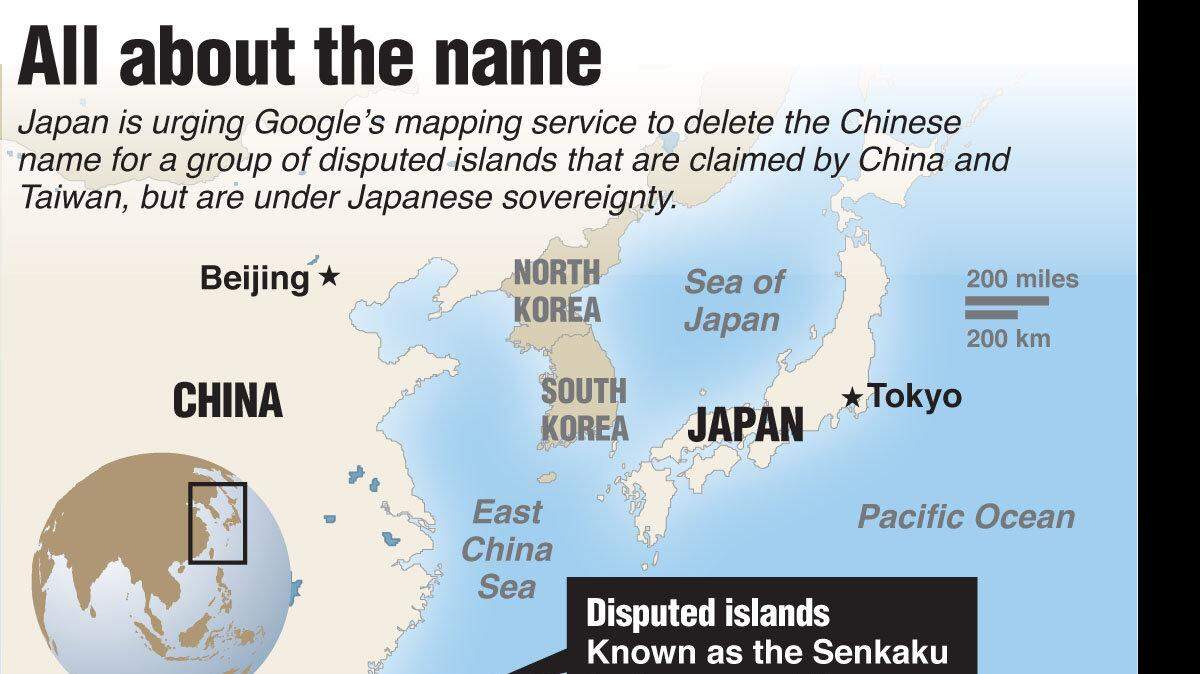
TOKYO — After Japan detained a Chinese fishing boat captain near a tiny, disputed chain of islands last month, China shut down diplomatic channels and threatened further retaliation. At the end of the fracas, amid reports of China cutting off crucial raw material exports, Japan backed down and released the captain.
The tensions weren't over. In a Washington speech last week, former Japanese Prime Minister Shinzo Abe compared China's push for more military power to "Lebensraum," or "living space," Adolf Hitler's conviction that Nazi Germany should expand into other countries.
Soon after, thousands of nationalists staged dueling protests in Japan and China this past weekend.
On a recent autumn afternoon in Tokyo, however, tour buses packed with Chinese tourists still rolled into the city's fabled Ginza luxury shopping area and disgorged visitors eager to spend.
Standing in the haberdashery he manages, where a topcoat can run more than $10,000, Hitoshi Tsuda said he had private thoughts about the island issue and how China had behaved. Dressed in a finely tailored tweed jacket, it was plain from his tightly drawn expression that Tsuda, 58, didn't like the idea of Japan getting pushed around by its neighbor. More important than discussing such thorny matters, though, he said, was the fact that Chinese wandering the area had large stacks of yen to spend.
Or as another nearby shopkeeper recently put it: "Business is business."
Even as animosity continues to fester, Japan is bound closely by its economic ties with the Middle Kingdom. That's pressed Japan into a dilemma similar to that of other nations that are worried about China's increasing clout: deep anxiety about what Beijing's newfound power will mean, balanced by a hunger to capitalize on the world's most dynamic economy.
Trade relations have long been seen as a guarantee against any serious confrontation between the countries, said Tsuneo Watanabe, the director of foreign and security policy research at the Tokyo Foundation, a respected independent research center.
However, with the perception that China's foreign policy has grown more aggressive as its coffers have swollen, that calculus has changed.
"Now I think there is some risk to the economic interdependence itself," Watanabe said. "It's a wake-up call."
The issue isn't likely to go away anytime soon. In addition to tit-for-tat protests in the countries, China's historic grudges against Japan and sharp rhetoric from Japanese and Chinese politicians seem sure to fuel problems in coming years.
On Tuesday, the Japanese press reported that more than 11,000 people had canceled reservations for flights between Japan and China since the fishing boat controversy began.
"Because we are getting into an unknown era of two regional powers, this sort of collision is probably going to continue to happen," said Koichi Nakano, a prominent political science professor and analyst at Tokyo's Sophia University.
Yet underneath the political friction, the countries are lashed together by business. Last year, China was Japan's largest trading partner, and Japan was China's second-biggest. In the first half of 2010 alone, the countries' trade with each other was worth more than $138 billion, according to the Japan External Trade Organization.
Some analysts have suggested that Japan can shop elsewhere. When it comes to items such as the so-called rare earth minerals that are needed in high-tech electronics, though, China has cornered the market for now. There also have been signs that Japan may band with others in the region and the United States to act as a political counterweight to Chinese might. Japan, of course, also has plenty of leverage with its sizable trade to China.
In the end, however, most Japanese acknowledge the need to maintain strong commercial ties with China, especially given their country's past two decades of economic slowdown.
All of which makes a lot of people in Japan nervous.
"In the past, it was only the fringe-right that said China is dangerous ... but today such a perception is more widely held," Nakano said.
For Japan, history appears to have magnified, if not distorted, fears about China. After occupying parts of China from the 1930s to 1945 and committing atrocities that included rape and murder, Japan went on to become a leading world economy in the latter part of the century as China sat mired in poverty and political dysfunction. Nearly two decades of sputtering and stagnation followed Japan's booming 1980s, though. During that time, China's economy skyrocketed, a trend punctuated earlier this year when China passed Japan as the world's second-largest economy.
At the least, China reminds Japan of what it once was, an exciting powerhouse that the world watched with awe.
"Japan maintained its No. 1 position in Asia for 100 years. It always considered itself a superpower compared to China and other Asian nations," said Zhu Jianrong, a Chinese international relations expert at Tokyo's Toyo Gakuen University. "However, this time Japan was defeated by pressure from China."
Several observers have cast the incident with the boat as partly a byproduct of Japan's relatively new government.
The ruling Democratic Party of Japan took power in August 2009, and some analysts think that its leaders may not have fully thought through its decision to arrest the Chinese captain for allegedly ramming coast guard boats and then to indicate that the Japanese judicial system might try him. The implication, several Tokyo analysts told McClatchy, was to have asserted Japanese sovereignty over the Japan-controlled island chain in the East China Sea, known as the Diaoyu in Chinese and Senkaku in Japanese. The area is home to considerable natural gas and oil reserves, over which Japan and China have competing claims.
Nonetheless, some Japanese wonder whether Tokyo's capitulation with the release of the captain could be a sign of things to come. "The fact that they so quickly employed bullying tactics without (making clear) what the Japanese government should do, other than completely surrender, was shocking," Nakano said.
After a Japanese coast guard patrol took the captain into custody, China began ratcheting up the pressure early last month. Beijing suspended high-level government exchanges, its Foreign Ministry said there would be "strong countermeasures," Japanese offers to discuss the problem were scorned and Chinese Premier Wen Jiabao threatened to "take further actions."
In late September came reports that China had halted exports of rare earth minerals, a necessity for Japan's high-end electronics manufacturers. Japanese prosecutors quickly announced that the captain would be released.
"I think that China is ready to claim anything if we don't protect our rights," said Michimasa Hasegawa, a 27-year-old who runs a small construction business in Tokyo building restaurants and bars.
What did he think of how his government handled the boat captain affair?
Hasegawa struggled to answer.
"I wasn't happy with the decision at first, but when I saw that a lot of businesspeople were in trouble because of the rare earth minerals, well, if I were in their position ..." and at that Hasegawa broke off the sentence.
"It's very difficult," he explained.
MORE FROM MCCLATCHY
Follow China developments at McClatchy's China Rises blog
Is a rising China getting too big for its britches?
Nobel winner Liu Xiaobo's wife under house arrest after prison visit
China says little as inter-Korean tensions escalate
Sixty years after war broke out, Korean peninsula still in limbo
South Korea condemns North over torpedoing, halts trade
This story was originally published October 21, 2010 at 3:06 PM with the headline "China's threats anger Japan, but trade ties complicate things."