
Think China has a big stake in U.S. business? Not yet
WASHINGTON — China holds almost $1 trillion in U.S. government bonds, but it's made only modest investments in the nuts and bolts of the U.S. economy.
China lags far behind its Asian and European competitors in direct investment in the U.S. — taking stakes in manufacturers, suppliers, warehouses and other businesses. In fact, cash-rich China is near the back of the pack.
Chinese companies invested only $791 million in U.S. firms in 2009, the last full year of data available from the U.S. Bureau of Economic Analysis. South Korean companies invested $12 billion, Japanese firms $264.2 billion, German firms $218 billion, and British companies $453 billion.
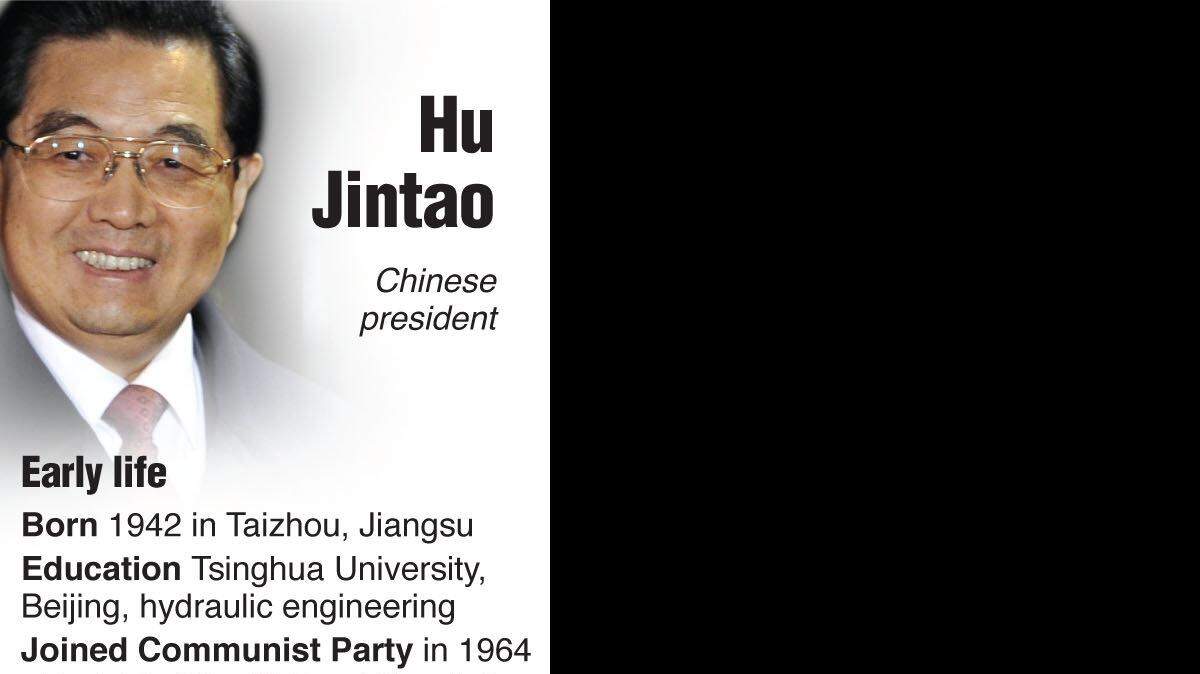
As Chinese President Hu Jintao visits the U.S. this week, he's likely to announce some new business deals, as has been his practice when visiting other nations.
To be sure, China's state companies are shopping abroad, just not here. A Chinese silicon company is preparing to buy a Norwegian metals giant for $2.6 billion. State-owned PetroChina invested almost $2 billion last year in Canadian oil producers. Late last year the China Petrochemical Corp. took a big stake in Brazilian offshore oil exploration.
"In years past, we saw the emergence of China's economic clout, but we didn't really, until recently, see the expansion . . . to investing abroad. . . .This may be the first year where outward investment from China exceeds inward investment," said Myron Brilliant, senior vice president of international affairs for the U.S. Chamber of Commerce. "China is increasingly taking the capital it has in its reserves and investing that overseas."
But not much in the U.S.
There are lots of reasons why, not the least being American suspicion when China, now the world's No. 2 economy, seeks to buy a U.S. company or take a stake in one. A number of U.S. high-tech companies and their products remain off limits to China for national security reasons. In addition, failed investments in Wall Street firms such as defunct Lehman Brothers left a bad taste.
"Part of it is they are still trying to figure out how to invest in the United States," said Brilliant.
Another reason is that China's fast-growing domestic market offers plenty of home-grown alternatives. That's unlike Japan, which bought into the U.S. decades ago after first capturing market share through exports.
"They (the Japanese) were making an investment in America to service the American domestic market, which was then growing, candidly, faster than the Japanese domestic market was growing," said Mitch Roob, Indiana's commerce secretary. "The difference in China is their domestic market for products is growing far faster than our domestic growth is."
Still, Roob expects Chinese investment in the U.S. to grow sharply soon.
"I think you'll see that change quite a bit in the next five years, it'll be much higher," he predicted.
"The kinds of investments they're talking to us about in Indiana alone are in the hundreds of millions of dollars."
Roob's made several trips to China and recently helped an Indiana manufacturer of artificial hips and knees purchase a Chinese company.
"Four out of five days, I've got at least one China meeting," said Roob, whose state has traditionally relied on manufacturing jobs but has struggled to keep them.
China's main interest in the U.S. has been the automotive sector. China's SAIC announced late last year that it'd take a 1 percent stake in General Motors — a $500 million investment.
Through its joint-venture partners in China, GM already has the largest market share in the world's fastest-growing car market. The SAIC deal underscored the potential for greater integration between the world's two largest economies.
GM also sold an important auto parts maker, Nexteer Automotive, to the Chinese firm Pacific Century Motors in late November for an undisclosed amount. That sale involved 22 manufacturing facilities that make steering columns, shafts and components for automobiles. Nexteer, once known as Saginaw Steering in Detroit's heyday, is now under Chinese ownership.
Another Chinese firm, Changan Automotive, announced late last year that it would open a research and development center in Plymouth, Mich., and could expand into light manufacturing.
These investments signal a shift. China's previous highest profile U.S. investment sector had been financial institutions. The quasi-government China Investment Corp. took a 9.9 percent stake in investment bank Morgan Stanley in December 2007. That followed a similar 9.9 percent stake in the Blackstone Group when the private equity giant went public in a stock offering earlier in 2007.
CIC is what's called a sovereign wealth fund, a government investment company that invests a nation's foreign reserves to earn a better return than what's provided from safer investments such as U.S. or German government bonds. CIC manages at least $200 billion of China's foreign reserves, estimated in the range of $2.4 trillion to $2.8 trillion.
Sovereign wealth funds raise concern in part because they could place geopolitical goals above profits, since the funds aren't necessarily for-profit entities.
China's sovereign wealth fund and state-controlled companies have been most active in foreign acquisitions tied to natural resource companies — mining, timber and energy in particular. Those may be areas of future investment interest in the U.S., too.
"I think they're going to look at natural resource areas that have stable return," said John Holsapple, the chief operating officer of Sino Investments, a Detroit-area firm involved in trade and investment with China. "The Chinese are looking to invest in the professed 'real economy.' In their mind, this is natural resources, technology and manufacturing firms, to name a few."
Hu's U.S. visit also will feature new pro-China TV commercials for broadcast into American homes.
The Chinese website China.org.cn said last week that the commercials will "present Chinese people from different walks of life." They're designed to soften China's image, showing Chinese astronaut Yang Liwei and basketball star Yao Ming.
CHINA'S U.S. HOLDINGS AT A GLANCE
- U.S. treasuries , $938 billion in October
Source: Treasury Department, Bureau of Economic Analysis, Census Bureau
MORE FROM MCCLATCHY
McClatchy's probe into roots of financial crisis, a Pulitzer finalist
To ask a question about this story or any economic question, go to McClatchy's economy Q&A
Poll: Obama rebounding, would beat GOP rivals, crush Palin
Few foreclosures, no bank failures: Canada offers lessons
New oil drilling regulator lays out the road ahead
Group forms to back Indiana's Pence for GOP presidential run
Death in China: Crushing dissent or tragic accident?
This story was originally published January 17, 2011 at 3:14 PM with the headline "Think China has a big stake in U.S. business? Not yet."