What counts as extremism in the military? Pentagon includes social media in new rules
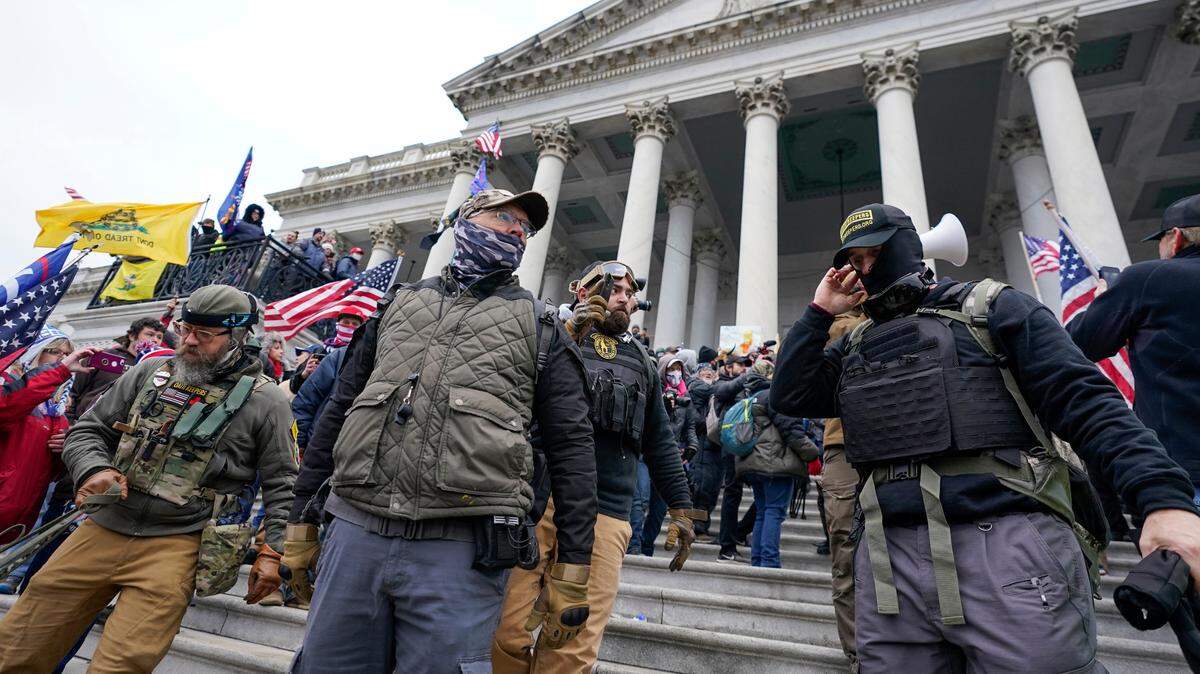
Six days before armed rioters stormed the U.S. Capitol, a hashtag appeared in a Facebook post by 53-year-old Air Force veteran Larry Brock Jr. that decried America as “under occupation by a hostile governing force.”
It read “#Oathkeeper.”
The Oath Keepers, founded by an Army veteran, are an anti-government organization that believes in “defending their interpretation of the U.S. Constitution against all enemies,” according to the Center for Strategic and International Studies. Brock’s Facebook posts referencing the group didn’t attract attention from authorities until his ex-wife said she recognized him in photographs from the Jan. 6 insurrection and called the FBI. Now he’s facing federal charges.
The use of social media by veterans and current members of the U.S. military to spout extremist ideologies or engage with fringe groups isn’t new.
But the liking, retweeting and sharing of that content wasn’t explicitly outlined in the Pentagon’s definition of extremism within the military — until now.
Extremism in the military
Reports of current and former service members participating in the Jan. 6 insurrection spurred the U.S. Department of Defense to take a closer look at extremism within its ranks. On Monday, Dec. 20, the agency released a report that broadened its definition of extremist activities to include social media and other online behavior.
“The new definition preserves a service member’s right of expression to the extent possible, while also balancing the need for good order and discipline to affect military combat and unit readiness,” Secretary of Defense Lloyd J. Austin III said in a news release. “These new updates provide increased clarity for service members and commanders on what qualifies as prohibited extremist activities.”
According to the report, extremist activity among active-duty service members is rare with fewer than 100 cases over the last year. But officials said there has been a spike in domestic violent extremism with “an uptick in veteran participation in these cases.”
In 2020, the Army became the first branch to address the role of social media in extremist activities when it revised the Army Command Policy to provide better guidance for commanders on how to address “prohibited activity that crosses the line into misconduct.”
Now the Defense Department is following suit.
What counts as extremist activity?
Monday’s report contains a six-part definition of “extremist activities” followed by 14 examples of what constitutes “active participation” in those activities — including paying membership dues, attending a rally in support of extremist activities or displaying extremist symbols on a flag, bumper sticker or tattoo.
Social media and online activity falls under the thirteenth bullet point, which says:
▪ Engage in electronic and cyber activities regarding extremist activities, or groups that support extremist activities – including posting, liking, sharing, re-tweeting, or otherwise distributing content – when such action is taken with the intent to promote or otherwise endorse extremist activities. Military personnel are responsible for the content they publish on all personal and public Internet domains, including social media sites, blogs, websites, and applications.
A Defense Department official told reporters the rule holds service members accountable for the content they post on social media.
But that doesn’t mean the federal government will be actively screening service members’ social media accounts.
How will extremist activity be reported?
Pentagon Press Secretary John F. Kirby said the Defense Department doesn’t have the ability to monitor the social media accounts of millions of service members and, even if they did, that wasn’t the intent behind the new guidelines.
“What we’re talking about is a case where, for instance, it came to light that an individual on social media openly advocated, forwarded, encouraged the dissemination of prohibited extremist material,” Kirby told reporters during a Dec. 20 media briefing. “That would have to come to light through various streams of reporting. It wouldn’t be something that the command or the department’s going to be actively fishing for.”
A senior Defense Department official said social media could be “one point among many that would be taken into consideration” during an investigation into a service member’s alleged extremist activities.
Whose responsibility it is to bring that activity to light varies. Officials said there are channels for service members to report it within the organization, such as the military criminal investigative organizations, the Judge Advocate General’s Corps (JAG) or a commanding officer.
The Pentagon also receives reports from local law enforcement agencies, the official said.
“I think considering the broad spectrum in which these incidences can manifest themselves, I think it’s important to have the different reporting streams and we need to make sure that all of those — the leaders involved in those different reporting streams understand the mechanisms and the ways to address concerns and to adjudicate them in cooperation with commanders on the ground,” the official told reporters.
Looking for ‘active participation’ in extremist activity
The Defense Department said the guidance on cyber activities has two parts — assessing whether a service member’s conduct rises to the level of extremism and whether they engaged in “active participation” of extremist activities.
Assuming the first element is satisfied, one official said, “liking something with the intent to promote or endorse an extremist activity would be violative of the policy.”
A service member merely viewing extremist content on social media, however, might not be.
“There has to be a knowing element to it, so there has to be sort of an amplification of a message is what we’re looking at,” one official said. “So somebody who just stumbles across content wouldn’t be necessarily sufficient depending on the facts to violate this policy, but if it’s their — it’ll be very, very fact specific, something the commander’s going to have to look at along with their legal counselor to assess.”
Kirby told reporters there will be training on acceptable social media use for new members, active service members and those getting ready to retire. As for punishment, he said it will mainly fall to commanders and “what they believe is the right thing to do.”
“That’s not something that the department would dictate at this level,” Kirby said. “And not everything has to be punished either... I mean, it could be an accident, right? So you want to have a conversation here.
“So it’s not just a knee-jerk reaction to immediately go to punishment,” he continued. “Each case will have to be looked at individually.”