
From aide to assassin plotter
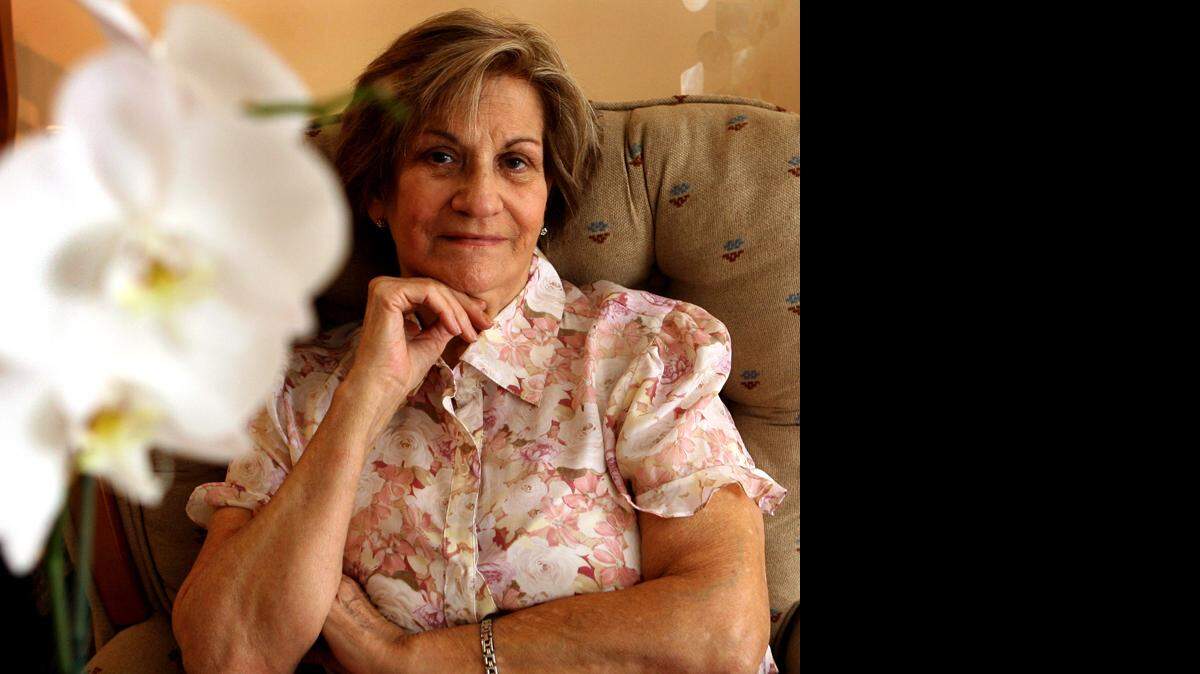
MIAMI — Aida Orta is furious with the CIA.
In a declassified report, the Central Intelligence Agency claims her brother, Juan Orta, Fidel Castro's personal secretary for a short time after the Cuban revolution, received money from the mob bosses that ran Havana's casinos.
"I don't doubt that he received the pills, but I'll bet my arms and head that Dr. Juan Orta would never have accepted a penny from the Mafia. Never! Because he always worked very honestly," said Aida, 79, of Miami, the only survivor of 15 Orta siblings.
Stamped "SECRET - EYES ONLY," the CIA memo notes that well-known mob figures suggested in 1960 that the CIA recruit Orta to poison Castro with pills "of high lethal content." At the time, Orta was disillusioned with the Cuban leader, the memo says.
One of the mobsters, Salvatore "Sam" Giancana, commented that Orta "had been receiving kickback payments from the gambling interests ... and was in a financial bind," the memo says.
Orta accepted the mission and received the pills, but after a while lost heart and gave them to another person, not identified in the memo. It was the first of many CIA attempts to kill the Cuban leader.
The CIA papers bring to light the scant information available on Orta, who carried to his grave the privileged memories of his years as Castro's secretary. Orta died in Miami in 1977 at age 73 of diabetes, depressed and poor. His last job was as a highway toll collector.
The story of Orta and his family is one of many unpublished tales from the Cuban exile community that has formed the emotional landscape of a city where a neighbor, a gardener, a teacher, an air-conditioner repairman - and even a toll collector - once were protagonists in their nation's history.
"My brother talked more with Fidel than with Raul," Aida Orta recalled. "He saw him every day, all the time, because he worked in the anteroom to Castro's office."
Orta was the third of 15 children raised by an illiterate washerwoman and a sponge cutter in Batabano, a port in southern Havana province.
"Despite our poverty, we never went to bed hungry and we always had clothes on our backs," Aida Orta said.
Juan Orta studied at the University of Havana and graduated as a teacher. During Fulgencio Batista's first term (1940-1944), Orta was an administrative assistant at the Jose Marti asylum in Cojimar.
During that time, he made his first connections with the Orthodox movement, which became a political party in 1947.
Later, he became private secretary to Emilio "Millo" Ochoa, founder of the Orthodox Party. Ochoa died June 27 in Miami at the age of 99.
In 1952, Batista returned to power in a coup. According to Max Lesnik, a Miami radio commentator who supports dialogue with the Cuban regime and in the 1950s was a young Orthodox leader, Castro met Orta in Oriente province. Through Orta, Castro learned of the conspiracy being hatched by the party's top leaders against Batista.
"Millo found out about the friendship between Fidel and Orta and dismissed him from his post," Lesnik said. "From that time on, Orta took Fidel's side."
Orta's anti-Batista militancy endangered his family, but they remained supportive. "We began the anti-Batista battle, and it was terrible. Wherever Juan went, everybody went," Aida recalled.
Orta fled to Miami. His father died of a heart attack in 1954, Aida said, as a consequence of the constant police raids at the family home.
Orta made a living in Miami packing books and participating in the many conspiracy groups that rocked the city. Some of the groups were coordinated by former President Carlos Prio Socarras, Aida said. He was deposed by Batista in 1952.
Orta forged a close friendship with Prio and exchanged letters with Castro, who had fled to Mexico.
Castro visited Orta in Miami and discussed plans for the December 1956 landing in Cuba from Mexico, Aida said. Castro called her brother "gordo," because Orta was heavyset, she said.
In 1959, when Castro rose to power, Orta returned to the island and became Castro's secretary.
"He was hoping for something better," Aida said.
The post of interim president of Cuba went to Manuel Urrutia, which disappointed Orta. He thought the presidency should go to the man who had lost it by force - Prio Socarras.
Orta had enough when Castro ordered the indiscriminate execution of his vanquished enemies, Aida said. "He used to tell my mother that `there are some things a man cannot humanly stand.'"
Aida vehemently rejects that her brother's exile was related to shady business "with the gambling interests."
"The only person who speaks ill of my brother is ... Max Lesnik, who had problems with him," Aida said.
Lesnik's version of the origins of Orta's problems with Castro begins with Urrutia's decision to shut down the casinos. The workers pleaded with Castro to reverse that edict, and he did.
According to Lesnik, Orta told the workers that the casinos were reopened thanks to his intervention.
"When Fidel learned of Orta's contacts with the Mafiosi, he separated him from his side, which caused Orta to become an enemy of Fidel," wrote Lesnik in an e-mail sent to El Nuevo Herald.
Aida's reaction: "That's the greatest slander he could invent about a person as honorable as Dr. Orta," as she refers to her brother.
Before the relationship between Castro and Orta soured, the CIA was preparing a handful of poison pills to kill the Cuban leader. Among the men trusted by the CIA was Frank Sturgis, later to become a Watergate figure, who had sent weapons from Miami to support Castro and later was named director of security for the Havana casinos.
According to Warren Hinckle and William Turner, authors of the book "Deadly Secrets," "one of Sturgis' main sources of intelligence within the government was Dr. Juan Orta, Castro's secretary."
However, according to the declassified CIA memo, Sam Giancana, a legendary capo from Chicago who used CIA spy equipment to monitor the faithfulness of his lovers, and Santo Trafficante, Cuban operations chief for the Cosa Nostra, reached out to Orta.
The two men, who were on the FBI's Most Wanted list, met in Miami Beach with Robert Maheu, a former FBI source who collaborated with the CIA, and suggested Orta for the job.
Trafficante gave the pills to Orta, the memo says. But Orta later (the memo does not say when) asked out of the assignment.
The Bay of Pigs invasion in April 1961 ended the poison pill project. Juan Orta sought asylum in the Mexican Embassy two weeks before the invasion, as did three of his brothers and Aida's husband, Rafael Peruyera, a Customs official who was captured during the invasion and detained for 20 days.
In 1962, Aida and her three young children arrived in Miami. With time and much work, she revalidated her teacher's accreditation and is now retired from Miami-Dade schools.
Her brother Juan Orta remained five years in the Mexican Embassy, waiting for a safe conduct from the Cuban government. He wrote prodigiously, but no one knows what happened to his papers.
This story was originally published July 16, 2007 at 10:25 AM with the headline "From aide to assassin plotter."