Female military pilots see the next barrier to break: Getting more Black women to fly
The women who were the first to break gender and race barriers as military pilots understand the isolation that comes with being the only female in their squadron.
They have spent years encouraging more women to fly, but as new data obtained by McClatchy shows, there are still few in the ranks, and even fewer who are Black.
Women comprise just 7 percent of the 48,308 active duty, National Guard and reserve pilots now serving in the military. Of those 3,314 female pilots, only 72 identified as African American or Black, according to military data obtained by McClatchy.
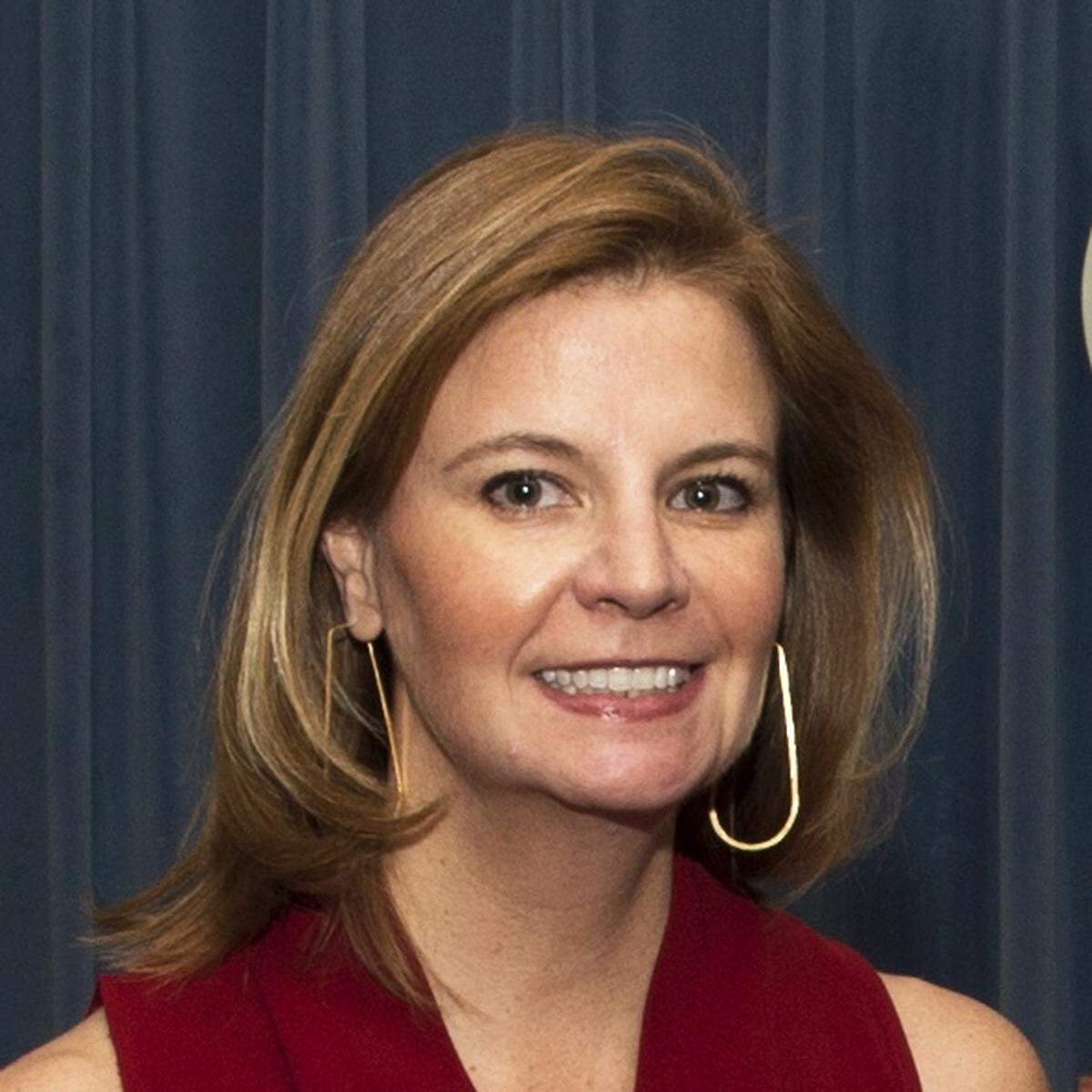
“I am disappointed in that number, but I do think it’s fixable,” said Lt. Col. Christina “Thumper” Hopper. As an F-16 pilot in 2003 over Iraq, Hopper became the first Black female Air Force pilot to fly combat missions in a major war.
“What I’m seeing that’s happening in the military, specifically through some of the circumstances that have happened in our country, are very positive things,” said Hopper, who is now a T-38 instructor pilot in the Air Force Reserve. “I think they are going to help us shift and move in the right direction, to hopefully increase some of the numbers from what we see now.”
Among active duty forces the disparities were stark. The Air Force has 12,323 active duty pilots, of which 13 were African American or Black women. In the Navy, of 7,074 active duty pilots, only six were African American or Black women. In the Army’s 9,133 pilots there were 25 African American or Black women. Within the Marine Corps’ 5,024 pilots, there were five. Among the Coast Guard’s 1,258 pilots there were also five. The data included only pilots, not additional aviator roles such as weapons officers or navigators.
Defense Secretary Mark Esper last week directed a Pentagon-wide review of racial disparities in the military and whether Defense Department policies have created barriers to equal opportunity. The review was prompted by the nationwide protests against racial injustice following the death of George Floyd in Minneapolis police custody.
Treating military women equal
“These actions will maximize our efforts to ensure a diverse workforce at all levels, an inclusive environment, and equal opportunity for all who serve,” Esper said in a memo directing the military services to do an in-depth examination of all their policies that could discriminate, such as the criteria used to determine who is promoted.
The Defense Advisory Committee on Women in the Services has also been looking into aircraft designs and equipment issues that may be dissuading women from pursuing pilot slots, such as ejection seats and flight gear that are designed for male body frames.
Hopper said programs are needed that target youth, to get them dreaming of becoming military pilots, then matching them with mentors to help guide them. The Black female military pilots who are flying can help by increasing their public outreach, she said.
“It can at times be lonely to be the only person in your squadron, in your unit, that is different,” Hopper said. “But at the same time, I feel like standing out and being an ‘only one’ has kind of given me a platform from which to reach out and encourage other young girls, and especially young minority girls, and tell them, ‘Hey there are opportunities here that exist for you.’”
“The more times that they see me, then the more times I think they see the possibility and perhaps that encourages the numbers to increase,” she said.
Women have been officially allowed into military pilot roles since the 1970s, even though they flew for the nation before that. Women who ferried aircraft for the United States during World War II as Women Airforce Service Pilots, or WASPs, were not considered military pilots until 1977, according to the Defense Department.
The first female pilots graduated in the Army and Navy in 1974, and in the Coast Guard in 1977. The U.S. Marine Corps graduated its first female pilot in 1995, the delay was in part due to a ban at the time on women flying combat aviation missions.
Last month, the Air Force honored the “Trailblazers,” the first 10 women to complete a 1976 test program for female pilots.
Retired U.S. Air Force Col. Kathy Cosand, who went on to fly C-141 Starlifter cargo aircraft, was in that group.
On her first assignment, she was the only female pilot among 2,500 men assigned to the air wing at McGuire Air Force Base in New Jersey. That isolation of being “the only one” — similar to the experience Hopper had decades later — has made Cosand sensitive to the barriers minority female pilots are still breaking.
“I believe boys, girls, Black, white, I try not to look at color, I really try not to, because I’ve been on the other end,” Cosand said.
She recalled how her first flight engineer wouldn’t look her in the eye or directly acknowledge her.
“He talked to me in the third person. He’d go, ‘Somebody ought to tell her to move her flight bag over here. Somebody tell her she should move her kit bag to here,’” Cosand said in an interview with McClatchy. “I sat there and I thought, I’m just going to show you that I can do this job.”
Others made a point to treat her as an equal, even when it broke the military’s rules. The ban on women flying combat missions, which wasn’t lifted until 1993, meant that when Cosand’s unit was deployed to Zaire in May 1978, she wasn’t supposed to go. Her aircraft commander thought she deserved the opportunity.
“He said, ‘You need to get your gear, go out to the airplane and go hide until we actually get ready to go,’” Cosand said. “So I went and flew this contingency operation for over a week, and then the Air Force found out about it, and then they made us come back.”
“To this day I wonder if my aircraft commander was pulled into the office afterwards and [told] ‘What were you thinking?’” Cosand said.
‘I CAN BE HER’
While all aviation positions are now open to women, the first Black female Air Force fighter pilot did not graduate from training until 1999. The Navy’s first Black female fighter pilot just completed training on July 7.
Hopper said she has spent years focusing on getting young women, and especially young minority women, to see themselves in her and think of flying as a goal within their reach.
“I think sometimes when you see a woman, or a minority woman in a career field, and she’s maybe the sole one, or maybe part of a minority, there’s a tendency to think ‘Oh, she must be an exception. There must be something exceptional about her,’” Hopper said. “And that’s what I’d like to dispel. I want girls to look at me and say ‘I can be her.’”
Cosand said more needs to be done to convince not just Black women, but all who have faced discrimination, such as gay service members, to consider flying in the military as a career option.
“Those restrictions aren’t there anymore. Your talent. What you bring, what you want to do. That is what we need to promote,” Cosand said.
The families of potential female and minority pilots should be brought in early in the recruiting process and convinced they will have equal opportunities and be supported, said retired Air Force Lt. Col. Mary Livingston, who was also one of the 10 Trailblazers.
Livingston was assigned in 1977 to serve as a T-37 jet instructor pilot. In that role, she taught male students flying tactics she was not allowed to perform herself in the field because of the ban on women in combat.
“They’re looking at a woman, and they’re going, ‘How can this person actually teach me to be a fighter pilot?’” Livingston said in an interview with McClatchy.
She focused on letting her performance win over doubters.
“There was one student I had, and he was about 6-foot-2, just about the max height you could be to be fitting into the cockpit,” Livingston said. “I was 5-foot-4, a real lightweight. And so he’s convinced he’s going to be able to fly this aircraft much better than this lightweight.”
“We get to the No. 1 for takeoff [position], and you are supposed to run up the engines to max power and check all the engine instruments, which means you have to hold the brakes. He couldn’t hold the brakes,” she said.
“I take the aircraft, and I immediately get the aircraft to stop, and get it all lined up back again.”
The student tried again.
“And he really stomps on these brakes, he puts the power up and the aircraft just skitters down the runway” because he still cannot hold the brakes and keep the aircraft from rolling forward, she recalled.
Over the aircraft’s radio, Livingston privately asked the control tower to let the student continue to struggle. Then she took control of the jet again.
Afterward, when they were debriefing the flight lesson, she recalled the male student approached with a question — “How is it that I can’t hold the brakes, and you can?”
“I said, ‘You know what, there’s a lot that I can teach you, and there’s a lot that we can do together to make you be a successful pilot,’” Livingston said.
‘‘So, are you ready to start?” she asked. “And he goes, ‘Yes Ma’am.’”
This story was originally published July 20, 2020 at 5:00 AM.