Tragedies often spur changes to building codes. Will the South Tower collapse bring more?
Right around the time the developers of Champlain Towers South were advertising brand-new gleaming condos on the Atlantic Ocean, a five-story condo building under construction in Cocoa Beach came crashing down, killing 11 workers and injuring dozens more.
The March 1981 tragedy in Brevard County spurred state engineers to write a new law requiring “threshold inspections,” methodical reviews by engineers to ensure buildings are built as designed and to code. Though hired by the building owner, threshold inspectors are responsible only to the local enforcement agency.
Threshold inspectors, who are engineers with special certification, would make sure rebar was correctly placed before concrete was poured, and ensure that quality product was used.
“The thought was, ‘We really need to have engineer oversight, and it has to be an engineer that is competent with design and construction of these kind of high-rise buildings,’ ” John Pistorino, a structural engineer who led the group that recommended the new requirement to Florida lawmakers, told the Miami Herald.
It remains to be seen whether the far-deadlier collapse of Champlain Towers South, which killed 98, could spur similar changes in codes governing construction. It has certainly unleashed a scramble by local governments to reinspect buildings of a similar vintage. A Miami-Dade grand jury is set to probe what went wrong and is likely to make recommendations, as is the National Institute of Standards and Technology, a federal agency that has launched an investigation into the collapse.
The biggest changes to standards and codes have often come in the wake of tragedies, said structural engineer Mohammad Ehsani, inventor of QuakeWrap technology used to reinforce old concrete structures.
“Structural engineers, we have learned from our mistakes over the years,” Ehsani said. “Proper design calls for a redundancy so once one of the columns fail, the loads will be taken by nearby columns. The floor might sag or crack but the whole building wouldn’t come down.”
In South Florida, concrete construction is governed by multiple codes. The American Concrete Institute, a national nonprofit, sets the standards for concrete. Other aspects of construction fall under the Florida Building Code — formerly the South Florida Building Code until the state unified its codes after Hurricane Andrew.
Both codes have been updated various times since Champlain Towers South was constructed.
Pistorino’s first experience helping reconfigure building standards came in the wake of a disaster nearly 50 years ago. A downtown Miami office building leased by the Drug Enforcement Administration collapsed, resulting in seven deaths. In the wake of the catastrophe, Pistorino helped Miami-Dade fashion rules requiring that buildings be recertified after 40 years — and every 10 years after that. It was the very process that the 40-year-old Champlain Towers South had been navigating.
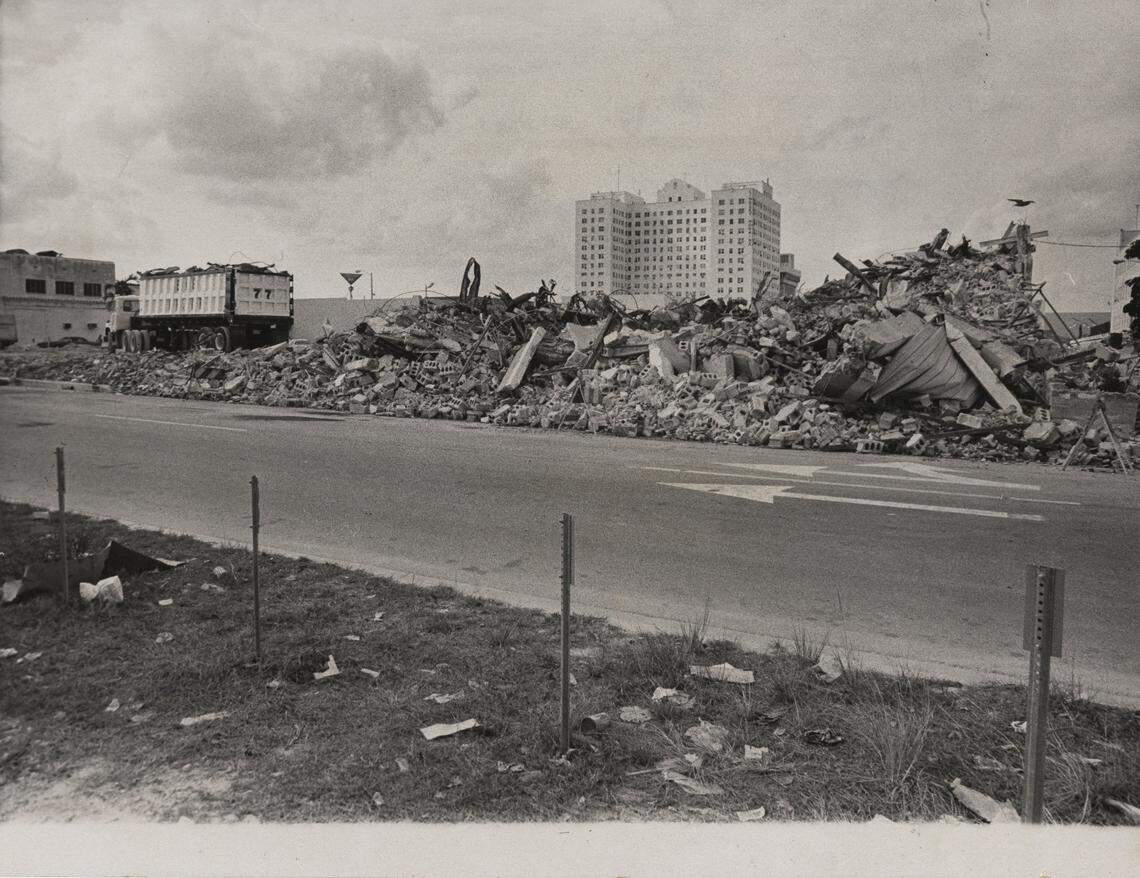
The Cocoa Beach tragedy followed, resulting in the threshold inspector provision. It was modeled after an existing requirement in the South Florida Building Code to have “special inspectors” certify to local building officials that buildings were built properly, Pistorino said. But the new statewide law was more rigorous, he said, requiring a special license to serve as a threshold inspector, daily inspection logs, and weekly reports submitted to building officials.
Building codes were transformed again after Hurricane Andrew hit South Florida in 1992, damaging or destroying tens of thousands of homes.
After Andrew, oceanfront structures had to be built to withstand winds of up to 140 miles per hour, a number that has increased to as much as 195 miles per hour for high-risk buildings in recent years.
It meant changes to the way building envelopes — roofs, windows, doors and walls — were constructed, said Gregg Schlesinger, a general contractor and attorney based in Fort Lauderdale.
“That required better materials, stronger materials, bigger columns. The structural integrity of the building envelope had to be increased,” Schlesinger said, adding that Florida’s building standards “are the strictest in the United States.”
Engineers who spoke with the Herald identified some aspects of the original Champlain Towers South design that met building codes at the time, but would fall short today.
For instance, today’s ACI code calls for stronger steel reinforcement connecting concrete slabs to columns, said Dawn Lehman, an engineering professor at the University of Washington working as a consultant to the Herald.
Today’s ACI code also requires the use of more durable concrete for buildings exposed to seawater. The latest version of the code, released in 2019, prescribes a minimum concrete strength of 5,000 pounds per square inch for concrete exposed to seawater, said Abieyuwa Aghayere, a Drexel University engineering researcher.
Building plans for Champlain Towers South called for concrete strength of 4,000 pounds per square inch from the pool deck up to the eighth floor and 3,000 pounds per square inch above that.
The code today also requires a lower ratio of water to cement than it did in the late 1970s for concrete exposed to the sea — another change intended to strengthen concrete.
“The more water you have, the weaker the concrete,” Aghayere said.
Schlesinger, the contractor and attorney, noted that while building codes have changed substantially, Florida codes past and present have always required proper maintenance of structures over time.
“The owners of the building must maintain their building,” Schlesinger said. “If they don’t, they are negligent.”
This story was originally published August 8, 2021 at 6:00 AM with the headline "Tragedies often spur changes to building codes. Will the South Tower collapse bring more?."