
CIA leaker Sterling sentenced to 3 1/2 years in prison
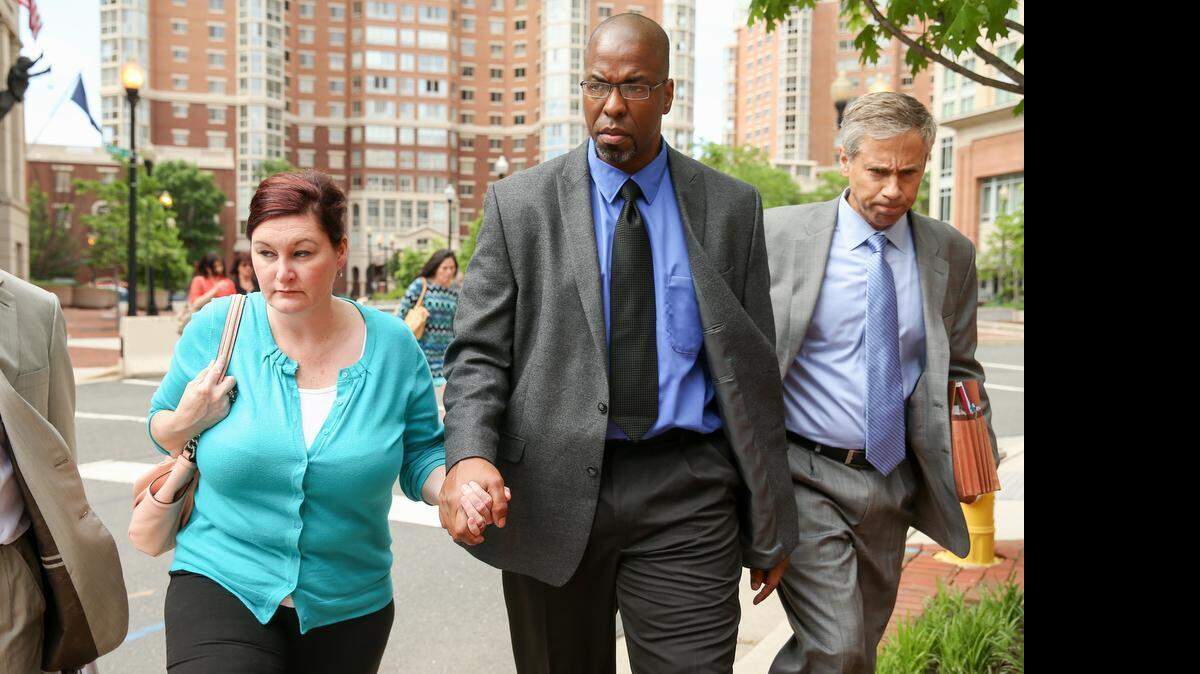
A federal judge sentenced ex-CIA employee Jeffrey Sterling Monday to serve 3 1/2 years in prison for leaking to a New York Times reporter details of a clandestine agency program aimed more than a decade ago at impeding Iran from developing nuclear weapons.
Sterling, 47, of O’Fallon, Mo., was found guilty by a federal court jury in Alexandria, Va., on Jan. 26 of nine criminal counts for divulging to Times correspondent James Risen details of an effort to send Iran phony blueprints for a nuclear weapon. Besides the jury’s finding that he disclosed classified information without authorization, he also was found guilty of obstruction of justice.
Federal prosecutors alleged that Sterling leaked the information in retaliation for the agency’s refusal to settle administrative and civil complaints he’d filed against the agency.
But the case also was a centerpiece of an Obama administration crackdown aimed at deterring whistleblowers from conveying sensitive or classified information that they contend sheds light on questionable government conduct. Other leaks, including those by fugitive former National Security Agency employee Edward Snowden, revealed the agency’s massive collection of metadata on Americans’ phone and email communications.
Prosecutors argued that the operation on which Sterling blew the whistle wasn’t bungled and should have remained secret.
For years, a Risen faced the possibility he would be held in contempt and sent to jail over his failure to reveal his source, but prosecutors ultimately won Sterling’s conviction without forcing the issue by calling the journalist as a witness. Nor did they ever provide direct evidence that Sterling was Risen’s source, instead relying on a circumstantial case built around the years-long relationship between the two men.
“For his own vindictive purposes, Jeffrey Sterling carelessly disclosed extremely valuable, highly classified information that he had taken an oath to keep secret,” said Dana Boente, U.S. attorney for the Eastern District of Virginia. “His attempt to leverage national security information for his own malicious reasons brought him to this sentence today.”
Andrew McCabe, chief of the FBI’s Washington field office, praised bureau agents and prosecutors who built the case, saying the intelligence analysis and gumshoe investigative work undertaken exemplify how far they will go “in pursuit of justice.”
Sterling, who is a lawyer, signed security, secrecy and non-disclosure agreements in which he pledged not to disclose classified information to people lacking security clearances and that the information was the property of the CIA.
Risen worked on a story detailing the CIA operation for the Times in early 2003, but under pressure from the Bush administration, the newspaper elected not to publish it. In January, 2006, his book “State of War” was published, revealing details of the secret program.
In an interview broadcast on Amy Goodman’s TV and radio talk show Democracy Now shortly before the trial, Risen said: ”By launching criminal investigations of stories that are outside the mainstream coverage, they are trying to, in effect, build a pathway on which journalism can be conducted: Stay on the interstate highway of conventional wisdom with your journalism, and you will have no problems; try to get off and challenge basic assumptions, and you will face punishment.
“Journalists have no choice but to fight back,” he said, “because if they don’t, they will become irrelevant.”
This story was originally published May 11, 2015 at 4:20 PM with the headline "CIA leaker Sterling sentenced to 3 1/2 years in prison."