Concerning drop in people wanting COVID vaccines has experts asking: What can be done?
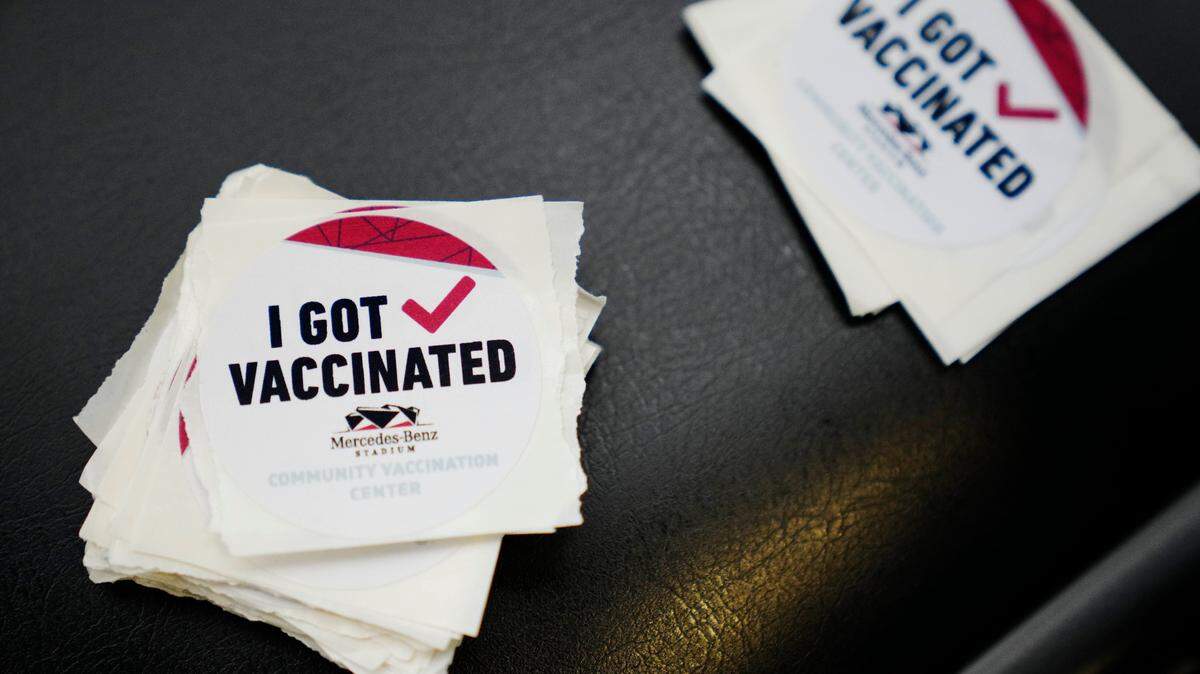
When COVID-19 vaccines first became available in the United States, demand for them far outpaced their supply.
Vaccination efforts were mostly focused on those at the highest risk — including health care workers on the front lines, those working and living in long-term care facilities and Americans ages 65 and up — and appointments were hard to come by.
Now, months into the country’s vaccine rollout, the opposite is true in many areas.
Some states have seen a significant drop in vaccine demand, even as everyone aged 16 and up is now eligible to receive the shot. The shift has experts worried about the country’s progress toward reaching herd immunity and has leaders grappling with how to get more people to take the vaccine.
A decrease in demand
Data from the Centers for Disease Control and Prevention suggests the average number of vaccine doses administered daily has started to taper off.
The seven-day average of daily doses administered had been trending upward since they first came available in mid-December, reaching a peak of more than 3.2 million doses by April 11. But that average has fallen to roughly 2.6 million as of April 20, the latest date for which the seven-day average is available.
Some say the drop in daily vaccinations could be explained by a decrease in demand for the vaccine now that more people have received a shot.
While some areas are still struggling to keep up with demand, health officials in other areas are closing mass vaccination sites or turning down their allotted vaccine shipments.
A mass drive-through clinic in Galveston County, Texas, for example, had been administering 5,000 shots a day, The New York Times reports. But it will shut down May 1.
Dr. Philip Keiser, the county’s chief public health officer, told the Times that appointments had decreased in the past few weeks. He asked the state to pause vaccine shipments over concerns that doses may expire before they can be used.
Concern about the decrease
Some experts say the decrease in demand could slow the country’s progress toward herd immunity — or the point where enough of the population is immune to the virus that the likelihood of infection is reduced for all and the spread of the virus slows.
And if the country takes too long to reach herd immunity, new variants that could be resistant to the vaccine could emerge, the Times reports.
Experts say a number of factors could be contributing to the decrease in vaccine demand.
The temporary pause in the use of the Johnson & Johnson vaccine — which followed reports of extremely rare but dangerous blood clots among a very small number of people who received the vaccine — could have contributed to the decrease, officials told The Washington Post, but it doesn’t fully explain it.
While the pause, which ended last week, didn’t seem to decrease confidence in the vaccines overall, millions of Americans are still hesitant to sign up for the vaccine for a number of reasons, the Post reports, including wanting to avoid the hassle of making an appointment and wanting to wait for more research on the side effects.
Polling from the Kaiser Family Foundation found the percentage of American adults who say they have already received the vaccine or who plan to receive it as soon as possible has increased — up from 34% in December to 61% in March.
But another 17% still say they will “wait and see” how the vaccine works for others and 13% say they will “definitely not” get it, the Kaiser survey found in March.
How do we get more people vaccinated?
Kaiser says its polling suggests the country will reach a “tipping point on vaccine enthusiasm” in the next two to four weeks — at which point efforts to encourage vaccination will be more difficult.
“Federal, state and local officials, and the private sector, will face the challenge of having to figure out how to increase willingness to get vaccinated among those still on the fence, and ideally among the one-fifth of adults who have consistently said they would not get vaccinated or would do so only if required,” Kaiser says.
At the federal level, President Joe Biden’s administration has launched a campaign to increase confidence in taking the vaccine.
The ‘We Can Do This: Live’ initiative employs medical experts, celebrities and organizations to “meet people where they are with the information they need to feel confident about receiving the vaccine,” according to a release from the U.S. Department of Health and Human Services.
Last week, Biden announced tax credits for some businesses to give their workers paid time off to get the vaccine and to recover from any side effects as part of an effort to get more people vaccinated.
Still, some experts say outreach will have to increase at the local level.
“It’s really going to be all about the ground game,” Dr. Bechara Choucair, the White House vaccinations coordinator, told The New York Times. “It’s going to be about planning at the local level. It’s going to be about microplans. It’s going to be about county by county, ZIP code by ZIP code, census tract by census tract to make sure what are the strategies that work.”
And some say local officials may have to change how vaccinations are offered.
For example, some states are focusing on having patients vaccinated at their doctor’s offices, where they may be more comfortable, instead of at mass vaccination sites, the Times reports.
Nirav Shah, the head of Maine’s health department, told The Washington Post there needs to be focus on people who have not made an appointment because they can’t find transportation or because of other barriers, including by offering more walk-in sites and free rides.
“What we’ve all seen in the work that we’ve done is it’s not enough for vaccine to be in a state, it’s not enough for it to be at a vaccination site or at the doctor’s office,” Shah said.
This story was originally published April 26, 2021 at 12:06 PM with the headline "Concerning drop in people wanting COVID vaccines has experts asking: What can be done?."