Coronavirus weekly need-to-know: Taxes, school reopenings, vaccines for all and more
Each week, we offer you a round-up of our noteworthy coronavirus coverage.
More than 27.8 million people in the United States have tested positive for the coronavirus as of Friday morning, Feb. 19, according to Johns Hopkins University. That includes more than 493,000 people who have died nationwide.
Globally, there are now more than 110.4 million confirmed cases of the highly infectious virus, with more than 2.4 million reported deaths.
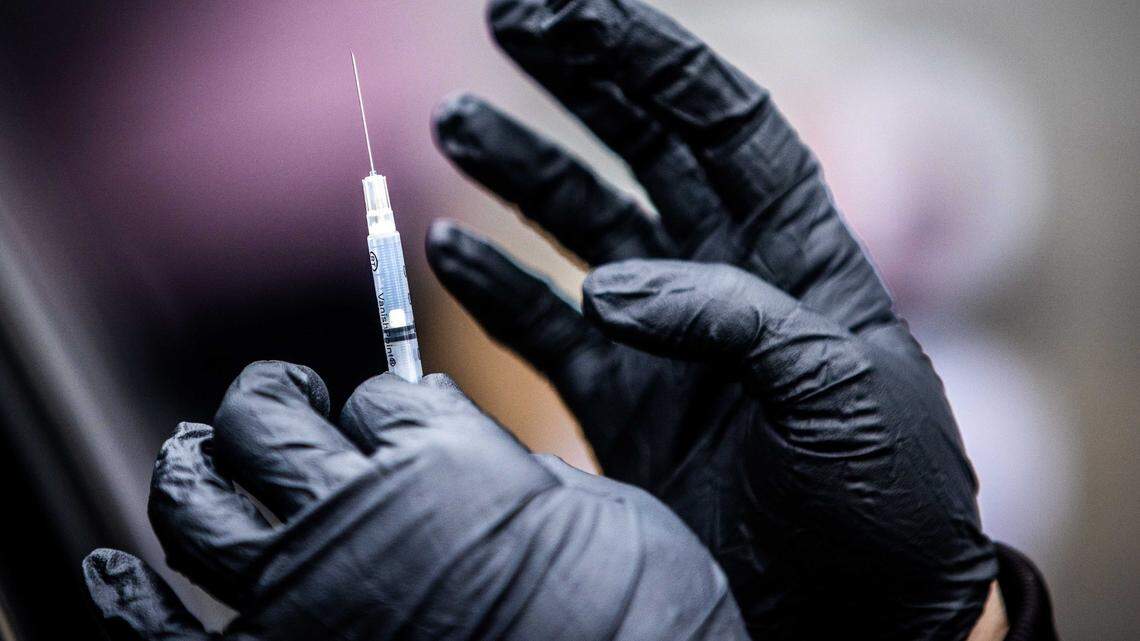
About 41 million Americans have received their first dose of a COVID-19 vaccine as of Feb. 18, a Centers for Disease Control and Prevention tracker shows. More than 16.1 million of them have been inoculated with their second dose, meaning they’ve received maximum protection against the coronavirus.
Here’s what happened between Feb. 12 to Feb. 18.
When will COVID-19 vaccines be available for everyone?
Since President Joe Biden’s administration stepped in, America’s capacity to manufacture and administer COVID-19 vaccines has accelerated, though experts say much more work needs to be done to get a handle on the pandemic.
In the last week, health and government officials have announced major deals with vaccine developers and ambitious goals to increase vaccination rates.
Here’s what those deals are and what kind of timelines officials are thinking might come to fruition.
Are COVID-19 vaccines the reason coronavirus cases are dropping?
For the last five weeks, coronavirus cases have been steadily declining in the U.S. following peaks likely spurred by holiday gatherings. Meanwhile, COVID-19 vaccination rates have been picking up pace.
Experts agree it’s too early to know if the small amount of vaccines administered relative to the U.S. population is responsible for the recent dip in cases, hospitalizations and deaths.
Yet, studies show that tides might be shifting, making way for the shots and all their benefits to reach across the nation. Meanwhile, uncontrolled coronavirus outbreaks are creating problems.
Schools need COVID-19 relief funds, more resources to reopen safely
Dr. Anthony Fauci said a COVID-19 stimulus package needs to pass for schools to reopen safely following new guidelines released last week by the CDC on reopening schools during the pandemic.
The guidelines recommend that schools prioritize mandating mask use and social distancing to safely reopen but said access to COVID-19 vaccines should “not be considered a condition for reopening schools for in-person instruction.”
Continue reading to learn what some lawmakers have proposed.
How does COVID-19 affect your taxes?
The Internal Revenue Service will begin processing tax returns Friday — several weeks later than usual as the agency prepares to disperse leftover economic impact payments to qualifying individuals who didn’t receive them the first go-around.
But this tax season is different in more ways than one.
What’s causing the post-holiday plunge in COVID-19 cases?
The threat of COVID-19 is far from over — more than 478,000 Americans had died from COVID-19 complications as of Feb. 16. But in the week leading up to Friday, the CDC reported a seven-day average of 104,217 cases. That’s down from 134,524 the week before.
Despite the falling case count, experts still urge people to wear face masks and take other precautions to help protect against the contagious disease.
Experts explain what may be causing the drops.
Test for all human coronaviruses? Researchers have a blueprint for one
Researchers have developed the foundation for a future test that would be able to detect current infection with any of the known human coronaviruses, including SARS-CoV-2 and its new variants, as well as past infection via the presence of antibodies.
The team says their “genetic fingerprints” have an overall 98% specificity and sensitivity, meaning it’s highly accurate, and could provide the blueprint for diagnostic and surveillance tests.
Here’s how it works.
Large student survey reveals crushing pressure in pandemic learning
A survey of more than 10,000 high school students conducted during the fall shows that kids are experiencing high levels of stress and pressure, have little desire to be engaged with school work and are feeling disconnected from teachers and peers — sentiments that bear heavier weights on girls and non-white communities.
The survey posted this month incorporates student responses from fall 2018 through fall 2020, including over 75,000 kids from 86 high schools across the country.
This is what it found.
In other coronavirus coverage...
New standards will take the guesswork out of choosing the most effective face masks
Some coronavirus patients left with nodules on eyeballs, study finds
This story was originally published February 19, 2021 at 8:32 AM with the headline "Coronavirus weekly need-to-know: Taxes, school reopenings, vaccines for all and more."